How to properly manage flowers and fruit on Red Globe grapes?
How should flowers and fruit be managed on Red Globe grapes? Seeking advice. Red Globe grapes can be managed as follows during the flowering and fruiting period: 1. Purpose. Through flower and fruit management, the size of the grape cluster is controlled. By removing secondary clusters and pinching off the tip of the cluster, nutrients are saved, the workload of berry thinning is reduced, the fruit set rate is increased, the berries are enlarged, and fruit quality is improved. Through...
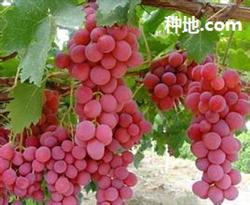
How should flowers and fruit be managed on Red Globe grapes? Seeking advice
Red Globe grapes can be managed as follows during the flowering and fruiting period:
1. Purpose
Through flower and fruit management, the size of the grape cluster is controlled. By removing secondary clusters and pinching off the tip of the cluster, nutrients are saved, the workload of berry thinning is reduced, the fruit set rate is increased, the berries are enlarged, and fruit quality is improved. Through cluster shaping, the grape cluster can be adjusted according to human requirements and shaped into different cluster forms; for example, by using the secondary cluster and thinning out most of the main cluster, a "couple" cluster is formed.
2. Basis for determining the load
Yield per unit area = per unit area (cluster weight x number of clusters), and cluster weight = number of berries x berry weight. Therefore, based on the target (planned) yield and the characteristics of the variety, the number of clusters retained per unit area can be determined. The characteristics of the variety determine the cluster weight of that variety, but in the market sales process there are also issues such as the cluster weight and berry size favored by consumers. What is worth noting here is that whether thinning inflorescences or thinning clusters, a margin should always be left; usually, the degree of inflorescence thinning before flowering can be 2 to 3 times the reserved target yield. After flowering, cluster thinning can be 1.5 to 2 times, finally reaching about 1.2 times. However, if the target yield is set too high, it will inevitably affect berry size and thereby reduce quality.
3. Measures
1. Thinning inflorescences
After the inflorescences open, promptly thin out excessive or overly weak inflorescences according to the load situation.
2. Removing secondary clusters and pinching off the cluster tip
When the inflorescences have opened but have not yet flowered, cut off the secondary clusters that affect the cluster shape; to make the cluster compact, pinch off 1/3-1/5 of the cluster tip.
3. Berry thinning
Timing: after physiological fruit drop.
Principle: remove berries that are misshapen, too densely packed, damaged, or squeezed, ensuring the cluster is compact and the berries are uniform.
4. Bagging and bag removal
Carry out after berry thinning. Before bagging, the cluster can first be sprayed once with Fuxing at 8000 times dilution, and bagged after the solution dries. Newspaper or slightly better-quality paper can be used for the bags, or commercially available paper bags specially made for grapes can be purchased. To reduce the occurrence of sunburn, it is best to do this on a cloudy day or in the afternoon when light is weak and the temperature is not high. The bags can be removed 20 days before ripening, or when a small number of red berries appear inside the bag; first open the bottom of the bag into an umbrella shape, and completely remove it after 3-5 days.
Click to view more grape growing techniques
Click to view more fruit growing techniques