Causes of Grape Berry Cracking and Detailed Control Methods
Why do grapes crack? How to prevent and control it, please advise. Table grapes are currently an important tree species in fruit cultivation in China, but berry cracking often occurs before grape harvest, especially in rainy years during the late fruit-ripening stage. Cracking not only affects the appearance of the fruit but also leads to infection by external microorganisms, causing...
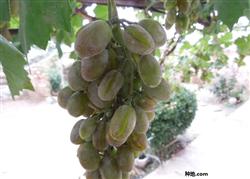
Why do grapes crack? How to prevent and control it, please advise
Table grapes are currently an important tree species in fruit cultivation in China, but berry cracking often occurs before grape harvest, especially in rainy years during the late fruit-ripening stage. Cracking not only affects the appearance of the fruit but also leads to infection by external microorganisms, causing rot, severely reducing the commercial value of the fruit. It is a physiological disease that cannot be ignored in production.
I. Types and manifestations of berry cracking. Grapes often crack during the ripening stage, causing relatively large losses. Due to differences in variety, the location and type of cracking also differ. Generally, cracking is divided into two types: dense-berry type and sparse-berry type, and their causes and mechanisms are also different.
The cause of dense-berry type cracking is that the berries are in close contact early on, forming corky fissures; as the fruit develops, the pericarp and roots absorb a large amount of water, generating internal turgor pressure within the berry, and cracking occurs at the fissured parts where the berries touch. Sparse-berry type cracking follows the same principle, except that the cracking site is not at the contact point between berries but near the fruit apex or fruit stalk, where the pericarp strength is weaker, and massive water absorption further promotes cracking. Sometimes, when fruit set is heavy, cracking is also more frequent. Sparse-berry type cracking has three situations: first, cracking at the fruit apex, occurring at the root-head scar area, with very little juice overflowing, basically not infecting healthy berries, and causing relatively little damage, but it is quite common; second, cracking at the stalk end, that is, cracking from the base of the pedicel to the equatorial area, with a relatively large opening, juice overflowing, and a great impact on healthy berries; once it occurs, losses are severe; third, cracking at the corky area, occurring where cork has formed on the berry surface, with very little juice outflow, no infection, and relatively little damage, but it seriously harms fruit quality.
II. Causes of berry cracking. It is mainly related to the fragile pericarp tissue of grapes, especially the decrease in pericarp strength as fruit maturity increases; on the other hand, it is related to the increase in internal turgor pressure within the berry caused by cultivation conditions, climate change, and so on. Among these, soil has the greatest influence on cracking; compacted soil and clayey soil with poor drainage that is prone to both drought and waterlogging have more cracking. Trees that have been transplanted and trees that have suffered sunscald crack more; fruit load is also related to cracking, and excessive fruiting makes cracking more likely. In addition, rainy seasons with abundant rain and large wet-dry fluctuations during the coloring period make cracking more likely; trees with poor coloring and years with poor coloring have especially more cracking. Cracking at the corky area is mainly because the space around the cluster is too small; under the action of wind, the berries rub against branches and leaves, forming cork, and the local tissue becomes fragile; as the fruit expands, cracks open at the corky area. In short, Kyoho grape cracking is mainly due to changes in soil moisture; during the second stage of fruit growth, expansion is slow, while in the third stage it is rapid, causing fruit surface deformation, forming fissures and depressions and other weak tissue areas; water is absorbed from the roots and fruit surface, generating turgor pressure, and the fissured and depressed parts split open.
Cracking is also closely related to seedlessness. In seedless berries, the stigma scar is large, and during the rainy period this part is filled with mold, thereby damaging the pericarp and causing it to split; this is one of the causes of cracking. Another reason is that cracking occurs in berries with only a single seed; the single seed is offset to one side, the side with the seed develops well, while the side without the seed develops poorly, and a slight impact easily causes splitting.
III. Preventive measures. Control strategies for berry cracking should differ by variety. The main approach is to select and plant varieties that are less prone to cracking. For dense-berry type cracking, the key to control is leaving an appropriate amount of fruit and preventing water absorption; generally, 7-8 berries per 1 cm of rachis is sufficient. The simplest method to prevent water absorption is fruit bagging, and if protected cultivation can be used, the effect on controlling cracking is even better. For sparse-berry type cracking, the key to control is improving soil management, promoting a robust tree, maintaining normal fruit set and stable fruit development conditions, and appropriately promoting early ripening, which can reduce cracking; if it can be converted to greenhouse cultivation, the control effect is even better.
1. Improve soil structure and reduce changes in soil moisture. Through open ditches, make every effort to do drainage work well; and increase soil permeability by plowing and applying organic fertilizer, so as to reduce changes in soil moisture.
2. Irrigate at the right time. Keep the soil at a certain moisture content (about 60%). During dry periods, especially the dry period after the rainy season, irrigate promptly.
3. Cover with plastic film. On the one hand, it can prevent the roots from absorbing too much water at once after rainfall; on the other hand, it can inhibit soil moisture evaporation, reduce changes in soil moisture, and maintain balanced moisture. However, when covering with plastic film during drought, it should be combined with irrigation.
4. Set up rain shelters on the trellis surface, or bag the clusters to prevent rainwater. If the grape fruit surface directly absorbs rainwater, or after the roots absorb water, the fruit generates turgor pressure, leading to cracking. Studies have shown that bagging the clusters near the fruit ripening stage to prevent the pericarp from absorbing water can significantly reduce the cluster cracking rate. Therefore, taking rain-shelter measures on rainy days can effectively prevent cracking.
5. Regulate fruit load. Trees with poor grape coloring have especially more cracking; therefore, by thinning clusters, thinning berries, and pinching cluster tips, adjust the fruit load well and reduce cracking.
6. Improve cultivation management. While strengthening cultivation management and ensuring a robust tree, summer pruning should be strengthened so that clusters are distributed reasonably and do not rub against branches and leaves. At the same time, create good conditions for coloring.
7. Cultivate and weed. Cultivation can not only eliminate weeds and reduce the occurrence of pests and diseases, but also loosen the soil, and has the effect of preserving moisture in drought and drying the soil in waterlogging, regulating soil moisture content. Generally, cultivate once every 10-15 days, and after rain, cultivate promptly to disperse soil moisture.
Click to see more grape-growing techniques
Click to see more fruit-growing techniques