What are the summer and autumn management methods for grape seedlings?
How should grape seedlings be managed in summer and autumn? What should be noted? Every year there are growers who fail to cultivate strong grape seedlings or virus-free grape seedlings. The reasons are either lack of experience or relaxed management. The quality of grape seedlings depends on summer and autumn management. 1. Branch and vine management 1. Shoot removal. Cutt...
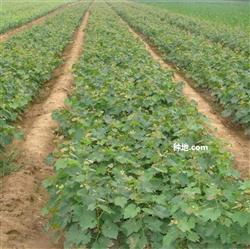
How should grape seedlings be managed in summer and autumn? What should be noted?
Every year there are growers who fail to cultivate strong grape seedlings or virus-free grape seedlings. The reasons are either lack of experience or relaxed management. The quality of grape seedlings depends on summer and autumn management.
1. Branch and vine management
1. Shoot removal. For grape seedlings raised by cuttings, the new shoots grow to 40-50 cm in mid-July. Some seedlings have several new shoots or one new shoot with several secondary shoots. Shoots must be removed in time, leaving one strong new shoot.
2. Pinching. When the new shoots of the grape seedlings grow to about 50 cm, begin pinching. Of the secondary shoots produced after pinching, except for the one left at the top, all the rest are removed. When the top secondary shoot grows to 6 leaves, pinch it leaving 3 leaves. All shoots growing again on the secondary shoots are removed.
3. Trellising and tying. New shoots on seedlings of premium grape varieties can be allowed to grow to 1.0-1.5 m, and such seedlings must be trellised. Every 3-4 m between two rows of seedlings, insert a bamboo pole, and stretch 2-3 lines of thin iron wire or nylon rope. Stretch one line at each of the two end bamboo poles. Tie all the seedlings of the two rows to the iron wire or nylon rope between the bamboo poles. If the seedlings are sparse, tie the new shoot of each seedling to one bamboo pole.
2. Management of water, fertilizer and soil
When the seedlings grow to 8 leaves, broadcast 15-20 kg of urea per mu, and apply once more after 15 days. Generally 3 applications are enough. Foliar topdressing is divided into 2 applications: in summer, spray 0.5% urea together with pesticide spraying; in autumn, spray 0.3% potassium dihydrogen phosphate, each sprayed twice.
Before the grape cuttings sprout, generally water once every 7 days. After the new shoots grow to 10-20 cm, water once every half month. After the new shoots grow to 30-40 cm, water once every 20 days, and do not water if the soil moisture is good. If the seedlings are not to leave the nursery before winter, water well for overwintering. Water immediately after each topdressing. When the new shoots grow to 7-8 leaves, off-type seedlings can be recognized and pulled out with roots. Different grape varieties should be marked with bamboo slips inserted between different varieties.
After the grape seedlings shed their leaves, they should not leave the nursery immediately, because this is the process in which nutrients continue to be stored in the roots. It is more suitable to leave the nursery around "Minor Snow". The nursery beds are mostly covered with plastic film, so generally no intertillage is needed; just pull out weeds. After each watering, remove weeds on the bed ridges and both sides.
The main diseases of grape seedlings are downy mildew and black pox, and the main insect pests are cotton bollworm, beet armyworm and grape hornworm. Pesticide spraying can be used for integrated control of diseases and pests. When the seedlings grow to 8 leaves, begin spraying: spray once with 50% carbendazim 500 times solution, and half a month later spray once with 80% penconazole 600-800 times solution. After pinching the seedlings, spray once with Bordeaux mixture at 1:0.7:200. If downy mildew is found, spray once with 78% copper oxychloride 600 times solution, or 80% fosetyl-aluminum 300-500 times solution. In autumn, mainly use Bordeaux mixture at 1:1:180 or 1:1.5:180.
Click to view more grape growing techniques
Click to view more fruit growing techniques