How should apple trees be managed after harvest?
Apples are a popular fruit. If management is neglected after apple harvest, yields will decline year after year. With proper management, not only can the damage that the cold winter brings to the fruit trees be reduced, but a foundation can also be laid for a bumper harvest the following year. 1. Apply "postpartum" fertilizer quickly, because during the fruiting period the tree body consumed a large amount of nutri...
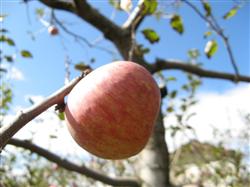
Apples are a popular fruit. If management is neglected after apple harvest, yields will decline year after year. With proper management, not only can the damage that the cold winter brings to the fruit trees be reduced, but a foundation can also be laid for a bumper harvest the following year. 1. Apply "postpartum" fertilizer quickly Because the tree body consumed a large amount of nutrients during the fruiting period, a quick-acting fertilizer should be applied as soon as possible after harvest to help it recover its vigor early, strengthen the leaves' ability to produce carbohydrates, and ensure sufficient nutrients for flower bud differentiation and nutrient storage in the tree body. While fertilizing, spray New High-Lipid Film to improve the utilization rate of the effective fertilizer ingredients and reduce residual toxicity. 2. Timely remove buds, pinch off growing tips, or twist shoots When new shoots inside the canopy grow to 20-30 cm, they should be pinched or twisted. For clustered branches, overly dense branches, thin and weak branches, drooping branches, water sprouts, and pest- or disease-damaged branches, some or all should be pruned away. 3. Prevent and control pests and diseases 1. In addition to pruning away pest- and disease-damaged branches, also hook out the larvae that bore into the trunk to overwinter, and you can also apply wound healing and antiseptic film to strictly prevent overwintering diseases from sheltering and multiplying. 2. Clear away dead branches and fallen leaves in the orchard, scrape off the cracked and rough bark on the trunk, and burn them in a centralized manner. Whitewash the trunk with lime sulfur mixture to kill insect eggs. 3. Spray General Tree Guardian to disinfect and sterilize, close off the paths of virus replication and spread, urge the fruit trees to enter dormancy early, and make them vigorous the following year. 4. Shallow plowing and mulching with grass To meet the needs of root growth and respiration of the fruit trees, after harvest some rice straw, crop stalks, or green grass should be spread under the canopy, and then some crushed soil should be placed on top to prevent it from being blown around by the wind. In this way, the soil can be made loose and aerated, and moisture can be retained to resist drought and heat can be preserved to resist cold; after the grass material rots, it can also add fertilizer to the orchard. 5. Deep plowing of the soil In late autumn and early winter in October-November, carry out a comprehensive deep plowing and soil improvement once in orchards that have not adopted crop-fruit intercropping (excluding the root zone under the trees), which is beneficial for protecting water, soil, and fertilizer in the orchard and enhancing cold and drought resistance.