Dragon fruit cultivation has clear advantages, so how big is its development potential?
Dragon fruit is a plant of the genus Hylocereus in the cactus family, native to the tropical desert regions of Central America, and is a typical tropical plant. Also known as green dragon fruit and red dragon fruit, it was introduced from Southeast Asia to Taiwan, China, and then improved in Taiwan, China and introduced to our Xianju farm. Dragon fruit gets its name because its fleshy scales resemble the outer scales of a dragon. It is smooth and...
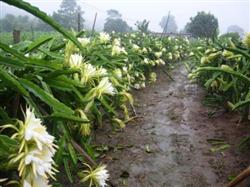
Dragon fruit is a plant of the genus Hylocereus in the cactus family, native to the tropical desert regions of Central America, and is a typical tropical plant. Also known as green dragon fruit and red dragon fruit, it was introduced from Southeast Asia to Taiwan, China, and then improved in Taiwan, China and introduced to our Xianju farm.
Dragon fruit gets its name because its fleshy scales resemble the outer scales of a dragon. When its smooth and enormous flowers bloom, they give off fragrance in all directions, and growing it as a potted ornamental plant gives people a sense of good fortune, which is why it is also called the "auspicious fruit." Its fruit is brilliantly colorful, with flesh that is snow-white or blood-red, sweet without being cloying, with a faint fragrance amid its mildness, even better than "cantaloupe." Developing dragon fruit allows it to be made into juice and blended into various beverages, with effects for beauty and health care.
Cultivation and management
Dragon fruit is a tropical plant that likes light and tolerates shade, tolerates heat and drought, likes fertilizer and tolerates poor soil. Its stems can even grow attached to rocks, and the plant has extremely strong wind resistance; as long as the support is firm, it can resist typhoons. Plant 300-400 plants per 667 sq m, and bury one 10 cm square, 2 m high concrete post as a support in the middle of every 4 plants.
Dragon fruit can adapt to various soils, but neutral soil and slightly acidic soil that are rich in humus and retain water and fertilizer are best. To make it grow vigorously after planting, it is necessary to apply more sterilized and fermented organic fertilizer of human, livestock and poultry manure. At the seedling stage, apply calcium magnesium phosphate fertilizer and compound fertilizer, with the amount determined according to the size of the plant.
Dragon fruit grows rapidly in a warm, humid, and well-lit environment. During open-field cultivation in spring and summer, it should be watered more to keep its root system in a vigorous growth state, and during continuous rainy weather, drainage should be timely to avoid infection by pathogens that causes the stem flesh to rot. Dragon fruit tolerates low temperatures of 0°C and high temperatures of 40°C. To ensure its year-round growth and multiple fruiting, try to reach the suitable temperature of 20-30°C. In northern cultivation, a greenhouse must be built, and the nighttime temperature in winter should not be lower than 4°C. In summer, the plastic film may be left in place, but ventilation is essential. A dragon fruit orchard does not need plowing; just cut the weeds in time. Dragon fruit has a thick waxy layer and a smooth appearance, so bagging is unnecessary, saving labor and time.
From flowering to fruit maturity, dragon fruit takes about 30 days. When the fruit gradually turns from green to red and is slightly fragrant and brightly colored, it can be harvested. One year after planting, dragon fruit reaches its initial production period, with a yield of 1,000 kg per mu; after two years, 2,000 to 3,000 kg; after three years, a full production period of 3,000 to 5,000 kg should be no problem. Maintaining a density of 6,000-7,000 drooping stems per 1 mu of land is suitable, that is, about 10 stems per sq m, with each stem bearing an average of 1 fruit per year, and an average fruit weight of 0.3-0.4 kg, so 1 mu of land yields 2,000-2,670 kg per year.
Nutritional value of dragon fruit
Dragon fruit is rich in nutrients and has unique functions. It contains plant albumin and anthocyanins, which are rare in ordinary plants, as well as abundant vitamins and water-soluble dietary fiber.
In every 100 grams of dragon fruit flesh, there are 83.75 grams of water, 0.34 grams of ash, 0.17 grams of crude fat, 0.62 grams of crude protein, 1.21 grams of crude fiber, 13.91 grams of carbohydrates, 59.65 kcal of calories, 1.62 grams of dietary fiber, 5.22 grams of vitamin C, 2.83 grams of fructose, 7.83 grams of glucose, 6.3-8.8 mg of calcium, 30.2-36.1 mg of phosphorus, 0.55-0.65 mg of iron, and large amounts of anthocyanins (most abundant in red-fleshed varieties), water-soluble dietary protein, plant albumin, and more.
In the unique mucus of dragon fruit stems and flowers, which is formed because of extremely low osmotic pressure, there are large amounts of nutritional substances and therapeutic substances with remarkable medicinal effects. Dragon fruit has the effects of preventing constipation, promoting eye health, increasing bone density, helping cell membrane formation, preventing anemia, and resisting neuritis, angular cheilitis, lowering cholesterol, and whitening the skin and preventing dark spots. It also has effects such as relieving heavy metal poisoning, resisting free radicals, preventing age-related diseases, slimming, and preventing colorectal cancer. More recent research results show that the juice of dragon fruit and its stems has shown positive effects on conditions such as tumor growth, viruses, and immune response suppression.