Detailed Explanation of Key Techniques for Greenhouse Cultivation of Sweet Cherry
I. Variety Selection and Orchard Establishment 1. Main cultivars. Early-ripening red varieties are the primary choice. Currently the better varieties are: Hongdeng (Red Lantern), Italian Early Red, Ukrainian Big Cherry, etc. To enrich pollinizer varieties, improve fruit set rate and extend the supply period, high-quality varieties such as Sato Nishiki, Rainier, and Van may be appropriately combined...
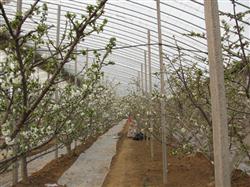
I. Variety Selection and Orchard Establishment
1. Main cultivars. Early-ripening red varieties are the primary choice. Currently the better varieties are: Hongdeng (Red Lantern), Italian Early Red, Ukrainian Big Cherry, etc. To enrich pollinizer varieties, improve fruit set rate and extend the supply period, high-quality varieties such as Sato Nishiki, Rainier, and Van may be appropriately combined.
2. The ratio of main cultivars to pollinizer varieties should preferably be 2-4:1. To ensure adequate pollination with the main cultivars, no fewer than 2 pollinizer varieties should be present in the same greenhouse.
II. Vigorous Nursery Stock
1. Rootstock. The principle is to select rootstocks that are vigorous, have large leaves, well-developed root systems, and good grafting compatibility. Currently the better rootstocks are layered seedlings of Laiyang Big Leaf Grass Cherry, seedling rootstocks of mountain cherry, etc. In greenhouse cultivation, attention should also be paid to selecting dwarfing rootstocks, such as Laiyang Dwarf Cherry; introduced foreign dwarf rootstocks may be trial-planted and promoted.
2. Nursery stock should be selected with good root systems, thick and sturdy stems, and plump buds. Specifically, fruit seedlings with a height of over 80 cm to 1.2 m and intact root systems are preferred.
III. Planting Density
In order to use the land more economically and obtain higher returns, the planting density of greenhouse cherries should be greater than that of open-field cultivation. Generally, row spacing is 2-3 m x 1.5-2 m, with 111-222 plants per 667 sq m. The specific density varies depending on factors such as variety, tree form, soil fertility, and cultivation conditions.
IV. Training and Pruning
1. Tree form. Greenhouse-grown sweet cherries should adopt a tree form that is short, compact, and highly efficient in light utilization. In the central row of an arched plastic greenhouse, the improved central leader form should be used. This tree form has a trunk height of 50-60 cm, maintains the dominance of the central leader, on which 8-10 horizontally extending scaffold branches are evenly arranged, bearing fruiting branch groups; the tree height is about 3 m. Greenhouse trees may appropriately reduce the number of scaffold branches; for the border rows of the greenhouse, a trunkless clump-shaped natural form may be used, i.e., 3-5 scaffold branches arising from ground level, with opening angles of 30-60 degrees, and a relatively shorter tree body.
2. Pruning. Pruning methods are mainly carried out during the growing season.
(1) Branch bending and bud notching: Starting from the 2nd year after planting, before spring bud break, long branches are bent to horizontal. Before and after covering the greenhouse, tall trees are headed back, and through branch bending, the orientation of large branches is adjusted to facilitate greenhouse covering. During the 2-3 years after planting, before spring bud break, bud notching is performed on the central leader and on lateral bud positions of branches to promote branching.
(2) Summer pinching: From May to mid-to-late July, when the extended shoots of scaffold branches reach about 40-50 cm, they are pinched to promote branching; upright new shoots on scaffold branches are pinched when they reach about 10 cm to promote flower formation at the base of the new shoots.
V. Soil, Fertilizer, and Water Management
1. Soil. For planted trees, ridges may be built along the tree rows, with a ridge height of about 30 cm and a width of 0.8-1 m; for newly established orchards, ridges may be made in the row direction before planting, with a ridge height of 30-50 cm and a ridge width of 0.8-1 m; one month before covering the greenhouse, or at the latest at the same time as covering, plastic film should be laid along the ridge backs to create good temperature, light, and water conditions for the root system.
2. Fertilizer. First, base fertilizer: adhere to the principle of early application and sufficient application of organic fertilizer. Apply organic fertilizer after fruit harvest until July or August; per plant apply 10-20 kg of decomposed chicken manure, or 20-30 kg of decomposed human excreta and urine, or 50-60 kg of pigsty manure, applied in furrows or broadcast when combined with deep soil plowing. Second, supplementary fertilizer: supplementary fertilization should be carried out after petal fall and before the hard-pit stage; young trees receive 0.5-1 kg of compound fertilizer per plant, while fruiting trees generally receive 1-2 kg of compound fertilizer or 25 kg of human excreta and urine. Third, foliar fertilization: during the greenhouse-covered period, foliar fertilization is primary. Spray 0.3% borax in the early full-bloom stage, and after the full-bloom stage spray 0.3% urea and 600x monopotassium phosphate; note that spraying should be done in the afternoon or evening, mainly on the undersides of leaves, to facilitate leaf absorption. In addition, after covering the greenhouse and before flowering, spraying branches and shoots with 1%-3% urea can promote flower bud development.
3. Water. Greenhouse cultivation is inside the greenhouse and the ground is generally covered with plastic film; therefore, the amount and frequency of watering should be less than in open-field cultivation. Watering greenhouse cherries should follow the principle of small amounts and frequent irrigation to maintain soil moisture. To prevent fruit cracking, during the fruit enlargement stage, furrow irrigation or localized irrigation may be used. Where conditions permit, drip irrigation may be used in the greenhouse. Irrigation standard: soil moisture content should preferably reach 60%-80% of field capacity; in the field, it should form a ball when squeezed by hand and crumble at a touch.
VI. Pest and Disease Control
Comprehensive management should be strengthened, tree vigor enhanced, pests and diseases controlled in a timely manner, and the tree body and leaves well protected. Generally, before and after film covering, spray once with 3-5 degrees Beaume lime sulfur mixture; after fruit harvest, spray 1-2 times with 70% mancozeb 500x solution or 50% carbendazim 700x solution; in July-August, spray 2-3 times with equal-amount lime 200x Bordeaux mixture. Caterpillars and slug moths are controlled by spraying pyrethroid insecticides during the larval stage.
VII. Improving Fruit Set Rate and Fruit Quality
1. Flower organ hardening. Starting 10 days before flowering, open cracks or skylights in the greenhouse every day to allow the tree body to receive a certain amount of direct light, which benefits flower organ development and enhances adaptability.
2. Supplementary pollination. Most sweet cherry varieties are self-unfruitful, and in addition the temperature and humidity inside the greenhouse are high and ventilation is poor, so supplementary pollination during the flowering period is especially important. First, artificial pollination: use mixed pollen collected in the previous year (frozen in a refrigerator, stored dry) and the method of collecting and using pollen on the spot during the current flowering period, and perform artificial point pollination during the flowering period. Second, bee pollination: place bees during the flowering period, generally one box of honeybees per 667 sq m; in recent years, the Japanese horned mason bee has been introduced, which has strong low-temperature tolerance and higher pollination capacity than honeybees; about 300 mason bees may be released per 667 sq m. Note: do not spray pesticides 10 days before releasing bees.
3. Flower and fruit thinning. The purpose is to increase single fruit weight and fruit uniformity. For trees with excessive flowers, small poor-quality flower buds, weak flowers, and late flowers may be appropriately thinned; after physiological fruit drop, small fruits and deformed fruits should be thinned.
4. Fruit coloring. In the early stage of fruit coloring, appropriately remove leaves that block light; 10-15 days before harvest, lay silver reflective film under the canopy and hang strip-shaped reflective film between rows to promote fruit coloring.
5. Use of paclobutrazol. For young vigorous trees (2-4 years old), the use of paclobutrazol has a notable effect in inhibiting growth and promoting flowering. There are two methods: soil application and spray application. Soil application: for 2-4 year old trees, use 2-3 grams per plant, open a ring-shaped furrow around the outer canopy, and water after application. Spray application: in mid-to-late May, with an interval of more than 10 days, spray 2 times with 500-1000 x 10 to the negative 6th power paclobutrazol.
VIII. Greenhouse Setup
1. Site and type of greenhouse. The greenhouse should be built in a place sheltered from wind and facing the sun, on flat ground or a gently sloping sunny site; with convenient drainage and irrigation, a relatively low groundwater table, and loose soil. For forcing cultivation of sweet cherry, an arched plastic greenhouse is preferable.
2. Greenhouse orientation, size, structure, and layout.
(1) Orientation: arched plastic greenhouses are generally oriented north-south for even lighting, and the row direction of trees planted in the greenhouse should also be north-south.
(2) Size: generally a single greenhouse area of about 667 sq m. If too large, ventilation and heat dissipation are poor; if too small, insulation performance is relatively low.
(3) Structure: the span of the greenhouse is generally about 7-10 m, the length is 50-80 m, and the height mainly depends on tree height and management convenience. Generally, the top height of the arched greenhouse is 2.5 m or 3.5 m, and the shoulder height is 2 m or 2.5 m. A space of 40-50 cm should be maintained between the tree tops and the greenhouse film. The angle at the top of the greenhouse should be small, generally no more than 30 degrees.
(4) Layout: for north-south greenhouses, the spacing between greenhouses is generally 0.8-1.5 times the top height of the greenhouse. In windy places, greenhouses should be staggered to reduce the risk of strong winds.
3. Ventilation and Covering
(1) Ventilation: greenhouses are ventilated through working doors and ventilation windows, or through cracks. Working doors are set at both ends of the arched greenhouse, with a size of about 1.5 m (height) x 0.7 m (width); ventilation windows are set at the upper middle and both sides of the greenhouse, with a size of 0.5-0.8 m and a spacing of 5-8 m. Installing ventilation windows is relatively labor- and material-consuming, so crack ventilation may be used, i.e., divide the film into 3 panels, press the top panel over the panels on the east and west sides, overlapping each other by 30 cm. Crack ventilation saves materials and is easy to operate.
(2) Covering: a. Film: for greenhouse film covering, long-life drip-free polyethylene film with good light transmittance should be selected. Because old film has low light transmittance, it is best to replace the greenhouse film with new film every year. b. Covering: the most commonly used insulation method is covering the greenhouse film with straw curtains, uncovered by day and covered at night, which can reduce heat loss inside the greenhouse and avoid low-temperature damage, but straw curtains have a relatively high cost and require much labor to uncover and cover every day; when rain or snow occurs, the greenhouse frame bears a heavy load. After improvement, insulation quilts sewn with 2 layers of film filled in the middle with shredded old thread blankets, insulation cotton, etc., or multi-layer paper quilts may be trial-used. In regions slightly farther south in latitude, such as south of the Qingdao area, double-layer film greenhouses may be used; when low temperatures occur, combined with temporary heating methods such as smoking outside the greenhouse and lighting alcohol inside the greenhouse, low-temperature damage during the flowering period can be successfully resisted.
IX. Timing of Greenhouse Construction, Covering, and Film Removal
1. Timing of greenhouse construction. The criterion should be whether a certain commercial yield can be formed per unit area and relatively high economic returns obtained. At a relatively high level of management, generally a certain number of flower buds are formed in 3 years, and greenhouse construction and film covering begin in the 4th year.
2. Timing of film covering. The greenhouse should be covered after the tree body has completely completed natural dormancy. According to reports, sweet cherry can pass natural dormancy after 1100-1440 hours below 7.2 degrees. Generally, dormancy is completed by the end of December. The specific covering time should also be determined according to the greenhouse's behavioral conditions (heating and insulation conditions) and the fresh fruit market period. For example, at the entrance of Qinglan Village, Bathhouse Town, Laiyang City, film was covered and straw curtains added on January 7, 1996, and harvest began on April 22, 38 days earlier than open-field cultivation. In Xiazhuang, Chengyang, Qingdao, double-layer film was covered in early February 1998, and ripening began on April 25, nearly 1 month earlier than open-field cultivation.
3. Timely film removal. After the late frost period in spring, as temperatures rise, crack ventilation on both sides of the greenhouse may be gradually increased until the covering film is rolled to one side of the greenhouse and then the film is put back in place to raise temperature and prevent fruit cracking. After harvest is completed, the greenhouse film may be completely removed.
X. Greenhouse Temperature and Humidity Management Standards and Their Regulation
1. Temperature management standards and their regulation
(1) Temperature standards: From film covering to before bud break: 18-20 degrees during the day, 3-5 degrees at night; from bud break to flowering stage: 18-20 degrees during the day, 6-7 degrees at night, soil temperature 14-15 degrees; full-bloom stage 20-22 degrees, not exceeding 25 degrees, 5-7 degrees at night; the suitable temperature for pollen germination and fertilization is 18-20 degrees during the day; petal-fall stage: 20-22 degrees during the day, 7-8 degrees at night; fruit enlargement stage: 22-25 degrees during the day, 10-12 degrees at night; during this period a day-night temperature difference of more than 10 degrees should be maintained to facilitate fruit enlargement and coloring. A relatively balanced relationship should be maintained between soil temperature and air temperature inside the greenhouse. The suitable soil temperature for different growth stages is the daily average air temperature of the corresponding growth stage inside the greenhouse.
(2) Greenhouse temperature regulation: Greenhouse temperature management is often one of the keys to the success or failure of greenhouse cherry cultivation. Temperature increase: mainly through the greenhouse film receiving light and warming during the day; at night, insulation may be provided by adding straw curtains or multi-layer paper quilts, double-layer film greenhouses, etc.; coal-fired, oil-fired, and other heated greenhouses can effectively resist cold wave cooling. Before covering the greenhouse or at the same time as covering, lay plastic film along the tree rows so that soil temperature rises steadily. Temperature decrease: mainly through ventilation and air exchange for cooling; watering inside the greenhouse can also appropriately lower the temperature. Frost prevention: from covering the greenhouse to after bud break, especially during the flowering period, if cooling weather occurs, greenhouses without heating need to adopt temporary heating methods, such as smoking outside the greenhouse and lighting stoves inside the greenhouse.
2. Humidity management standards and their regulation
(1) Humidity management standards: relative air humidity around 80% at bud break stage; 50%-60% at flowering and fruit enlargement stages; 50% from coloring to harvest. Relative soil humidity: from bud break to before early flowering, 80% is suitable; from flowering to fruit enlargement stage, 60%-70% is suitable.
(2) Greenhouse humidity regulation: mainly ventilation to reduce humidity; appropriately raising temperature can also reduce humidity. Soil humidity inside the greenhouse mainly depends on the irrigation method, frequency, and amount. Irrigation inside the greenhouse should follow the principle of small amounts and frequent watering; drip irrigation and hole irrigation facilitate soil moisture control, and plastic film covering helps maintain soil humidity.