Why is it hard for watermelons to set fruit, and why are there so many deformed fruits?
During the production process, watermelons are often affected by unfavorable factors, which can lead to difficulty in setting fruit and a large number of deformed fruits, reducing yield and marketability and directly affecting growers' income. The reasons for difficulty in setting fruit and a large number of deformed fruits in watermelons are as follows: abnormal weather conditions. During the flowering and fruit-setting period of watermelons, high temperatures, ...
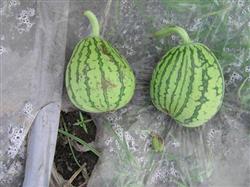
During the production process, watermelons are often affected by unfavorable factors, which can lead to difficulty in setting fruit and a large number of deformed fruits, reducing yield and marketability and directly affecting growers' income. The reasons for difficulty in setting fruit and a large number of deformed fruits in watermelons are as follows:
Abnormal weather conditions. During the flowering and fruit-setting period of watermelons, adverse weather conditions such as high temperatures, low temperatures, continuous rain, and drought can all cause abnormal growth of watermelon plants, resulting in weakened plant growth, incomplete development of watermelon ovaries, or small and thin ovaries. In particular, continuous rainy weather can prevent normal pollination and fertilization in watermelons, causing a serious imbalance between vegetative growth and reproductive growth, excessive vine growth, excessive vegetative growth, and the shedding of a large number of young fruits, leading to the serious consequences of difficulty in setting fruit, late fruit setting, and a large number of deformed fruits in watermelons.
Improper fertilizer and water management, with excessive nitrogen fertilizer application. If fertilizer and water management are improper during the watermelon growing period, plant nutrition can become imbalanced, stems and leaves can grow excessively, and flower drop or fruit shedding can occur. In particular, when nitrogen fertilizer is applied in excessive amounts and phosphorus and potassium fertilizers are insufficient, plants are very likely to grow excessively and the fruit-setting rate is reduced.
Poor pollination of female flowers during the watermelon flowering and pollination period. During the watermelon flowering period, if the temperature is relatively low, it is not conducive to insect activity, affects insect pollination, and also reduces the fruit-setting rate. Such watermelon fields should be given artificial supplemental pollination. If female flowers are pollinated unevenly, it will cause problems such as a low fruit-setting rate and deformed fruits.
Insufficient understanding of variety characteristics and failure to achieve good varieties with good methods. There is insufficient understanding of the characteristics of watermelon varieties, and cultivation management has not been carried out according to the characteristics of the varieties. In particular, for large-fruited watermelons, measures such as controlling fertilizer and water during the flowering and fruit-setting period and supplemental artificial pollination are not implemented adequately, and this is unrelated to watermelon seed quality.