What are the key points for growing kiwifruit? Master the key techniques in one article
Rich in a variety of vitamins and nutrients, it is known as the "king of fruits" and has high economic and cultivation value. It is suitable for planting in places with a mild climate, abundant rainfall, fertile soil and lush vegetation, where the soil is deep, well-drained, moderately moist black humus soil or sandy loam, with a pH value of 5.5-7 slightly acidic soil...
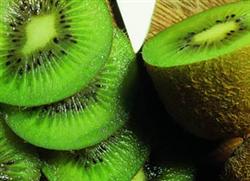
Rich in a variety of vitamins and nutrients, it is known as the "king of fruits" and has high economic and cultivation value. It is suitable for planting in places with a mild climate, abundant rainfall, fertile soil and lush vegetation, where the soil is deep, well-drained, moderately moist black humus soil or sandy loam, with a pH value of 5.5-7 slightly acidic soil.
1. Choose suitable varieties
Mainly Hongyang (red-fleshed fruit), Hayward, Bruno, Qingcheng No. 1, Qinmei, Miliang No. 1, Chuanmi No. 2, Chuanmi No. 3, Chuanmi No. 4, etc.
2. Raising seedlings
1. Rootstock seedling cultivation. Collect fully mature fruit in early to mid-September to October. After the fruit ripens and softens, squeeze the fruit out together with the seeds, put them into a gauze bag and rub them so that the seeds separate from the flesh, then rinse repeatedly with clean water, spread the washed seeds indoors and dry them in the shade. Soak the seeds in warm water at 40-50°C for 2 hours, then soak them in cold water for a day and a night, then stratify them in sand for 50-60 days before sowing. During sand stratification, kiwifruit seeds are afraid of both dryness and moisture, so check and turn them frequently to prevent mold. The sowing time is generally ideal from mid-March to early April. First, choose a nursery site with deep, fertile soil and good irrigation, drainage and transport conditions; second, prepare the land and make beds, apply enough base fertilizer, remove debris, make the beds about 1 m wide, press the seedbed down slightly, water thoroughly, and sow the sand-stratified seeds together with the sand. After sowing, spread a layer of fine river sand about 2-3 mm thick, cover with rice straw, spray water on the straw or build a small plastic (11280, -35.00, -0.31%) tunnel. Third, strengthen seedbed management to ensure the cultivation of robust rootstock seedlings.
2. Grafted seedling cultivation. The grafting period is best about 20 days before bud break, mainly using methods such as single-bud cut grafting. Select scions that are plump and have a small pith, and cut a shoot segment with one bud, 3-4 cm long. Choose a flat side and peel off the bark layer, with the cut surface preferably 2-3 cm long and deep enough to expose the xylem or slightly include the xylem, and cut a short slanted cut surface of about 50 degrees on the opposite side of the cut surface. Cut the rootstock at 10-15 cm above the ground, choose a smooth side and cut downward with one cut, with the cut surface slightly longer than the scion cut surface and the same depth as the scion, peeling away 2/3 of the rootstock bark; then insert the scion, requiring the scion to be basically the same size as the rootstock; make sure the cambium layers of rootstock and scion are aligned, then wrap with plastic grafting film, leaving the scion bud eye exposed. 3-4 weeks after grafting, the grafted bud begins to sprout, and after the new shoot grows and basically matures, the binding film can be removed. For spring and autumn side-grafted seedlings that have survived, cut the rootstock immediately, with the cut about 4 cm from the graft union. After the summer grafted bud survives, the rootstock can first be bent and then cut. Timely removal of sprouts on the rootstock is the key to survival and shoot growth. The nursery land should be frequently cultivated and weeded, and care should be taken not to touch the newly emerged grafted buds when weeding. After the grafted bud sprouts and grows, a support should be set up beside the grafted bud, and the new shoot should be tied and protected on the support. When the seedling is 60 cm tall, it should be appropriately pinched. Combined with irrigation, human excrement and urine, pig manure, etc. can be applied, or 1% urea can be added to the water and applied; when fertilizing in July, an appropriate amount of superphosphate can be added to promote the aging of young seedling branches and plump bud eyes. From July to August, kiwifruit seedlings should be shaded and avoid direct strong light.