How to apply plant growth regulators on bananas
The primary sources of initial infection for this disease are mainly diseased plants and suckers, as well as susceptible intermediate hosts (such as tomato, pepper, eggplant, tobacco, cowpea and certain weeds). Long-distance spread occurs mainly through virus-carrying suckers, while natural spread in the field is mainly through the cotton aphid and the corn aphid. In addition, this disease can also be transmitted through sap rubbing. Because...
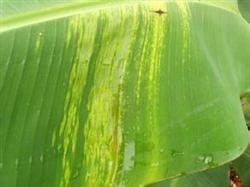 The growth, development, flowering and fruiting of bananas are affected by nutrients and endogenous hormones within the plant as well as external environmental conditions (climate, soil, management level). During the growth and development process, they are often constrained by one aspect or another, which affects the yield and quality of banana fruit. The vigor of the plant and the size of the pseudostem can generally serve as a basis for measuring plant yield; the thicker and taller the plant, the higher the yield. However, it is sometimes seen that some plants, though their stems are not large, produce fruit bunches that grow larger than those of plants with thicker stems. This phenomenon is related to differences in endogenous hormone status among banana plants. Although some plants are vigorous in vegetative growth, the production and accumulation of endogenous hormones that affect reproductive growth are blocked, resulting in an imbalance between vegetative and reproductive growth, which causes the phenomenon of a tall, large pseudostem and a small, slender fruit bunch. According to reports, the period of most rapid fruit development generally coincides with the highest auxin content. Parthenocarpy in bananas occurs because the ovary itself contains relatively large amounts of gibberellin, which promotes ovary enlargement and continued development. It can be seen that banana growth and development are not only constrained by their own nutrient supply and the external environment, but also by endogenous hormones. Tests and production practice have shown that bananas can likewise have their plant and fruit growth and development controlled through the use of synthetic plant growth regulators. According to foreign reports, for the Cavendish banana variety, spraying 0.01-0.4% ethephon, 0.05%-0.15% chlormequat (CCC), or 0.0025%-0.01% naphthaleneacetic acid (NAA) at 5 or 7 months after planting, compared with untreated controls, spraying 0.15% chlormequat reduced plant height the most, while using 0.01% ethephon increased plant height the most, and treatment with 0.01% naphthaleneacetic acid gave the highest yield, increasing yield by 6495 kg per hectare (17.9%); none of the treatments had a significant effect on fruit quality. In China, in 1976 Qin Jianqiu in Shunde used 50 g of 80% naphthaleneacetic acid plus 500 g of urea added to 50 kg of water, spraying 100 bunches of fruit; spraying banana fruit at more than 50% filledness gave notable results (spraying too early deformed the fingers and made the peel thick and uneven), and after spraying the fingers increased in length by 2.8 cm and increased in thickness (circumference) by 1.2 cm, with each bunch increasing yield by 1.4 kg, but the fruit growth period was delayed by 15 days. From 1976 to 1977 Cao Deqin of South China Agricultural College treated fruit at 30-40% filledness with 2,4-D; the 0.0001% 2,4-D group had the highest yield, followed by the 0.0005% group, increasing yield by 74.1% and 57.7% respectively compared with the untreated control. In 1978 Ling Xinghan, at the Henan Horticultural Farm in Guangzhou, sprayed banana fruit at 60% filledness with 0.02% 920 plus 0.25% monopotassium phosphate, increasing yield by 15%. From 1987 to 1988, Xinglong Overseas Chinese Farm in Hainan Province used petroleum growth promoter 802 plus Nongyuanbao (fertilizer essence) before banana bunch emergence, mixing with water to make a 0.0011% solution, spraying the heart leaf and top leaves 1-2 times when the banana formed its "head," and after bunch emergence spraying once for each hand of flowers opened until the bunch was cut off; compared with the untreated control, each bunch increased yield by 3.1 kg and also increased sugar content. In recent years, banana growers in some banana areas of Zhongshan, Panyu and Dongguan in Guangdong have successfully applied 2,4-D spray to fruit, achieving good results in lengthening fruit fingers, improving banana fruit quality and increasing economic returns. The specific dosage is: 1/3 to 1/2 tablet of 50% 2,4-D tablet, diluted in 15000 g of water, with a small amount of Zhibaosu added and mixed evenly; or 0.1 g of 98% 2,4-D powder, dissolved in a little alcohol, then diluted with 14.8-21.8 kg of water, and then 20 mL of Zhibaosu added and mixed evenly. It is best to spray the fruit fingers 2-4 times from banana flower bud flowering until 10 days after the bunch is cut off. (The author believes: treatment during this period is most appropriate. According to observations, throughout the entire fruit development period, the stage from flowering to 10 days after bunch cutting is the stage when fruit fingers elongate fastest.) The spray droplets should be fine, spraying only until the fruit does not drip.
When using plant growth regulators, the following points should be noted:
① First determine the concentration to be used, then find out how much pure active ingredient the product contains, and then carry out the corresponding dilution and preparation. For the effective and safe concentration of each agent, small-area trials must be conducted in advance, and only after gaining experience should it be extended and applied. For growth promoters sold on the market or other people's experience in using them, they should also be tested first and used afterward. Only in this way can safety be ensured and the goals of increasing yield, improving quality and increasing income be achieved. It is commonly seen that some banana growers spray the whole fruit before they have mastered the methods for using these agents, causing losses from phytotoxicity; in severe cases the fruit fingers turn yellow and wilt, and in mild cases the fruit hands are misshapen and the fruit deformed. This is very inappropriate.
② Master the optimal timing for spraying, which requires first no phytotoxicity and second an effect of increasing yield and improving fruit quality.
③ Choose good external conditions. Generally, growth regulators take effect only at relatively high temperatures, so the low temperatures of winter should be avoided; it is best to do the spraying when the temperature is above 20°C, choosing a sunny day after 3 p.m.
Finally, it should also be recognized that to achieve high yield, high quality and high benefits in bananas, the main reliance is still on varieties, an adequate supply of fertilizer and water, and a good level of management; the use of growth promoters is only an auxiliary technical measure.