Want loquats to fruit early and yield heavily? Fertilization technique is the key
Fertilizing young trees. Young loquat trees should be fertilized 5-6 times a year. In the first year just after planting, it is best to apply fertilizer once a month. Use fairly dilute human manure urine or organic fertilizer mixed with inorganic fertilizer, applying 1-1.5 kg per tree at 25-30 cm around the tree. From the second year on, apply a shoot-promoting fertilizer once before each new flush sprouts, and 15-20 days later, after the tender shoots have unfolded...
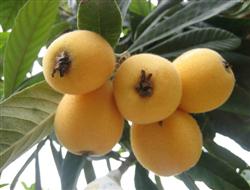
Fertilizing young trees. Young loquat trees should be fertilized 5-6 times a year. In the first year just after planting, it is best to apply fertilizer once a month. Use fairly dilute human manure urine or organic fertilizer mixed with inorganic fertilizer, applying 1-1.5 kg per tree at 25-30 cm around the tree. From the second year on, apply a shoot-promoting fertilizer once before each new flush sprouts, and 15-20 days later, after the tender shoots have unfolded leaves, apply a shoot-strengthening fertilizer again. This application should be light, preferably rotted human and animal manure urine water plus an appropriate amount of quick-acting nitrogen fertilizer; generally apply 15 kg of rotted, diluted human and animal manure urine, or 150 g of compound fertilizer.
Fruit-picking fertilizer. This fertilization is the most important one in the loquat's annual growth. It is generally applied after fruit harvest, with quick-acting fertilizer as the main type, and combined with deep plowing, more fully rotted organic fertilizer can be applied. The nitrogen:phosphorus:potassium ratio is 3:2:2, and the application amount accounts for about 50%-60% of the annual fertilizer amount. Taking a tree yielding 35 kg as an example, apply 50-70 kg of organic fertilizer per tree, 0.5 kg of urea, 2 kg of phosphate fertilizer or 0.75 kg of compound fertilizer, and 10 kg of chicken manure.
Flower-promoting fertilizer. This fertilizer is applied in September-October, when the loquat's flower bud differentiation has basically ended and before the flower clusters begin to show grains. The fertilizer is mainly organic fertilizer, with a nitrogen:phosphorus:potassium ratio of 5:4:5, and the application amount accounts for 20%-30% of the annual total; apply 40-50 kg of human and animal manure per tree, or 1.5 kg of organic biological fertilizer, or 10 kg of chicken manure.
Fruit-strengthening fertilizer. This fertilizer is crucial, as it relates to the quality and size of the fruit, and is applied in February-March after fruit thinning. This fertilizer first promotes the growth of spring shoots and roots, strengthening the tree vigor, and second promotes the rapid expansion of young fruit, reduces fruit drop, and promotes and fills out the spring shoots. The nitrogen:phosphorus:potassium ratio of this fertilizer is 3:4:3, with phosphorus applied according to the amount of fruit set. This fertilizer should account for 10%-30% of the annual fertilizer amount; apply 30-50 kg of dilute manure urine per tree, plus 0.3-0.6 kg of compound fertilizer, or 1 kg of biological organic fertilizer. The application depth in this period should be shallow to avoid damaging the roots.
Foliar topdressing. For fruit trees bearing many fruits, nutrients should be supplemented in time through foliar topdressing, spraying foliar fertilizer 2-3 times during the period of rapid fruit expansion. You can spray 0.3% urea plus 0.3% potassium dihydrogen phosphate plus BPOG plant growth agent (a plant growth promoter that improves sugar content and quality, with effects of ripening, freshness preservation, and fruit retention), with an interval of 10 days. Loquat is a potassium-loving crop and should be given more potassium fertilizer, but attention should also be paid to the rational combined use of various nutrient elements to prevent partial or excessive application of any one fertilizer. More potassium means greater sugar content and sweetness, but the fruit becomes coarse and hard; more nitrogen means larger fruit, but the internal quality of the fruit decreases and the taste is poor, so rational fertilization is advocated.