Detailed Explanation of Grafting Methods and Tips for Bayberry (Yangmei) Saplings
Bayberry saplings are generally grafted by the branch grafting method, mainly cleft grafting. For the scion, select a vigorous, high-yielding tree in full fruiting stage, and cut 1-2 year old branches from the outer middle-upper part of the canopy. For the rootstock, use wild seedling stock or seedlings grown from seed collected from self-sown trees, cultivated for 2-3 years. Bayberry grafting is carried out before bud break in spring, and early...
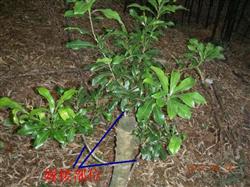
Bayberry saplings are generally grafted by the branch grafting method, mainly cleft grafting. For the scion, select a vigorous, high-yielding tree in full fruiting stage, and cut 1-2 year old branches from the outer middle-upper part of the canopy. For the rootstock, use wild seedling stock or seedlings grown from seed collected from self-sown trees, cultivated for 2-3 years.
Bayberry grafting is carried out before bud break in spring, and earlier grafting is more favorable; if too late, the wound flow affects the survival of the graft union, so it is generally done from early February to late March. Each scion is 6-7 cm long, and after grafting it is wrapped with plastic film, preferably covered with soil to retain moisture.
The sap flow of bayberry is vigorous, which affects the grafting survival rate, especially when grafting onto large rootstocks, where the effect is greater. In order to suppress tree vigor and reduce the rise of sap from the roots, the following methods can be used for treatment.
1. Grafting in place, cutting the root system. This is commonly used for 2-3 year old rootstocks. After grafting, deep cuts are made on both sides of the rootstock planting bed to cut part of the main and lateral roots.
2. Grafting after relocation. Before grafting, dig up the rootstock, prune part of the main and lateral branches, replant it in another location, and then graft.
3. Indoor grafting. Dig up the rootstock and carry out grafting indoors; this is used for 2-3 year old rootstocks, or large 3-4 year old rootstocks dug from the wild. After grafting, heal them in or plant them directly at the final planting site.
4. Grafting with retained branches. First plant the rootstock, then graft in place; this is used more often for large rootstocks. That is, graft on the main branch and leave another branch as a "water-pulling branch" to attract water flow toward that branch, slow the growth vigor of the grafted part, and thereby increase the grafting survival rate.