Detailed Guide to the Prevention and Control of Major Pests of Lychee and Longan
I. Pests More than 50 species of pests have been found on lychee and longan, among which the most common and serious ones are the lychee stink bug, the lychee fruit borer, the lychee tip moth, the longan Heliothrips moth, and the longan angular leaf psyllid, 5 species in total. The first 4 of these attack both lychee and longan, while the angular leaf psyllid attacks only longan. In our province, the lychee stink bug and the lychee fruit borer cause the most serious damage to lychee and longan.
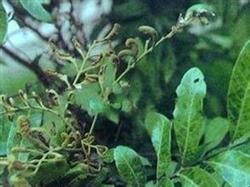
I. Pests
More than 50 species of pests have been found on lychee and longan, among which the most common and serious ones are the lychee stink bug, the lychee fruit borer, the lychee tip moth, the longan Heliothrips moth, and the longan angular leaf psyllid, 5 species in total. The first 4 of these attack both lychee and longan, while the angular leaf psyllid attacks only longan. In our province, the lychee stink bug and the lychee fruit borer cause the most serious damage to lychee and longan.
II. Control Methods
1. Integrated control of the main longan pests: A longan orchard is generally sprayed 4 times a year. The first is after spring pruning, in early March, when the spring shoots have grown 5-8 cm, spraying 80% trichlorfon at 800 times dilution plus 25% dimehypo at 500 times dilution to control the lychee stink bug and psyllids, and depending on the occurrence of the tip moth and the Heliothrips moth, adding 10% high-efficiency miebaike at 3000 times dilution if necessary. The second is in early to mid-May at the initial flowering stage, when 10% high-efficiency miebaike at 3000 times dilution or 80% trichlorfon at 500 times dilution can be used to control adult and nymph lychee stink bugs. The third is from late June to early July, after flowering, when the summer shoots have grown 8-10 cm, when 10% high-efficiency miebaike at 2000-3000 times dilution can be used to control the tip moth, the fruit borer and the Heliothrips moth, and also to control psyllids and the lychee stink bug.
2. Integrated control of the main lychee pests: Generally 4-5 sprayings are applied throughout the year. The first is at the spring shoot and flower bud stage, focusing on controlling the lychee stink bug, which can be sprayed in mid-March with 10% high-efficiency miebaike at 3000 times dilution. The second is at the young fruit stage, focusing on controlling the fruit borer and also controlling the lychee stink bug, generally 10 days after lychee flowering, using high-efficiency miebaike at 3000 times dilution or 25% dimehypo at 500 times dilution. The third is during the fruit development stage, focusing on controlling the fruit borer; apply once each during the rapid fruit expansion stage, when the fruit begins to change color, and 20 days before harvest, with 10% high-efficiency miebaike at 2000-3000 times dilution giving the best control effect and also killing eggs; dimehypo combined with dichlorvos can also be used. The fourth is at the autumn shoot leaf expansion stage, mainly to control leaf-eating pests such as the fruit borer, the tip moth, leaf rollers and eriophyid mites; 10% high-efficiency miebaike at 3000 times dilution, or isocarbophos, dichlorvos, etc. can be chosen, sprayed when the autumn shoots have just sprouted.
In many places, because growing seasons are not consistent, it is relatively difficult for farmers to grasp the exact timing for timely spraying. Therefore, it is recommended that during the young fruit stage and the fruit development stage, while using 10% high-efficiency miebaike, add 5% cascade at 1500-2000 times dilution, which can significantly enhance the egg-killing effect, extend the control period, and at the same time have an excellent effect in controlling felt disease.