How to protect longan from the cold in winter? These management points you need to master
1. Cultivate robust autumn shoots. Autumn shoots are the fruiting mother branches of longan for the coming year and are also one of the main branches for longan to overwinter. Whether the autumn shoots are robust affects their ability to withstand cold during overwintering. Therefore, the last autumn shoots of longan are generally controlled to emerge in mid to late October. Before the shoots emerge, it is best to apply a light application of nitrogen fertilizer and water, so that the shoots emerge uniformly, and strive to...
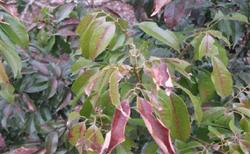
1. Cultivate robust autumn shoots. Autumn shoots are the fruiting mother branches of longan for the coming year and are also one of the main branches for longan to overwinter. Whether the autumn shoots are robust affects their ability to withstand cold during overwintering. Therefore, the last autumn shoots of longan are generally controlled to emerge in mid to late October. Before the shoots emerge, it is best to apply a light application of nitrogen fertilizer and water, so that the shoots emerge uniformly, and strive to have all autumn shoots mature by early to mid December. Robust autumn shoots can enhance the accumulation of nutrients in the tree, thereby effectively resisting cold waves.
2. Do a good job of winter orchard cleaning and trunk whitewashing. (1) Remove dead branches and diseased leaves: after the autumn shoots mature, spray with lime sulfur mixture at 0.9-1.2 degrees Baume to control overwintering pests and diseases. (2) Trunk whitewashing: use 10 kg of quicklime and 1 kg of sulfur powder, add 30-40 kg of water, stir evenly, and mix into a paste. Whitewash the main trunk and primary and secondary branches, which can effectively reduce freezing damage.
3. Mound soil around the tree base. Combined with deep digging during winter orchard cleaning, within a 100 cm diameter around the tree base, apply pond mud, turf, and so on for mounding, reaching a height of 10 cm above the graft union on the trunk, which can effectively protect the graft union.
4. Straw mulching and binding. (1) In winter, within a 120 cm diameter around the tree base, cover with straw, sorghum stalks, rapeseed stalks, and so on at a thickness of 10-15 cm, or cover with plastic film, which can increase soil temperature. (2) Bind the trunk and primary and secondary branches with straw, which can provide warmth preservation for the tree body.
5. Irrigate the orchard. Before the temperature drops, channel water into the orchard and irrigate the whole orchard, then drain immediately after irrigation. If there are no irrigation conditions, carry water to pour around the tree base. For adult trees, pour 100-120 kg of water per tree, which can replenish tree moisture, increase soil and air humidity, raise soil temperature, and reduce freezing damage.
6. Smoke the orchard. Before the cold wave arrives, prepare flammable smoke materials such as rice husks, sawdust, and turf in the orchard, placing 1 pile every 10 m and mixing in a small amount of waste diesel oil to increase the heat of the smoke. After 22:00 on the night when the cold wave arrives, ignite the smoke materials, using smoke to raise temperature and preserve warmth against frost.
7. Spray water to prevent freezing. If wet freezing occurs, quickly organize manpower to shake off ice blocks from the trees and spray water to thaw them.