Management methods for lychee and longan during continuous rainfall
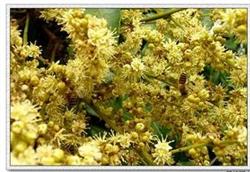
When longan blooms during continuous overcast and rainy weather, the anthers do not split open, pollination and fertilization are difficult, and the flowers pile up, causing flower soaking and rot, resulting in no fruit or poor fruit set. Yuhualing Technology hereby reminds fruit growers to pay attention to preventing flower soaking. 1. Do a good job of flower thinning. For those with short flower panicles, many lateral flower panicles and dense flower buds, thinning is needed before flowering...
 Lychee
With continuous rain, the main tasks in lychee management are: seize the time to harvest, protect the fruit, prevent summer shoot growth, and control pests and diseases.
1. The early-ripening Sanyuehong has already had its early-flower fruit harvested, while the late-flower fruit is not yet ripe. ① Seize the time to fertilize; there has been more rain this year, and fertilizing helps new shoots emerge. Prune 7-10 days after fertilizing (when the buds begin to swell). To promote new shoot growth, mainly use nitrogen fertilizer. ② If the fruit is not yet ripe, a small amount of fertilizer can also be applied, but for trees where summer shoots come on strongly, pay attention to fruit protection, appropriately control summer shoots, and prevent fruit drop during harvest. ③ To improve the quality of Sanyuehong and increase the soluble solids content, spray polynucleotide several more times. ④ Pay attention to the occurrence of stem borers, downy blight, anthracnose and felt disease.
2. Mid-season varieties such as Shuidong, Heiye and Feizixiao are in the young fruit growth stage. ① Apply fruit-strengthening fertilizer as needed. This year, Heiye and Shuidong with fruit have set fruit very well, and early-flowering Feizixiao is also good, so fertilizer should be applied appropriately. When fertilizing, given the characteristics of more rain this year and relatively wet soil, try to mix the fertilizer with the soil, and the amount applied must not be too much, so as to avoid root damage; mainly use compound fertilizer or decomposed organic fertilizer. ② Do a good job of drainage, especially when color change begins, to prevent fruit cracking. ③ When spraying after rain, add polynucleotide.
3. Late-maturing varieties such as Guiwei, Nuomici and Huaizhi have relatively large young fruit from early flowers; Guiwei in particular is almost as large as Shuidong and Heiye fruit, but fruit from late flowers is only the size of a soybean (4556,6.00,0.13%). ① In some orchards, early flowers set more fruit, late flowers set less, and late-set young fruit turns yellow and drops at the slightest touch. This is because weak young fruit cannot compete for nutrients with early-flower fruit, and insufficient nutrient supply causes fruit drop; the seeds of these fruit also become necrotic, making them even more likely to drop. For trees with many fruit, a small amount of fruit should be removed, and fruit-protection sprays may not be needed; but trees with few fruit may be affected by summer shoot swelling or emergence, so summer shoot emergence should be prevented or summer shoot growth controlled. When the terminal bud softens and turns green, you can girdle fruiting branches, or spray Huaguoling on branches without fruit; for branches that have fruit and also put out summer shoots, spray a dilute concentration of Huaguoling (add 80-100 jin of water per packet). For young trees where shoots can be removed by hand, remove the top of the summer shoot and keep 2-3 new leaves. For trees with many fruit, when a small number of summer shoots emerge, no treatment may be needed, especially for Guiwei and Huaizhi. ② For trees with many fruit, apply fruit-strengthening fertilizer, mainly compound fertilizer, applied shallowly. To prevent later fruit cracking, orchards with good fruit-protection work should appropriately thin fruit, prohibit spraying growth regulator drugs such as 920 and cytokinin, and may increase spraying of calcium-containing foliar fertilizer such as Greenfinwei No. 3. ③ Nuomici trees that flowered in April are in the second and third fruit-drop peaks, and fruit can be protected by girdling and spraying Guodebao, and before summer shoots emerge, spray Huaguoling to control shoots. Once Nuomici summer shoots begin to swell, fruit will drop; many fruit growers do not pay attention and easily overlook the harmfulness of summer shoots. ④ According to surveys, some of the dropped fruit of late-flowering Guiwei and Nuomici were damaged by stem borers, so spraying should be done promptly on sunny days.
Longan
With continuous rain, the main tasks in longan management are fruit protection and pest control.
1. Due to summer shoot emergence and also not much fruit set, some orchards have severe fruit drop. ① Before summer shoots sprout or just as they emerge, spray Huaguoling to control shoots. For orchards with strong tree vigor and prior experience in girdling to protect flowers and fruit, girdling can be used to control shoots and protect fruit, or spray Huaguoling + Guodebao (ratio 1:3 packets, then add 120 jin of water). ② After summer shoots emerge, for young trees where manual removal is possible, use manual topping and keep 2-3 leaves; bud wiping only accelerates new shoot emergence. For mature large trees where manual removal is inconvenient, spray Huaguoling: for areas without fruit, add 40 jin of water per packet; for areas with fruit, add 80-100 jin of water per packet. For trees with many fruit, summer shoots may not need treatment.
2. For trees without fruit, mainly use light pruning. ① For young trees, the goal is to increase the number of branches and expand the canopy; carry out renewal pruning of water sprouts, and thin out drooping branches and some inner canopy branches. When thinning inner canopy branches, be careful to protect the trunk from direct sunlight so as not to damage the tree. ② If inner canopy branches of mature large trees or old trees continuously put out new shoots, it indicates that the tree itself needs renewal. Some branches should be cut back as needed, or windows should be opened to let inner canopy branches receive light and grow strong before renewal pruning. For such trees, in addition to branch and shoot pruning, the root system also needs renewal. When fertilizing, intentionally cut 2-3 thick roots (over 2 cm in diameter), and heavily apply phosphorus fertilizer + organic fertilizer to improve the soil and promote new root growth. Use 2-3 years to renew and rejuvenate old trees.
This year has a leap fourth month, and the Dragon Boat water will appear in mid-to-late June, just as late-maturing lychee begins to ripen. Pay attention to the occurrence of diseases so as not to affect the harvest.
3. In addition, a reminder to all growers: according to the information we have collected so far, there are still no off-season longan varieties, so beware of counterfeits when buying seedlings.