Rainy weather makes litchi and longan flowers prone to soaking and rotting, growers need to take precautions
The main task at present is to prevent "flush shoots", improve the quality of flower panicles, watch for pests and diseases, and fertilize in time. The high temperature and high humidity weather in February has caused many litchi and longan orchards to produce "flush shoots", greatly affecting flower bud emergence and flower quality. The earlier low-temperature overcast and rainy weather helped the later development of flower buds and the prevention of "flush shoots"...
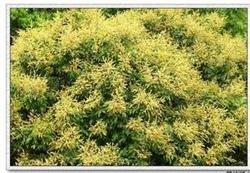
The main task at present is to prevent "flush shoots", improve the quality of flower panicles, watch for pests and diseases, and fertilize in time
The high temperature and high humidity weather in February has caused many litchi and longan orchards to produce "flush shoots", greatly affecting flower bud emergence and flower quality. The earlier low-temperature overcast and rainy weather helped the later development of flower buds and the prevention of "flush shoots"; but after the recent rain, rising temperatures are unfavorable for the growth of flower panicles of litchi, longan and other southern fruit trees. Generally speaking, during the flower bud emergence stage, as long as there is low-temperature weather and the plant is still growing, there is a possibility of flower panicles emerging. The main task at present is to prevent "flush shoots", improve the quality of flower panicles, watch for pests and diseases, and fertilize in time.
Early-maturing litchi:
Spray pesticides in time to protect fruit
Early-maturing litchi varieties such as Sanyuehong and Baitangying are in the flowering stage and young fruit growth stage. Watch for flower soaking and pest and disease outbreaks in rainy weather, and spray pesticides in time to protect the fruit.
Current management points: 1) Prevent flower soaking. Early-maturing litchi has larger flower panicles and many flower buds. If flowering meets rain, the spent flowers and nectar will form a good breeding ground for pathogens, which is unfavorable for the development of young fruit just after the female flowers fade. Therefore, after rain, shake the trees in time to shake off spent flowers and rainwater, so that the flower panicles can get ventilation and light, which is good for the growth of young fruit. 2) Spray pesticides to control pests and diseases. High temperature and high humidity weather easily induces diseases, especially in orchards planted in low-lying fields; some disease-preventing pesticides can be sprayed at the early flowering stage or when flowers fade. 3) Supplement nutrients to increase fruit set rate. Early-maturing litchi has large flower panicles and many flower buds, and flowering consumes a lot of nutrients, so when the female flowers have just faded, spray 1-2 times of agricultural nucleotides or Qingyise cytokinin to supplement nutrients and a small amount of hormones in time, which helps fruit set. 4) Spray pesticides to protect fruit. Spray Guodebao once 8-10 days after the female flowers fade. 5) Fertilize. Apply an appropriate amount of compound fertilizer or organic fertilizer according to the amount of flowers and fruit.
Mid-maturing litchi:
Fertilize to supplement nutrients
Mid-maturing litchi varieties such as Shuidong, Heiye and Feizixiao are in the stage of flower panicle emergence and early flowering. Watch for excessive flower panicle growth, do a good job of flower thinning, control pests and diseases, and fertilize to supplement nutrients.
Current management points: 1) Prevent excessive flower panicle growth, mainly for trees that have recently emerged flower panicles. Rain favors flower panicle growth. When the flower panicle grows to 5-8 cm, spray Kongshaoling once (each packet mixed with 30 kg of water) to control the growth rate of the flower panicle and reduce the amount of flowers. When the flower panicle exceeds 8 cm, spray a higher concentration of Kongshaoling (each packet mixed with 20 kg of water). 2) Thin flowers, mainly for the Feizixiao variety. Feizixiao flowers easily, but because the flower quantity is too large, "flowers but no fruit" often occurs, and fruit set rate must be improved through flower thinning. Generally speaking, keeping about 200 flowers per panicle of Feizixiao gives higher fruit set; when the first batch of young fruit begins to grow, thinning out the other flower buds that have not yet opened also gives very high fruit set. The former is still operable, while the latter is harder to operate, because thinning flowers is very difficult when flowers and fruit are mixed together. It is best to thin flowers when the flower panicle is fully extended or before flowering, which can reduce nutrient consumption and favor fruit set. 3) Supplement nutrients to improve fruit set. Male flowers consume too many nutrients when they open, affecting the growth of young fruit. When the female flowers have just faded, immediately spray 1-2 times of agricultural nucleotides or Qingyise cytokinin to supplement nutrients and hormones, which can improve fruit set. This is especially true in production areas with higher temperatures such as Hainan Island and western Guangdong, where because the temperature is high, male flowers open concentratedly and quickly, and nutrients are consumed even more. Therefore, supplementing nutrients immediately after the female flowers fade has a more obvious effect than spraying pesticides to protect fruit later. 4) Fertilize. Because of the earlier water shortage, soil fertilization was difficult; take advantage of the looser soil after rain and fertilize promptly, mainly with compound fertilizer and organic fertilizer, and add an appropriate amount of nitrogen fertilizer for weak trees. 5) Watch for pests and diseases and spray pesticides in time for control.
Late-maturing litchi:
Control flower panicle length
Late-maturing litchi varieties such as Nuomici, Guiwei and Huaizhi are in the flower bud emergence stage and flower panicle emergence stage. Watch for "flush shoots" and excessive flower panicle growth, and cultivate robust flower panicles. At present, growth states differ by shoot stage. Trees with early shoot control showed flower points in late January and began to emerge flower panicles in early February, with a small amount of "flush shoots"; autumn shoots that emerged in mid-to-late October last year recently began to show flower points and began to emerge flower panicles after the rain; later-emerged autumn shoots also showed flower points early, but turned into buds as the temperature rose.
Current management points: 1) Prevent "flush shoots". For flower panicles with leaves, if the leaves have stopped growing, no treatment is needed. Trees whose leaves are still growing should immediately be sprayed once with Kongshaoling (each packet mixed with 40 kg of water) to force the leaves to stop growing and concentrate nutrients on flower panicle emergence. Guiwei and Huaizhi may have flower panicles with leaves, and the leaves do not need to be removed; Nuomici will emerge flower panicles on new shoots, and the flower buds are weaker, so spray 1-2 times of agricultural nucleotides or Qingyise cytokinin appropriately to strengthen the flowers. 2) Spray pesticides to control flower panicle length and cultivate robust flower buds. Flower panicles emerged under high temperature have long internodes and weak flower buds, and fruit set is lower. When flower panicle emergence meets high temperature, spray Kongshaoling to control length. Research results show that Nuomici sets fruit ideally when the flower panicle is about 10 cm. When the flower panicle is about 5 cm, spray Kongshaoling once (each packet mixed with 30 kg of water) to shorten the flower panicle length. 3) Cultivate robust flower panicles, mainly for trees with late flower bud emergence. Spring temperatures rise quickly, and the later the flower buds emerge, the less guaranteed the flower quality. To improve the fruit set rate of late flowers, spray agricultural nucleotides or Qingyise cytokinin + 0.2% potassium dihydrogen phosphate during flower panicle growth. 4) Spray pesticides to prevent pests and diseases. As temperatures rise, together with rain, overwintering pests and diseases begin to become active. If orchard diseases are relatively serious, spray some disease-preventing pesticides at the flower bud emergence stage and early flowering stage. In orchards with many stink bugs, spray once with 90% trichlorfon 800-1000 times dilution. When felt disease appears, first cut off the diseased leaves and carry them outside the orchard to burn, then spray acaricides. When spraying, focus on the leaf backs and inner-canopy branches and leaves. 5) Fertilize. Well-managed orchards already fertilized in January; some orchards with insufficient management can fertilize at the flower bud emergence stage. Orchards with insufficient base fertilizer should add organic fertilizer in addition to compound fertilizer.
Longan:
Watch for and prevent flush shoots
Longan is in the flower bud emergence stage. Watch for and prevent "flush shoots", and fertilize to strengthen flower panicles. The low temperature and rain in January this year were very favorable for longan flower panicle emergence on Hainan Island; as long as the autumn shoots were timely, flower panicles have basically all emerged in time, and the flower panicles are growing normally. Only in some off-season orchards did "flush shoots" appear at flower bud emergence during the high temperature in January. In orchards near Guangzhou that began to emerge flower panicles in late January, although small leaves grew during the high temperature in February, they quickly turned green and flower panicles could still emerge. However, trees that showed flower points in early to mid-February all grew spring shoots under the influence of high temperature and began to turn green. If temperatures drop somewhat from late February to early March, longan can still emerge flower panicles on new shoots.
Current management points: 1) Prevent "flush shoots". In fact, whether longan produces "flush shoots" depends on atmospheric temperature. This is because when the temperature is above 15°C and the humidity is greater than 70%, leaves grow faster than flower panicles, and even if flower panicles can emerge, fruit set will be affected. There is currently no technology that can control air temperature; only some measures can be taken to control leaf growth. During flower bud differentiation, leaves differentiate at the same time, and are only affected by temperature during growth. Weak cold air will still move southward recently. In orchards where "flush shoots" appear, the urgent task is to force the leaves to stop growing and emerge flower panicles. In orchards that have already emerged new shoots, immediately spray Kongshaoling once (each packet mixed with 30 kg of water) to force the leaves to stop growing and strive for flower panicles to grow. If the leaves are stiff or have begun to turn green, no treatment is needed. 2) Fertilize. Pay attention to controlling nitrogen fertilizer application. Unless the tree vigor is weak, generally do not add nitrogen fertilizer, because nitrogen fertilizer promotes leaf growth. Fertilization should mainly use compound fertilizer and organic fertilizer. If the base fertilizer is sufficient, apply only an appropriate amount of compound fertilizer. 3) Prevent excessive flower panicle growth. Research results show that for longan flower panicle length, Shixia sets fruit ideally at about 25 cm. Therefore, when the flower panicle is about 10 cm, spray Kongshaoling to control flower panicle length, which favors fruit set. 4) Spray pesticides to control pests and diseases. In spring, longan psyllids damage new leaves, stink bugs damage flower panicles, and litchi eriophyid mites damage leaves and flower panicles; spray pesticides in time for control when pests appear. 5) Thin branches and clean the orchard. In shaded orchards, appropriate branch thinning can be carried out at the flower bud emergence stage, mainly removing shaded branches, drooping branches, weak branches and branches damaged by pests and diseases, and clearing orchard weeds to reduce pest and disease occurrence.