Key Management Techniques for Lychee in August and September
All post-harvest management work on lychee is carried out around the goal of cultivating robust autumn shoots. As the bearing mother branches for the coming year, the shoot timing and thickness (level of nutrient accumulation) of lychee autumn shoots will directly affect shoot control for flower promotion and flower formation. From production surveys, lychee trees in our city have generally already pushed out...
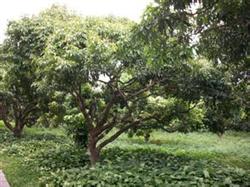
All post-harvest management work on lychee is carried out around the goal of cultivating robust autumn shoots. As the bearing mother branches for the coming year, the shoot timing and thickness (level of nutrient accumulation) of lychee autumn shoots will directly affect shoot control for flower promotion and flower formation.
From production surveys, lychee trees in our city have generally already pushed out the first post-harvest flush; the earlier ones are close to maturing, most have turned green or are about to turn green, and very few have just budded or not yet budded. In recent years, many fruit growers have not paid enough attention to post-harvest management, applying little fertilizer or favouring nitrogen fertilizer, with short fertilizer effectiveness and rough pruning, resulting in excessive new shoot growth and weak shoot quality. Continuous rainfall in June delayed the recovery of the root system, which was not active enough, affecting the absorption and transport of nutrients. In addition, the excessively high temperatures in July caused excessive respiratory consumption of the tree body, making nutrient accumulation difficult. Surveys found that the green-turned leaves were rather thin, which will increase the difficulty of shoot control for flower promotion to a certain extent.
Therefore, the main task at the present stage
is, on the basis of continuing to focus on pruning work, to pay attention to disease and pest control, manage by category according to tree age and tree vigour, reasonably regulate fertilizer and water, and consciously adjust the timing of the final flush.
I. Continue to focus on pruning work.
Pruning work is the key point of the entire post-harvest management period, and up to shoot control for flower promotion, it should be carried out persistently, with the aim of forming a moderate and reasonable tree shape and canopy and cultivating robust bearing mother branches.
(1) The first round of post-harvest pruning, if not yet completed, should be carried out promptly. For pruning methods, refer to "Fruit Science and Technology" 2005 issues 6 and 7.
(2) On the basis of completing the first round of post-harvest pruning, for the currently pushed new shoots, pruning should mainly be thinning, removing excessively dense branches, shaded branches, dead branches, diseased and pest-infested branches, excessively weak upright branches, etc. For vigorous trees, shaded branches may be appropriately retained to restrain excessive apical dominance; for excessively weak trees, shaded branches may also be pruned slightly later. Make the orchard as ventilated and light-transmitting as possible to improve photosynthetic efficiency.
Earnestly carry out the thinning and bud removal of new shoots. In principle, only 2 new shoots should be retained on each basal branch, and the rest removed; for a few relatively strong trees, up to 3 may be retained to control excessive growth. For vigorous trees, select and retain lower buds, and appropriately top and shorten. For excessively strong trees, select and retain weak branches and weak buds, remove upright vigorous branches, retain slanting and flat branches, and appropriately retain more branches at the top. For moderate trees, also select and retain lower buds. For weak trees and weak branches, retain upper buds and strong branches, and appropriately retain some upright branches.
II. Strengthen fertilizer and water management.
(1) For trees with poor vigour and short, weak new shoots, quickly drench with decomposed manure water, supplemented with a small amount of nitrogen fertilizer, to promote leaf colour turning green and new shoot elongation, and prevent old leaves from falling. Appropriately combine with weeding and shallow loosening of the soil to stimulate new root growth and improve the ability to absorb nutrients. In addition, certain amounts of foliar fertilizers such as calcium field benefit, biological chicken soup, and rare earth amino acids may be sprayed on the leaves.
(2) For vigorous trees, attention should be paid to controlling fertilizer and water to prevent excessive shoot growth. If three flushes are planned, a small amount of potassium fertilizer and compound fertilizer should be supplemented after the first flush matures.
(3) For moderate trees, a small amount of potassium fertilizer may be supplemented, and a small amount of monopotassium phosphate sprayed, to increase branch thickness. If three flushes are planned to be retained, after the second flush is pushed out, increase the supply of fertilizer and water to ensure the third flush is pushed out on schedule and early.
III. Continue to focus on thinning work in densely planted orchards to promote optimal resource allocation.
IV. Consciously regulate shoot timing.
For most orchards, in bumper harvest years, the post-harvest goal should be to retain two flushes, which is beneficial for tree recovery and accumulation. For those pushing shoots earlier, after the first flush matures, deep ploughing to improve the soil and removal of weeds can delay the budding time of the second autumn flush. Alternatively, after the first flush matures, try spraying low-concentration growth retardants such as chlormequat, which not only helps delay shoot pushing but also increases branch thickness and leaf thickness.
For those planning to retain 3 flushes, after the first flush matures, remove weeds within the tree pan and appropriately loosen the soil shallowly, but weeds outside the tree pan should be retained as much as possible to avoid the surrounding environment becoming too dry. Increase the supply of fertilizer and water, and it is best to carry out foliar topdressing at each flush to improve shoot quality. Alternatively, when the second and third flushes have just turned green, try using high-concentration vitality or low-concentration chlormequat, etc., to promote new shoots to mature as quickly as possible, shorten internodes, and thicken branches.
For young trees just planned for production, it is not advisable to blindly pursue the number of new flushes, and the excessive expansion of the canopy should be controlled. Recently, phosphorus and potassium fertilizers should be increased, with appropriate pruning, to weaken growth vigour, increase nutrient accumulation, and regulate shoot timing, which is beneficial for flower formation next year.
V. Control diseases and pests, and protect new shoots.
During the lychee autumn shoot period, pests are mainly leaf-eating pests such as geometrid moths and tussock moths. On weak trees and in shaded orchards, red spiders, eriophyid mites, gall midges, and tea shot-hole borers also occur more frequently. Pesticides such as Biqiaoling, Chongwushe, Danong Guochongsha, Lichong Kexing, Lichongqing, trichlorfon, and isocarbophos may be selected for spraying. Try to avoid single and continuous use of pyrethroid pesticides to avoid producing resistance.