Detailed Explanation of Key Techniques for Flower and Fruit Retention in Lychee
Question: Right now, it is the season for lychee flowering, pollination, and fruit set. Many farmers report that because the weather has been cold this year, retaining flowers and fruit is very difficult. In Damao Town, Wanning City, nearly 300 mu of lychee have prominent fruit retention problems, and more than 200 mu of lychee are overage and not bearing fruit. The fruit growers are so anxious they cannot eat or sleep, and hope that lychee experts in our province can provide technical...
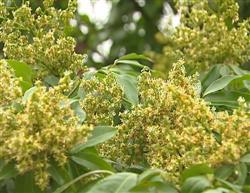
Question: Right now, it is the season for lychee flowering, pollination, and fruit set. Many farmers report that because the weather has been cold this year, retaining flowers and fruit is very difficult. In Damao Town, Wanning City, nearly 300 mu of lychee have prominent fruit retention problems, and more than 200 mu of lychee are overage and not bearing fruit. The fruit growers are so anxious they cannot eat or sleep, and hope that lychee experts in our province can provide technical guidance.
Expert advice (Chen Yeguang, lychee expert at the Fruit Tree Research Institute of the Provincial Academy of Agricultural Sciences):
1. Manage fertilizer and water well. The flowering period of lychee varies slightly in timing depending on variety, climate, and other factors. Therefore, it is important to fertilize lychee promptly during the flowering period. The standard is that for each tree carrying 50 kg of fruit, apply as a root-zone topdressing 0.5 kg of urea, 0.5 kg of potassium chloride, 1 kg of cake fertilizer, and 1-2 loads of farmyard manure, which can effectively retain flowers and fruit. In addition, foliar spraying of fertilizer can also be used to increase the pollination and fertilization rate and reduce flower and fruit drop. Note that from flowering to fruit set, lychee requires the soil to remain evenly moist. Avoid both excessive dryness and excessive wetness. During the rainy season, drain water promptly; during dry weather, irrigate (water) appropriately.
2. Place bees or use artificial supplementary pollination during the flowering period. The recommended number of bee colonies is 1-2 per mu. For lychee without bee pollination, artificial pollination can be used. That is, when the male flowers of lychee are in full bloom, gently shake the flower panicles and collect the fallen pollen, mix it into a solution of 10% sucrose plus 0.01% boric acid, and spray it onto the female lychee flowers, which can improve the pollination effect. If rainy weather occurs during the lychee flowering period, be sure to shake off the rainwater accumulated on the flower panicles to prevent the flowers from rotting and reduce the pollination and fruit-setting rate.
3. Spray plant growth regulators. Spraying 20 ppm gibberellin before flowering can promote flowering; spraying 3 ppm 2,4-D or 5 ppm indolebutyric acid at full bloom can increase the fruit-setting rate; after young fruit has formed, spraying a mixture of 3-5 ppm 2,4-D plus 30 ppm gibberellic acid plus 0.3% urea and 0.2% monopotassium phosphate can promote young fruit development and increase yield.
4. Timely prevention and control of pests and diseases. The main pests and diseases during the lychee flowering and fruiting period include downy blight, stink bugs, eriophyid mites, Perina nuda, scarab beetles, and stem-boring insects. Apply pesticides promptly for control.
For the 300 mu of lychee in Damao Town, Chen Yeguang and two other tropical fruit tree experts from the Provincial Academy of Agricultural Sciences went to the site to study and diagnose the situation, and also put forward several targeted suggestions for the more than 200 mu of lychee: first, select high-yielding mother trees on site as bud-grafting mother stock to overcome the technical difficulties caused by long-distance transport of budwood; second, replace the branches and trunks after March; third, perform bud grafting again in June-July; fourth, select good bud-grafting workers. Strictly select mother trees, strictly select budwood, strictly select bud-grafting rootstock, and strictly follow technical operations.