Increasing lychee yields requires management tailored to local conditions
"Due to limited land and water resources, lychee cultivation must transform its current production methods." Li Li from the Economic Crops Division of the National Agricultural Technology Extension Center of the Ministry of Agriculture pointed out that improving per-unit yield and quality through scientific fertilization and pesticide use, and supporting farmers' cooperatives and leading enterprises, can promote the healthy development of the lychee industry. How to...
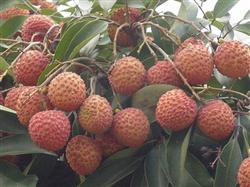
"Due to limited land and water resources, lychee cultivation must transform its current production methods." Li Li from the Economic Crops Division of the National Agricultural Technology Extension Center of the Ministry of Agriculture pointed out that improving per-unit yield and quality through scientific fertilization and pesticide use, and supporting farmers' cooperatives and leading enterprises, can promote the healthy development of the lychee industry.
What is the scientific way to fertilize lychee? Dr. Yao Lixian from the Guangdong Institute of Soil and Fertilizer introduced that through long-term research on lychee specimens from over a hundred trial sites in Guangdong, Guangxi and Fujian, it was concluded that "lychee trees in the Guangdong region are generally deficient in magnesium and calcium, and some orchards also show varying degrees of boron deficiency." He stated that this conclusion overturns the previous claim that "lychee is generally extremely deficient in boron," and advised fruit farmers not to apply the same management measures to different orchards.
In addition to rational fertilization, the attending fruit farmers were also concerned about how to obtain higher per-tree yields. Two South African scientists invited to the conference demonstrated the tricks of South Africa, a "lychee powerhouse": first, Dr. Gerhard Mostert explained all the needs of the tree from four aspects: water, nutrition, light and organic matter; then Dr. Regina Cronje shared the excellent method of "expanding row spacing and dwarfing the canopy" to increase per-tree yield.
Liu Fuqiao, senior agronomist at the Maoming Fruit Bureau, said that the drawback of traditional lychee cultivation in China lies in excessive density, which prevents effective nutrient supply to the tree, resulting in per-tree yields that have never been able to increase. Chen Houbin, chief scientist of the National Lychee and Longan Industry Technology System, believes that the two methods introduced by the South African scientists can increase the photosynthesis rate and also ensure tree nutrition to the greatest extent. In addition, Professor Zhang Chenglin from the College of Horticulture at South China Agricultural University also introduced the "integrated water and fertilizer system" at the conference. This technology solves the problem of low fertilizer efficiency, can achieve 30% fertilizer savings while ensuring 50% water savings, and can increase yield.