Six Common Irrigation Methods for Citrus Orchards
(1) Furrow irrigation This irrigation method is also called soaking irrigation. That is, furrows are opened between the rows of the citrus orchard and connected with the water supply channels, and the irrigation water seeps into the soil through the furrow bottom and furrow walls. This method is currently commonly used. (2) Flood irrigation Embankments are built in zones within the citrus orchard, and water is led into the orchard. This method consumes a large amount of water, the topsoil is prone to hardening, and soil permeability is poor, so it is generally...
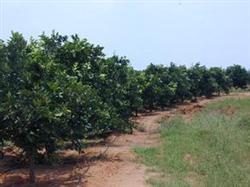
(1) Furrow irrigation This irrigation method is also called soaking irrigation. That is, furrows are opened between the rows of the citrus orchard and connected with the water supply channels, and the irrigation water seeps into the soil through the furrow bottom and furrow walls. This method is currently commonly used.
(2) Flood irrigation Embankments are built in zones within the citrus orchard, and water is led into the orchard. This method consumes a large amount of water, the topsoil is prone to hardening, and soil permeability is poor, so it is generally not suitable for use.
(3) Basin irrigation This method uses the citrus tree trunk as the center and builds soil embankments below the drip line of the canopy to enclose a circular basin. Water is supplied by powered pumping, watering with a hose, or carrying water manually for irrigation, and after irrigation the soil is loosened and covered. This irrigation method is generally used in citrus orchards lacking water sources and in young citrus orchards.
(4) Hole irrigation On the tree basin below the drip line of the canopy in the citrus orchard, irrigation holes are dug, with 8 to 12 holes dug for each tree basin, each hole 30 cm wide and 30 cm deep, and a handful of rice straw is placed upright in each hole. After irrigation, the soil is covered back. This method can be combined with the application of quick-acting liquid fertilizer as a top dressing.
(5) Sprinkler irrigation That is, in the citrus orchard, mechanical equipment such as a powered water pump, delivery pipes, and sprinkler heads is used to spray water from a water tower or storage reservoir into the air of the citrus orchard, forming fine water droplets that then fall onto the canopy and ground. Sprinkler irrigation methods include four types: high-head sprinkler irrigation, low-head sprinkler irrigation, fixed sprinkler irrigation, and movable sprinkler irrigation. In high-head sprinkler irrigation, water does not penetrate deeply into the soil, a relatively large amount of water is wasted, and the surface soil tends to harden after spraying. At present, low-head micro-sprinkler irrigation is more widely used for irrigation in citrus orchards.
(6) Drip irrigation Drip irrigation is an irrigation method in which water droplets or fine water streams slowly seep into the root zone through pipes. Drip irrigation saves more than 50% of water compared with sprinkler irrigation, can uniformly supply water to the soil in the citrus root zone, and can maintain soil permeability. However, drip irrigation often easily clogs pipes and emitters. Therefore, filtration equipment must be strictly selected, and at the same time the water should contain no mineral precipitates, and there should be no algae etc. growing inside the pipes.