How to Prune a Pomegranate Tree That Flowers but Bears No Fruit
In the first year after planting, select and keep 3-5 branches as the main trunk during winter pruning, and remove all other suckers. For high-quality large-fruited pomegranate trees, pruning is mainly done in late winter and early spring. Each time you prune, you must remove the root suckers, and you must also remove the fruit stalks that bore fruit the previous year. The drooping branches, dead branches and small crisscrossing branches inside the canopy should also be thinned out, so that the canopy...
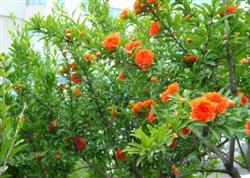
In the first year after planting, select and keep 3-5 branches as the main trunk during winter pruning, and remove all other suckers. For high-quality large-fruited pomegranate trees, pruning is mainly done in late winter and early spring. Each time you prune, you must remove the root suckers, and you must also remove the fruit stalks that bore fruit the previous year. The drooping branches, dead branches and small crisscrossing branches inside the canopy should also be thinned out, so that the canopy is sparse and even, which helps ventilation and light penetration and allows the tree to bear fruit fully. In addition, proper pruning should also be done during the growing season, mainly by appropriately cutting away thin and weak branches when the flowers fade, to save nutrients.
Through the above measures, the waste of the tree's nutrients will be reduced, ensuring that the fruiting branches get sufficient nutrients, reducing flower and fruit drop, and restoring the tree's ability to bear fruit.