Detailed Explanation of the "Three Early" Cultivation Techniques for Plums
In recent years, plum trees have developed rapidly. As the area has increased, standardized cultivation and management techniques have become fundamental to efficient plum orchards. 1. Planting techniques 1.1 Variety arrangement Due to climatic constraints, varieties suitable for growing in our city should be selected, including Dazi Li, Yuhuang Li, Suiling Li, etc. Most plum varieties are self-fruitful...
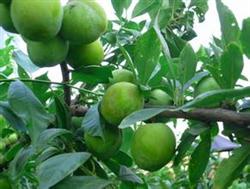 The "Three Early" cultivation techniques for plums:
I. Rational pruning to promote early flower bud formation: In the year of planting, when new shoots grow to about 30 cm, pinch off the tips to stimulate secondary shoots and form flower buds. For Misi Li, Dashi Zhongsheng and Dashi Zaosheng, after pinching, 40% of secondary shoots can form flower buds, while plum trees not pinched in summer generally do not form flower buds that year. During winter pruning in the first year, current-year branches are generally left unpruned, while crowded branches, water sprouts and shading branches are removed by thinning. In this way, a large number of clustered flower buds can form on the branches left unpruned that year. During winter pruning in the third year, the branches previously left unpruned should be appropriately cut back to prevent tree vigor decline. In subsequent years, winter pruning should follow the same sequence.
II. Rational fertilization to promote flower bud differentiation and early ripening and coloring of fruit: Attention should be paid to the combination of various fertilizers, especially applying sufficient organic fertilizer before leaf fall in autumn. Before the fruit matures in the second year, an appropriate amount of phosphorus and potassium fertilizer should be applied to promote flower bud differentiation and fruit coloring. Nitrogen fertilizer has a relatively large effect on how early or late plum fruit matures. Therefore, the amount of nitrogen fertilizer applied should be controlled before plum harvest. In this way, the ripening period of plum fruit can be advanced, thereby increasing its commercial value.
III. Preventing low temperatures in spring to increase the fruit-setting rate: Plums are often damaged by low temperatures during the flowering period, which affects fruit setting. For this reason, irrigation can be carried out before buds sprout in spring to lower soil temperature, delay bud break and postpone the flowering period. In summer pruning, more pinching and short cutting should be done to stimulate secondary shoots, using the characteristic that secondary shoots flower 7 to 10 days later than main shoots to delay flowering. In mid to late September in autumn, 100 mg of ethephon can be sprayed per tree, which can also delay the flowering period of the following year by 3 to 5 days. By using the above measures, damage to flowers from low temperatures in early spring can be avoided, thereby increasing the fruit-setting rate.