Analysis of the Reasons Why Strawberry Seedlings Grow Vigorously but Fail to Bear Fruit
Strawberries growing only stems without bearing fruit is fairly directly related to flower bud formation, because strawberries can only bloom and bear fruit after forming flower buds; if flower bud formation is disrupted, it leads to the phenomenon of no fruiting. Below, the factors affecting strawberry flower bud formation are analyzed from two aspects: internal factors and external factors. (1...
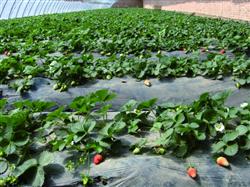
Strawberries growing only stems without bearing fruit is fairly directly related to flower bud formation, because strawberries can only bloom and bear fruit after forming flower buds; if flower bud formation is disrupted, it leads to the phenomenon of no fruiting. Below, the factors affecting strawberry flower bud formation are analyzed from two aspects: internal factors and external factors.
(1) Internal factors:
1. Variety characteristics. Varieties with different ripening periods differ in how early or late flower buds differentiate, the number of differentiated flowers, and the number of flower buds.
2. Nutrients. The nutritional status of the plant is closely related to flower bud formation. During the flower bud differentiation period, sufficient carbohydrates (C) and appropriate nitrogen nutrition (N), with an increased C/N ratio, are favorable for flower bud differentiation; conversely, a low C/N ratio delays flower bud differentiation. Strong seedlings differentiate flower buds earlier than weak seedlings, and their number of florets also increases accordingly. Excessive nitrogen causes vigorous vegetative growth, which is unfavorable for flower bud differentiation.
3. Growth regulatory substances. Growth regulatory substances are mainly endogenous hormones. Flower bud differentiation is the result of the interaction between hormones that promote flower bud differentiation and hormones that inhibit it. Generally, growth-promoting hormones such as gibberellins and auxins are unfavorable for flower bud differentiation; growth-inhibiting hormones such as abscisic acid and cytokinins promote flower bud differentiation.
(2) External factors:
1. Temperature and light. Temperature and light affect physiological processes such as photosynthesis and respiration in strawberries, relate to the production and accumulation of carbon nutrition, and affect flower bud formation. Low temperature and short-day conditions induce flower bud formation. Most strawberry varieties begin flower bud differentiation under induction by low temperature and short-day conditions when the average daily temperature drops below 20°C and the photoperiod shortens to below 12 hours. Differentiation is faster at 10-17°C and a 10-hour short-day photoperiod.
2. Fertilization and watering. For the same variety, excessive nitrogen fertilizer and excessive watering or rainfall cause strong vegetative growth, showing excessive vegetative growth, or too many leaves or insufficient leaves, all of which delay flower bud differentiation. Try not to apply large amounts of irrigation water or too much nitrogen fertilizer, so as to avoid the plants remaining green and growing excessively, with little nutrient accumulation, thereby affecting the quality of flower bud differentiation.
3. Plant growth regulators. Artificial spraying of gibberellin can inhibit flower bud differentiation; while plant growth retardants and inhibitors, such as chlormequat, paclobutrazol, and abscisic acid, when applied to strawberry seedlings, inhibit plant growth and promote flower bud differentiation.
4. Leaf removal. Experiments have shown that removing leaves from strawberry seedlings can induce flowering, and removing old leaves is more effective than removing new leaves. Analysis shows that old leaves contain more flowering-inhibiting substances, and removing them reduces their content; removing old leaves can reduce the consumption of nutrients and increase accumulation, thereby promoting flower bud differentiation; in production, leaf removal should be kept moderate.