How to control white-spotted flower chafer pests on nectarines
[Morphology and damage symptoms] Adults are 20-24 mm long, purple-copper in color, with more than 10 irregular white spots on the pronotum and elytra. Adults gnaw ripe fruit, making it lose its commercial value. [Occurrence pattern] The white-spotted flower chafer has 1 generation per year, overwintering as larvae in soil and organic fertilizer; it readily breeds in chicken manure. Adults emerge from June to September and fly to orchards, where they like to gather and damage ripe fruit. Adults are attracted to sugar-vinegar liquid, and in July adults look for suitable places to lay eggs.
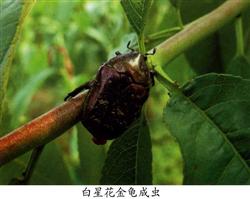
[Morphology and damage symptoms] Adults are 20-24 mm long, purple-copper in color, with more than 10 irregular white spots on the pronotum and elytra. Adults gnaw ripe fruit, making it lose its commercial value.
[Occurrence pattern] The white-spotted flower chafer has 1 generation per year, overwintering as larvae in soil and organic fertilizer; it readily breeds in chicken manure. Adults emerge from June to September and fly to orchards, where they like to gather and damage ripe fruit. Adults are attracted to sugar-vinegar liquid, and in July adults look for suitable places to lay eggs.
[Control methods] (1) When using chicken manure, it should first be treated with chemicals. A 300-fold dilution of 40% isofenphos-methyl emulsifiable concentrate, or 50% phoxim emulsifiable concentrate, can be sprayed onto the organic fertilizer while turning and mixing it to kill the larvae in the manure. (2) Trap and kill adults during the adult occurrence period. A sugar-vinegar liquid can be prepared in the ratio sugar:vinegar:water = 1:4:16 and hung in the field to attract adults.