Correction Methods for Nitrogen Deficiency in Nectarines
Soil nitrogen deficiency can turn the leaves of the whole tree from light green to yellow. The petioles and veins turn red. At this point, the growth of new shoots is hindered, leaf area decreases, and the branches and leaves become relatively hard. If the nitrogen deficiency is too severe, within 1 to 3 weeks, red or reddish-brown spots appear in the mesophyll between the large veins. In the later stage, many...
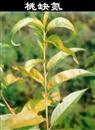
Soil nitrogen deficiency can turn the leaves of the whole tree from light green to yellow. The petioles and veins turn red. At this point, the growth of new shoots is hindered, leaf area decreases, and the branches and leaves become relatively hard.
If the nitrogen deficiency is too severe, within 1 to 3 weeks, red or reddish-brown spots appear in the mesophyll between the large veins. In the later stage, many red spots develop into necrotic spots. The leaves gradually form an abscission layer and drop off, starting from the base of the current year's new shoots and gradually progressing upward.
The tips of the new shoots grow short, with many flower buds, and the fruit set rate decreases. In severe nitrogen deficiency, the entire new shoot is short and thin, with fewer flower buds than normal trees, and the leaves are also small and light green, much like a potassium-deficient tree. However, with potassium deficiency, the terminal shoots are thinner and the internodes are longer. Red spots in the mesophyll are a characteristic of nitrogen deficiency.
Plants with low nitrogen content have fruit that ripens early. The coloring is good. The flesh of freestone nectarines has a bland flavor and contains much fiber. The fruit surface is not plump enough, and the flesh presses close to the stone.
[Occurrence conditions] 1. Peach orchards with poor, thin soil, extensive management, lack of fertilizer and many weeds are prone to showing nitrogen deficiency symptoms. 2. Young trees growing in sandy soil show nitrogen deficiency symptoms within a few days when heavy rain occurs during the growing season.
[Correction methods] 1. Generally, applying chemical fertilizers such as urea, ammonium sulfate, ammonium bicarbonate, etc., will make the nitrogen deficiency symptoms disappear. 2. During the rainy season and the rapid growth period of autumn shoots, the tree body needs a large amount of nitrogen, and at this time nitrogen in the soil is very easily lost, so a 0.5% ammonium sulfate or ammonium bisulfate solution can be sprayed on the canopy.