What measures are there for supplementary pollination of peach trees
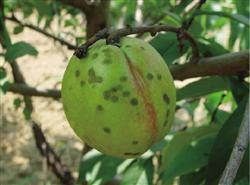
Peach scab, also known as black spot, is one of the common diseases of peach trees. When a peach tree is affected, black spots appear on the surface of the diseased fruit and cracking may even occur, seriously affecting its commercial value. 1. Symptoms of damage: It mainly damages the fruit, followed by the branches and leaves. When the fruit is affected, small brown round spots first appear, and then gradually...
 The peach tree is a tree species with a high self-fruitfulness rate, but abnormal weather such as low temperatures, rain, and frost can all have adverse effects on fruit set, while artificial supplementary pollination can effectively increase the fruit-setting rate and promote the trend of more uniform and larger fruit. Pollination varieties are often selected for their large flower quantity and overlapping flowering period. When establishing an orchard, it is common to plant multiple varieties mixed together or to plant them in a ratio of 1:5. Artificial supplementary pollination is generally carried out in the following ways:
1. Collection of pollen
The following simple method is used to collect peach anthers: 1-2 days before the initial flowering stage, place the collected flowers of the pollination variety on a smooth painted tabletop, gently rub the flowers with your hands, and then sieve them to obtain the anthers; alternatively, place the flowers in an iron sieve with a hole diameter of 0.25 cm, spread smooth white paper underneath the sieve, and then gently rub the flowers with your hands, and the anthers will fall onto the white paper. Although this method wastes some anthers, tests show that the anther loss rate is generally below 20%, and compared with removing anthers flower by flower with tweezers, the work efficiency is increased by dozens of times.
2. Methods for treating pollen
There are natural air-drying, heated kang drying, and electric light drying. Issues to note when drying anthers: (1) Temperature: if the temperature is too high, the germination rate is low and the amount of pollen released is small; if too low, the drying time is long. The suitable drying temperature is 20-25°C, and the temperature is required to be relatively stable. (2) Time: while maintaining a temperature of 20-25°C, the drying time is generally about 36 hours. (3) Never expose pollen to direct sunlight: the germination rate of sun-dried pollen is only 10-20%, while the germination rate of air-dried or oven-dried pollen can reach more than 50%.
3. Storage of pollen
Besides being used for artificial pollination in the same year, if there is any leftover prepared pollen, it can be refrigerated to prepare for pollination of fruit trees in greenhouses in winter or for use again the following year. Generally, the pollen is placed in a brown glass bottle and sealed; it can also be sealed in a plastic bag, wrapped in black paper, then packed in another plastic bag, and then stored in a refrigerator below zero degrees. When using it, a germination test is needed. Pollen stored by this method generally can still have a viability of more than 70% after 1 year.
4. Artificial pollination
At full bloom, prepare the collected pollen into a sugar-urea pollen liquid and spray it with a sprayer. The formula for the sugar-urea pollen liquid is 5 kg water + 10 g pollen + 10 g urea + 5 g borax + 100 g white sugar + a little adhesive, mixed together. Alternatively, spraying 10-20 mg/kg of PCPA (fruit-setting hormone) at flowering stage and spraying 20 mg of naphthaleneacetic acid after flowering can both increase the fruit-setting rate. It is also possible to mix the previously prepared pollen with talcum powder or milk powder at a ratio of 1:5-10, dip it with a rubber tip to pollinate the flowers, or put it into a gauze bag and shake it on the tree to scatter the pollen for pollination. When pollinating, proceed from the top of the canopy and from the outside of the canopy toward the inside. Repeating this 3-4 times at full bloom can significantly increase the fruit-setting rate.
5. Using bees for pollination
In orchards where the pollinating variety accounts for more than 20% and is evenly distributed, releasing mason bees or honeybees at flowering stage can significantly increase the fruit-setting rate. The pollinating wild bee Osmia cornifrons, according to tests, has a relatively good pollination effect, and the fruit-setting rate in peach orchards can be increased by 11%. The method is: 3-5 days before the peach trees bloom, take the bee cocoons out of a 4-5°C refrigerator or fruit storage, put them into prepared bee nest tubes, with 1 bee cocoon per nest tube, with the head of the bee cocoon facing the tube opening, and seal the tube opening with relatively thin toilet paper to facilitate the emergence of adult bees from the nest. Then hang the bee nest tubes (50 or 100 tubes tied into 1 bundle) on the south wall of the orchard watch room, near the recovered nest tubes, to facilitate recovery. Release 50-70 adult bees per mu.