Detailed Explanation of Key Nectarine Cultivation Techniques, Easy for Beginners to Master
Nectarine cultivation techniques are basically the same as those for other peach trees, but in order to fully preserve the characteristics of the variety and achieve high and stable yields, the following key cultivation techniques are proposed: 1. Site selection. Nectarine has a relatively short dormancy period, sprouts and blooms early, likes sunlight, is not tolerant of shade, fears waterlogging, and is not suitable for clay soil. Therefore, plots should be selected that have relatively high temperatures...
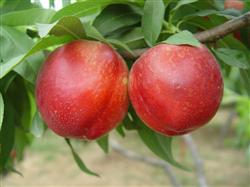
Nectarine cultivation techniques are basically the same as those for other peach trees, but in order to fully preserve the characteristics of the variety and achieve high and stable yields, the following key cultivation techniques are proposed:
1. Site selection
Nectarine has a relatively short dormancy period, sprouts and blooms early, likes sunlight, is not tolerant of shade, fears waterlogging, and is not suitable for clay soil. Therefore, plots should be selected that have relatively high temperatures, a good microclimate, few late frosts, are sheltered from the wind and face the sun, and have loose, fertile soil with good aeration and drainage.
2. Variety selection
Nectarines are divided into early, mid-season and late according to maturity period. Cultivated varieties can be selected flexibly according to local market supply.
3. Raising seedlings
Propagation can be carried out by grafted seedlings, top grafting to replace the canopy, and other methods. The rootstock used is mountain peach or sour peach.
4. Pollination varieties
Nectarine has a large amount of pollen and strong self-pollination ability. Cross-pollination can enhance its fruit characteristics, so when cultivating, other nectarines can be appropriately mixed in, and fruit quality will be better.
5. Field planting
Field planting is best after the soil thaws in spring and after leaf fall in autumn. The planting density is preferably 55--64 plants/mu. Planting method: trench planting or large-hole planting can be used. The planting hole should be 80--60 cm. Use 10 kg of stalk straw and 200 kg of farmyard manure per plant, then cover with soil in layers and plant the tree. Do not apply chemical fertilizer. After planting, immediately set the trunk height according to the intended tree shape, and cover the tree disk with plastic film.
6. Soil, fertilizer and water management
6.1 Soil management. The purpose is to create a deep, loose, nutrient-rich soil environment for the root system. Before establishing the orchard, deep plowing and fertilization should be carried out, or soil should first be dug out and fertilizer applied in a concentrated way. Later, combined with autumn base fertilizer application, the planting holes should be gradually enlarged.
Intertillage and weeding. Nectarine has a well-developed root system and requires good aeration conditions. During the growing season, intertillage and weeding should be carried out several times to keep the surface soil loose, which is beneficial to the rapid growth of nectarine.
Reasonable intercropping. In young orchards, intercropping can be done appropriately to improve the use of light, heat, water and air resources, but only with green manure, melons and vegetables, beans and other low-stalk, short-canopy crops that do not affect growth and development, do not spread related diseases and pests, and do not compete with the trees for fertilizer and water.
6.2 Fertilization. Base fertilizer is mainly farmyard manure, supplemented with superphosphate. Starting from the second year after planting, apply 150--200 kg of base fertilizer per plant each year. Young trees (2--4 years) are mainly given nitrogen fertilizer, with 1--4 kg per plant per year, and appropriate amounts of phosphorus and potassium. After entering the fruiting stage, gradually increase the proportion of nitrogen, phosphorus and potassium, generally preferably 2:3:2, and appropriately supplement other trace elements.
6.3 Irrigation. In areas with annual rainfall above 500 mm, irrigation may not be needed. However, because spring in our region is relatively dry, to ensure normal development or avoid late frost damage, it is required to irrigate thoroughly once during the germination period after thawing, and once before freezing.
7. Training and pruning
The nectarine tree has relatively strong apical dominance, many branches, fast new shoot growth, and flower buds that are easy to form. It is especially important to train a high-yield tree shape early. Commonly used are the three-main-branch natural open-center shape, the two-main-branch open-center shape, and the short-close layered shape, but these should be flexibly controlled according to cultivation method, density, and so on.
7.1 Open-center shape. This canopy is relatively tall and large, and the fruiting positions can make full use of space, with high yield, and it is suitable for a pure peach orchard. Training generally requires two or three main branches, that is, the trunk is headed at 50--60 cm in the current year. Later, select and retain the first main branch at 40 cm from the ground, and select and retain the second and third main branches at about 20 cm from the first main branch. The retained main branches should be robust and spread evenly in three directions around the trunk. All other branches are controlled in growth and retained as auxiliary nurturing branches. During winter pruning, the main branches are appropriately shortened to let them extend and expand the canopy. On each main branch, leave 2--3 side branches at intervals of about 30 cm. The remaining branches are pruned according to their growth position using the methods of removing weak and keeping strong, removing upward and keeping side, and removing distant and keeping near. In summer, when new shoots grow to 40 cm, pinch them promptly to promote secondary shoots, and thin out water sprouts on the back and dense branches, so as to achieve ventilation and light penetration and train the fruiting framework early.
7.2 Short-distance evacuated layered shape. It is suitable for row-band planting of fruit trees. For training, 5--7 main branches are required, that is, the trunk is headed at 40--60 cm in the current year. Later, leave the first main branch at 50 cm from the ground, and leave 5--7 main branches at 50 cm intervals in staggered directions. On each main branch, leave 2--3 side branches, and train the remaining branches as auxiliary nurturing branches, gradually forming an upper-lower structure. In this way, the light and water between fruit tree rows can be fully utilized, increasing income per unit area.
7.3 Flower and fruit thinning. Adopt "light first, then heavy", carried out in stages, and it can also be combined with summer pruning. The method is: appropriately shorten slender flowering branches, retract drooping flowering branches, and remove diseased, weak and densely crowded flowering branches. The first fruit thinning is carried out in mid-May, mainly removing twin fruits, deformed fruits, small fruits, basal fruits, and shoot-end fruits. The second fruit thinning is carried out from late May to early June. Generally, long fruiting branches retain 2--3 fruits, medium fruiting branches retain 1--2 fruits, and short fruiting branches retain 1 fruit. The leaf-to-fruit ratio should not be lower than 50:1, and the fruit spacing should not be less than 20 cm.
7.4 Bagging. Longdong has a continental climate. During the nectarine fruit enlargement period, it often suffers from natural disasters, causing fruit cracking and dirty fruit surfaces in nectarines, and the rate of commercial fruit drops greatly. In order to improve nectarine fruit quality and achieve green food standards, bagging technology can make up for many disadvantages and is economical and effective. That is, carry out bagging after fruit thinning in mid-to-late June each year. Ordinary single-layer paper bags or plastic bags sold on the market can be used for bagging, with the same method as apple bagging technology.
8. Disease and pest control. The main diseases and pests of nectarine include: peach anthracnose, brown rot, little leaf disease, peach aphid, spider mite, leaf miner, and so on. For these diseases and pests, spray 5-degree lime sulfur mixture once before germination; after petal fall, spray 10% imidacloprid wettable powder 2000 times once; in early May and mid-to-late June, spray 72% agricultural streptomycin 3000 times plus 800 times dichlorvos respectively, which can control little leaf disease, peach aphid and many other diseases and pests. After fruit harvest, promptly remove residual fruits, diseased fruits, and diseased branches and leaves, so as to give priority to prevention, observe at any time and control promptly, and ensure healthy growth of the tree throughout the year.