What are the main technical measures for cultivating robust hickory seedlings?
In recent years, many farmers have taken a favorable view of planting Manchurian walnut trees, but they know very little about its cultivation techniques. Not long ago, a fruit grower asked about the irrigation situation for Manchurian walnut trees. The author believes that to grow Manchurian walnut trees well, five key waterings are indispensable. The first watering. In years with normal rainfall, the first watering is in late March, called...
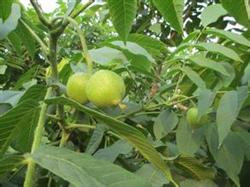 Hickory is one of the "Three Old Treasures," the main economic specialties of Lin'an City. To help farmers solve problems in the hickory seedling-raising process, continuously improve hickory seedling quality, and accelerate the pace of hickory development, the techniques for cultivating robust hickory seedlings have been summarized based on successful hickory seedling-raising experience accumulated over the years in various places.
1. Select good mother trees, collect good seeds
Select a sunny hillside, pest- and disease-free, with large, plump fruit, thin shells, no obvious alternate bearing, and high yield, a mature hickory stand as seed-collection mother trees. The seed-collection season is best in early to mid-September (after White Dew), choosing fully mature, naturally fallen fruit as the best. For spring-sown seeds, after harvesting the fruit and removing the husk, use water to float off empty and unfilled seeds, spread them in a ventilated indoor area for 3-4 days, and they can then be stored. If the seeds are for autumn sowing, the outer fruit skin does not need to be removed.
2. Timely storage for spring sowing
Spring-sown seeds need to be stored over winter. There are 3 storage methods: dry storage, sand storage, and husk storage, with sand storage being the best. Specific sand storage method: layer the shade-dried seeds with wet sand (coarse sand). The sand's moisture content should be 3-4%, and the sand is best when it does not stick to the hand. One layer of seeds (about 5-10cm thick), covered with a layer of sand (4-5cm thick), piled to a height of 30-40cm, 1m wide, with no limit on length. If the seed quantity is large, place bamboo baskets or straw bundles in the middle for ventilation, and turn the pile once every half month. About 30 days before spring sowing the following year, increase the sand's moisture (moisture content 5.5-7.0%) for pre-sowing germination, and check promptly. If seeds are found to have cracked and sprouted, sow them in batches in a timely manner.
3. Pre-sowing germination for autumn sowing
Hickory will germinate at temperatures above 10°C. Take the collected hickory seeds in piles of 250kg, cover with straw and plastic film. You can also place the seeds in woven bags and cover the outside with hickory husks (outer fruit skin) for germination. After about 4-5 days, the seeds will crack and sprout. Sow in batches (continue germinating seeds that have not cracked and sprouted). Note that the embryo bud should not be germinated too long (generally not exceeding 1cm), otherwise it will affect emergence.
4. Select good nursery land
Based on the ecological habits of hickory seedlings being afraid of strong sunlight and afraid of waterlogging, the nursery land is best chosen at an altitude of 200-500m, on shady slopes in mountain polder fields (land), with good drainage, convenient irrigation, and fertile sandy loam soil. Avoid choosing old nursery sites that have been used for many years.
5. Prepare the seedbed well
One-year-old hickory seedlings have relatively long taproots, so the nursery land needs deep plowing before sowing. The seedbed is best about 1m wide and 25cm high, which facilitates drainage, weeding, fertilizing, pest and disease control, and building shade frames and other management work.
6. Timely sowing
Hickory sowing is divided into 3 types: autumn sowing, winter sowing, and spring sowing, with autumn sowing being the best. Hickory shells are thick and difficult to germinate. For hickory seeds that have been germinated, sowing in September can result in germination and emergence in the same year, and seedling height can reach over 10cm within the year. Winter sowing from December to January of the following year without germination generally only roots in the same year without emerging from the soil. Both autumn sowing and winter sowing require covering with straw and plastic film (arched), and attention must be paid to the "four precautions": frost prevention, drought prevention, root rot prevention, and rodent prevention.
Spring sowing should be done in February to March, no later than the end of March. Seeds must be germinated before sowing. Hickory sowing uses drill sowing, with row spacing of 20cm, plant spacing of 5-10cm, covered with 3-4cm of soil. Seeds are best placed horizontally. The sowing rate per mu is 500kg of husks (about 150kg of wet seeds). After sowing, promptly cover with straw to prevent soil compaction, maintain moisture, and facilitate seedling emergence.
7. Careful management
Hickory seedling management must pass 3 hurdles: the emergence hurdle, the rainy season hurdle, and the hot summer hurdle. Seedling emergence is most afraid of soil compaction, scorching sun, and seedling damage. When weeding, try to pull weeds by hand near the roots, do it in the early morning and evening during high-temperature seasons, and drain promptly during the rainy season to prevent root rot. From July to September, build shade frames for sun protection (light transmittance 30%-50%). For seedling raising in higher altitude areas, interplant a small amount of corn around the seedbed to replace shade frames for shading.
8. Scientific fertilization
Fertilization should focus mainly on base fertilizer (organic fertilizer). Apply 100 loads of rotten manure (fermented) or 10 loads of human feces and urine, and 50kg of compound fertilizer per mu, applied into the sowing furrow and covered with soil. For topdressing, master "small amounts, many times." You can use 0.5-1.0% human feces or chemical fertilizer diluted with water for watering. During drought, water the roots 2-3 times per month. In the early stage, mainly use nitrogen fertilizer; in the middle and late stages, mainly use phosphorus and potassium fertilizers.