Detailed Explanation of the Characteristics and Cultivation Techniques of Sweet Mandarin Pomelo
Sweet Mandarin Pomelo is a new hybrid citrus variety introduced to our city from Japan in 1998, and has now been successfully trial-planted in our city. Sweet Mandarin Pomelo has five major advantages: easy management, superior flavor, high yield, storability and transportability, and strong cold resistance. Among late-maturing citrus varieties, it is the only one that can be eaten immediately after harvest and is deeply loved by fruit growers and consumers. Sweet Mandarin Pomelo in 20...
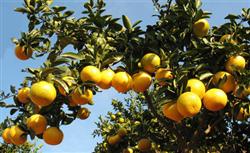
Sweet Mandarin Pomelo is a new hybrid citrus variety introduced to our city from Japan in 1998, and has now been successfully trial-planted in our city. Sweet Mandarin Pomelo has five major advantages: easy management, superior flavor, high yield, storability and transportability, and strong cold resistance. Among late-maturing citrus varieties, it is the only one that can be eaten immediately after harvest and is deeply loved by fruit growers and consumers. Sweet Mandarin Pomelo won the gold award at the 2002 China (Zhejiang) Citrus Expo, received unanimous praise from attending experts and leaders at the Citrus New Variety Evaluation Meeting held in Hangzhou in January 2003, and at the Agricultural Exhibition held in Hangzhou in January 2004, the product was in short supply and was listed as a new citrus variety for promotion in Lishui City. To promote the planting and extension of Sweet Mandarin Pomelo in our city and provide technical support for fruit growers' production, the variety characteristics and cultivation techniques of Sweet Mandarin Pomelo are introduced as follows:
I. Biological Characteristics
(1) Growth and Fruiting Habits
The Sweet Mandarin Pomelo tree is vigorous, with a round-headed canopy, and obvious apical dominance of shoots. Its budding and branching ability is strong, and the morphology of branches and leaves is close to that of Satsuma mandarin (Wenzhou mandarin). There are small thorns on the branches, and its phenological period is similar to that of Satsuma mandarin. For healthy young and middle-aged trees, leafy flowering shoots account for more than 90% of the flowers. The number and length of leafy flowering shoots are higher than those of other citrus varieties. The longest leafy flowering shoot can reach more than 35 cm, with more than 13 leaves. Spring shoots and autumn shoots are the main fruiting mother branches. Fruiting branches inside and outside the canopy can all bear fruit. The fruit expansion period is from July to late October, and the fruit matures from late November to early December.
(2) Adaptability and Stress Resistance
Sweet Mandarin Pomelo has strong cold resistance and is suitable for planting in areas suitable for Ponkan mandarin, Huyou pomelo, and Satsuma mandarin. Its cold resistance is stronger than that of Ponkan mandarin, and it can be safely planted in Lishui, Wenzhou, Quzhou, and other places in our province. Sweet Mandarin Pomelo is drought-resistant, tolerant of poor soil, and resistant to pests and diseases, making it suitable for planting on hillside land.
II. Main Economic Traits
(1) Few-Seeded or Seedless Trait
Most fruits are seedless, and a small number of seeded fruits contain about 3-5 seeds per fruit. At present, the selection work for seedless individual plants is still being carried out, and the cause of their seedlessness is also being studied.
(2) Fruit Quality and Storability
The fruit is oblate, steamed-bun shaped, uniform, and well-formed, with an average fruit weight of 230 g. The peel is orange-yellow, and the fruit surface is not very smooth. Peeling is slightly difficult, but easier than that of Huyou pomelo. The flesh is orange-yellow, with a soluble solids content of more than 12%. It is soft and juicy, sweet, refreshing, with no sour taste, and has the aroma of mandarin and pomelo. The eating quality is similar regardless of fruit size. It matures from late November to early December. When individually wrapped in plastic film and stored at room temperature until the end of May the following year, its market supply period is particularly long among citrus varieties.
(3) Early Fruiting and High Yield.
When top-grafted onto trifoliate orange rootstock, mid- to late-maturing Satsuma mandarin, and other trees, it bears a large amount of fruit the second year, and by the third year the yield per plant can reach 30-50 kg, with a per-mu yield of more than 3000 kg.
III. Cultivation Techniques
1. Site condition selection: Sweet Mandarin Pomelo can be planted in areas suitable for varieties such as Ponkan mandarin, Huyou pomelo, and Satsuma mandarin. The best sites are hillside land below 400 m in altitude, with deep and fertile soil, facing north and south.
2. Planting density and field planting: If it is hillside land, first dig horizontal terraces more than 2.5 m wide, then dig planting holes or planting trenches in the middle of the horizontal terraces, 60 cm deep and 100 cm wide. Apply garbage and barnyard manure or green manure such as young mugwort into the planting trench, one layer of fertilizer and one layer of soil. Keep the top layer of subsoil 15 cm apart from the organic fertilizer so that the root system does not come into direct contact with the fertilizer. For each plant, mix 0.5 kg of calcium magnesium phosphate fertilizer evenly with soil, cover it over the seedling root system, let the roots spread out in layers, and firm the soil. If planting on a sunny day, water thoroughly. If planned close planting is adopted, plant 150 plants per mu (1.5 x 3 m). If permanent planting is adopted, plant 75 plants per mu (3 x 3 m). Planting can be done every year from late September to early November in autumn and from mid-February to the end of March in spring.
3. Fertilization: Compared with varieties such as Ponkan mandarin and Satsuma mandarin, the number and amount of fertilizer applications are required to be somewhat greater, because it has many flowers, a large fruit load, and large individual fruits, so it consumes more nutrients. For young trees, in combination with the sprouting of spring, summer, and autumn shoots, apply shoot-promoting and shoot-strengthening fertilizer 5-7 times throughout the year, that is, once a month from March to early August, stop application from September to October to prevent the sprouting of late autumn shoots, and apply 1 winter fertilizer again in November. Depending on tree size, apply an average of 0.2-0.6 kg urea, 0.1-0.3 kg potassium sulfate, and 0.2 kg phosphate fertilizer per tree per year. For fruiting trees, apply fertilizer 4-5 times throughout the year: 1 application of post-harvest fertilizer, 1 application of pre-bud fertilizer in spring, and 2-3 applications of fruit-strengthening and shoot-promoting fertilizer, with fertilization amounts of 30%, 20%, and 50% respectively. For orchards with a per-mu yield of 2500-3500 kg, apply annually per mu 100 kg urea, 150 kg calcium superphosphate, 150 kg potassium sulfate, 3 kg borax, and 100 kg cake fertilizer or 1000 kg barnyard manure. The ratio of nitrogen, phosphorus, and potassium is 1.0:0.5:0.8.
4. Flower and fruit management: In years with many flowers, there is no need to protect flowers and fruits. In years with few flowers, 1 g of gibberellin can be dissolved in alcohol and then mixed with 20-25 kg of water, and fruit protection can be carried out when 2/3 of the flowers have fallen. Sweet Mandarin Pomelo has a relatively large single-fruit weight, and the leaf-to-fruit ratio is best kept at about 40:1. Excess fruits can be thinned. First thin diseased and insect-damaged fruits, deformed fruits, and densely clustered fruits, then thin excess fruits. After fruit thinning, bagging is recommended to produce pollution-free, high-quality fruit.
5. Pruning and training: Branches and branch groups whose tree vigor has prematurely declined due to excessive fruiting should be cut back to promote new shoots, so as to ensure high and stable yields year after year. For overly dense branches, thin out the weak and retain the strong. For vigorous fruiting trees, it is sufficient to cut off some crossing branches, merged water sprouts, severely diseased and insect-damaged branches, and shaded branches.
6. Pest and disease control: The pest and disease control measures are relatively consistent with those for Ponkan mandarin and Satsuma mandarin. Integrated control should focus on red spider mites, rust mites, scale insects, aphids, leafminers, and scab. In winter, use 0.5-1 degree lime sulfur mixture to clean the orchard. From March to October, carry out appropriate scientific control according to the occurrence of pests and diseases. Commonly used pesticides include Bordeaux mixture, thiophanate-methyl, azocyclotin, fenbutatin oxide, omethoate, chlorpyrifos, imidacloprid, fenpropathrin, and others.