Control of Banana Sour Rot
This is a sporadic disease during storage and transport, often occurring together with freeze injury to the fruit or CO2 poisoning during storage. Symptoms: the diseased bananas turn sour, the flesh softens, rots and oozes liquid, and a layer of white coarse powdery substance appears; the juice of the diseased bananas flows onto healthy fruit and continues to cause infection. Pathogen and occurrence pattern: the pathogen is Geotrichum candidum (Geotrichumcandidum...
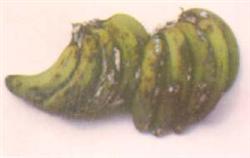
This is a sporadic disease during storage and transport, often occurring together with freeze injury to the fruit or CO2 poisoning during storage.
Symptoms: the diseased bananas turn sour, the flesh softens, rots and oozes liquid, and a layer of white coarse powdery substance appears; the juice of the diseased bananas flows onto healthy fruit and continues to cause infection.
Pathogen and occurrence pattern: the pathogen is Geotrichum candidum (Geotrichumcandidum Link ex Pers.). The source of infection for the disease comes from processing and packaging sites and storage and transport sites; tools and sanitary insect pests are the main routes of spread of this disease. The pathogen is a wound-infecting fungus that enters the fruit fingers through wounds. Green hard fruit harvested early has high resistance; the disease begins as the fruit physiologically ripens, and especially after the fruit is frozen or suffers CO2 poisoning, the fruit is highly susceptible, rotting and oozing liquid. The juice of diseased bananas often flows down onto healthy fruit below, causing the disease to break out in large amounts. High temperature and high humidity favor the occurrence and development of the disease during storage and transport.
Control methods: (1) Do a good job of cleaning and sanitation at packaging and storage-transport sites; after each batch of bananas is handled, the processing site can be washed with a 0.1%-0.2% sodium hypochlorite aqueous solution. (2) Bananas treated for antisepsis and freshness preservation should be air-dried before packaging to reduce the humidity inside the packing boxes. (3) During storage and transport, ventilation inside the carriage should be maintained to prevent CO2 poisoning of the bananas.