Detailed Explanation of Spring Management Measures and Technical Points for Lychee
China generally experiences dry climate, which promotes nutrient accumulation and flower bud differentiation in lychee and longan. It is currently spring, and lychee management during this season is a key link related to the quality of growth and development in the current year. Based on the current growth and development situation of lychee and longan, the following technical work opinions for spring management are specifically proposed. Lychee due to...
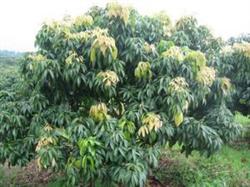
China generally experiences dry climate, which promotes nutrient accumulation and flower bud differentiation in lychee and longan. It is currently spring, and lychee management during this season is a key link related to the quality of growth and development in the current year. Based on the current growth and development situation of lychee and longan, the following technical work opinions for spring management are specifically proposed. Because lychee varieties differ, tree conditions vary greatly, and corresponding measures should be taken for management according to specific situations:
(1) Apply flower-strengthening fertilizer: apply it after the flower panicle forms and 15 days before flowering. Old trees and weak trees should be fertilized earlier. For each tree, based on a fruit load of 50 kg, apply 2-3 kg of compound fertilizer.
(2) Kill small leaves: for flower panicles with small leaves, from the beginning of small leaf development until before they turn red, choose Xiaoye Weisuo Su, Xiaoye Tuo, or Zhuanghua Sha Xiaoye Su to spray and kill the small leaves, cultivating pure flower panicles.
(3) Pruning: trees with a shaded canopy should be pruned by cutting off shaded branches, weak branches, and diseased and pest-infested branches to improve ventilation and light penetration conditions of the tree body; trees that have not yet sprouted flower panicles should be pruned promptly, which is beneficial for the sprouting and growth of flower panicles.
(4) Control panicles: for varieties with relatively long flower panicles, such as Feizixiao, Guiwei, Nuomici, and Huaizhi Qing young trees, when the flower panicle is 8-10 cm, spray half the amount of Kongshao Ling to control flower panicle elongation; artificial flower thinning may also be used by cutting off 1/3-1/2 of the flower panicle; or when the flower panicle is 20 cm long, cut off half; at the same time, thin out overly dense or weaker lateral branches of the flower panicle, which helps make the flower panicle short and sturdy.
(5) Strengthen flowers: for weak flower panicles, spray 1-2 times with multielement nucleotides + cytokinin + Wanfeng Lu to strengthen flowers, combined with foliar topdressing and pest control.
(6) Prevent and control diseases and pests: the flower panicle development period is the occurrence period of downy blight and lychee stink bug. Insecticides and fungicides should be sprayed once every half month, and insecticides and fungicides should be used in rotation. Spray lychee fruit-preserving solution once 15 days before female flowers open. Spraying insecticides is strictly prohibited 10 days before and after flowering to avoid harming bees and pollinating insects.
(7) Do a good job in lychee pollination. ① Place bees during the flowering period to increase the pollination rate. ② If drought weather occurs during the flowering period, spray water to prevent flower damage. ③ If rainy weather occurs during the flowering period, shake off accumulated water on the flowers to prevent flower soaking.
(8) Fertilizer and water management: for Feizixiao, Guiwei, and Nuomici with good management and strong tree vigor, if spiral girdling was used in last autumn and winter to control winter shoots, check the girdling cuts and keep the girdling cuts open; for those without girdling or ring cutting, carry out girdling or ring cutting before and after flowering to preserve fruit.
(9) Spray "Guodebao" once 10-12 days and 40 days after flower drop to preserve fruit, and when spraying, multielement nucleotides and other foliar fertilizers may be added to improve fruit quality.