What causes rotten fruit in greenhouse apricots? How should it be handled?
Causes of rotten fruit: Insufficient light in the greenhouse. During prolonged overcast days or rain and snow, dust accumulates on the surface of the greenhouse film, resulting in insufficient light and excessive humidity inside the greenhouse. Young fruit growing for a long time in dark, damp air is prone to rot. Excessive temperature in the greenhouse: During the young fruit stage of apricots, if the temperature inside the greenhouse exceeds 28°C...
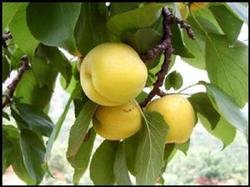
Causes of rotten fruit: Insufficient light in the greenhouse. During prolonged overcast days or rain and snow, dust accumulates on the surface of the greenhouse film, resulting in insufficient light and excessive humidity inside the greenhouse. Young fruit growing for a long time in dark, damp air is prone to rot.
Excessive temperature in the greenhouse: During the young fruit stage of apricots, if the temperature inside the greenhouse exceeds 28°C, water droplets from the greenhouse film will drip directly onto the surface of the young fruit, causing rot. Delayed protection causing rotten fruit: Because people mistakenly believe that apricot trees cultivated under greenhouse conditions are not exposed to wind, rain, insects and other disease vectors, they will not develop disease, so they do not spray or spray little fungicide, allowing apricot scab and pathogens to breed, leading to rotten fruit.
Adherents on the surface of young fruit: Due to poor ventilation and excessive humidity in the greenhouse, after apricot blossoms fade, many petals do not fall but attach directly to the surface of the young fruit. As the young fruit grows and develops, these petals absorb moisture in damp conditions, and the areas in contact with the petals remain in a moldy, damp state for a long time, causing the fruit to rot.
Preventive measures: In response to the phenomenon of rotten fruit in greenhouse apricots, the following measures are proposed for the reference of fellow fruit growers.
Improve light conditions, regulate and control temperature and humidity: Use high-quality drip-free film. If old greenhouse film is used, promptly remove dust from the surface of the film to increase light transmission; on overcast or rainy and snowy days, it is best to install fluorescent lamps in the greenhouse to supplement light and raise the greenhouse temperature; in terms of tree shape, choose the spindle shape, which transmits light well; on sunny days, pay attention to timely ventilation to maintain the greenhouse temperature below 28°C and relative humidity at around 60%.
Spray promptly: Spray for protection at different growth stages of apricot trees. Before bud break, spray 5 degrees Baume lime sulfur mixture; after petal fall, spray 70% thiophanate-methyl 1000x solution; during the fruit enlargement stage, spray 80% carbendazim 600-800x solution; during the rapid shoot growth stage, spray 65% mancozeb 1000x solution.
After petal fall, promptly remove adherents from the fruit surface and keep the fruit surface clean: After petal fall, promptly remove petals that have not fallen, and remove leaves covering the apricot fruit to prevent them from attaching to the fruit surface and causing rot.
Promptly remove diseased fruit and handle it in a centralized manner: Thin flowers and thin fruit, and maintain a reasonable load. For varieties with strong fruiting ability, when there are many flowers and set fruit, thin flowers and thin fruit, generally so that the fruit do not touch each other at maturity.