Ten management practices for protected cultivation of apricot trees
Because large flat apricot trees are cold-resistant and drought-resistant, they are mostly planted on poor, barren slopes, and because their root systems are strong and spread throughout the orchard, plowing and turning the soil is difficult. In addition, the land preparation standard at planting time is not high, which often leads to soil compaction, poor permeability, easy occurrence of soil-borne diseases (such as root rot), difficult fertilization, and laborious intertillage, ...
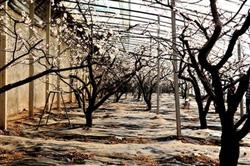 1. Rational fertilization. Fertilization should be based mainly on base fertilizer, with topdressing as a supplement. Base fertilizer is mostly applied from mid-September to mid-November after the autumn shoots stop growing, at 5000-7500 kg per mu. Topdressing should be based mainly on organic fertilizer. Before bud break, apply 0.1-0.15 kg of nitrogen fertilizer per tree. During the fruit expansion period, apply a compound fertilizer of nitrogen, phosphorus, and potassium, 0.1-0.2 kg per tree. In addition, spray foliar fertilizer once every 10-15 days, such as potassium dihydrogen phosphate, Liguomei liquid, etc.
2. Timely watering. Water once before covering the shed, and cover the ground with plastic film after covering the shed. Watering is needed before flowering, during new shoot growth, during fruit development, and after harvest, but the humidity inside the shed must be controlled.
3. Regulating temperature and humidity
1. Bud forcing period. Apricot trees generally can break dormancy after 500-900 hours of low temperature below 7.2°C. Fifteen days before covering the shed, first cover with plastic film, which can control humidity and maintain ground temperature, and then cover the shed for insulation. After covering the shed, maintain the daytime temperature at 15°C-22°C, and not lower than 3°C at night. Keep the humidity inside the shed at 80%-85%.
2. Flowering period. If the temperature during the flowering period is too high or too low, it will seriously affect pollination and fertilization. Maintain the daytime temperature at 15°C-20°C, with a maximum not exceeding 23°C; the nighttime temperature should not be lower than 7°C. When it is lower than 5°C, artificial heating is needed. During the flowering period, control humidity at 50%-60%. When it is too low, spray water on the ground; when it is too high, ventilate to reduce humidity. Do not water 1 week before flowering.
3. Fruit expansion period. Control the daytime temperature at 25°C-30°C, not lower than 10°C at night, and control humidity at about 60%. Watering is allowed during this period.
4. Harvest period. Control the daytime temperature at 26°C-31°C, with a nighttime temperature of about 10°C. Humidity 50%-60%. During this period, if the soil is not very dry, it is best not to water, to prevent a decline in fruit quality or fruit cracking.
5. Flower bud differentiation period. After the apricot fruit is harvested, the side film can be lifted, with the daytime temperature at about 28°C and the nighttime temperature at about 15°C. From late June to mid-July, when the temperature exceeds 34°C, it is unfavorable for apricot flower bud differentiation, so film can be used for shading to promote flower bud differentiation.
4. Light management. Apricot trees like light, so the height of plants on the south side should be controlled. Use drip-free film, spray an anti-drip agent before use, and promptly clean or wash the shed film to improve light inside the shed. If temperature permits, uncover the straw mats as early as possible and put them down as late as possible. On cloudy days, if there is no rain or snow, the mats should also be uncovered to use scattered light.
5. Training and pruning
1. Timely pruning. Prune in time before covering with film, removing flowerless branches, weak branches, overly dense branches, and upright water sprouts to concentrate nutrients.
2. Bud removal and pinching. After sprouting, promptly remove buds on the upper side of branches. When new shoots grow to about 20 cm, pinch the tips to prevent excessive growth from affecting light, ease the competition for nutrients between new shoot growth and fruit development, increase the fruit-setting rate, and enlarge fruit size.
3. Controlling the canopy and promoting flowering. After pinching twice, spray 250-400 times diluted 15% paclobutrazol, continuously spraying 3-6 times; for weak trees bearing many fruits, do not spray paclobutrazol again. For apricot trees with excessive nitrogen fertilizer application, if vegetative growth still cannot be controlled after using paclobutrazol, measures such as cutting some roots and increasing the intensity of summer pruning can be taken to control canopy growth.