Detailed Explanation of Key Technical Points for Flower and Fruit Management of Apricot Trees
I. Artificial Pollination Apricot trees rely on bees and others for pollination. But experience shows that carrying out artificial supplementary pollination can increase the fruit-setting rate by 3-4 times compared with natural pollination. Artificial supplementary pollination should be carried out during full bloom, because the apricot flowering period is very short (5-7 days), so preparations should be made in advance. Apricot flower stalks are fragile and break easily, so extra care should be taken during pollination...
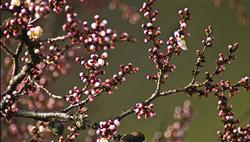
I. Artificial Pollination
Apricot trees rely on bees and others for pollination. But experience shows that carrying out artificial supplementary pollination can increase the fruit-setting rate by 3-4 times compared with natural pollination. Artificial supplementary pollination should be carried out during full bloom, because the apricot flowering period is very short (5-7 days), so preparations should be made in advance. Apricot flower stalks are fragile and break easily, so extra care should be taken during pollination. The artificial pollination method can follow that used for apples. Keeping honeybees and horned mason bees in the apricot orchard can significantly increase the fruit-setting rate. In recent years, apricot cultivars introduced from European and American countries, such as Kait apricot and Manao apricot, have a high self-fruit-setting rate and do not require artificial supplementary pollination.
II. Spraying Water During the Flowering Period
In areas with severe windblown sand during the flowering period, strong winds carrying soil often dry out the stigmas and coat them with mud, affecting pollination results. Spraying water during full bloom to keep the stigmas moist can significantly increase the fruit-setting rate. The Wofosi Forest Farm in Zhuolu County, Hebei Province, sprayed water during the flowering period on kernel-apricots, increasing the fruit-setting rate by 107%-137%. Adding 0.2% urea and 0.2% borax to the water gives even better results. When spraying, try to make the water droplets mist-like; the droplets must not be too large, and the amount of water must not be too much, so as not to affect the activity of pollinating insects.
III. Fruit Thinning
In the production of fresh-eating apricots and processing apricots, in order to improve the market competitiveness of apricot fruit and balance the load, flower and fruit thinning should be advocated. Because the proportion of incomplete flowers in apricot flowers is high, determining fruit set by flowers is very inaccurate, so flower thinning is mostly not practiced and only fruit thinning is carried out. Fruit thinning is carried out from half a month after petal fall to before the pit-hardening stage. At this time, the fruit drop caused by poor pollination has already passed, and the young fruit has developed to the size of a broad bean (vertical diameter 1.0-1.5 cm). First remove all diseased and insect-damaged fruit, deformed fruit and small fruit, then remove overly dense fruit, so that the remaining fruit is evenly distributed on the branches. The degree of thinning depends on the species, cultivar, tree vigor, yield situation and management level. Cultivars with a high fruit-setting rate and strong fruiting ability can be thinned more, and large fresh-eating fruit can also be thinned more; general processing cultivars can be thinned appropriately less; kernel-apricots, apart from removing diseased and insect-damaged fruit, are generally not thinned. Weak trees, especially trees in an "on" year, should be thinned more, while vigorous trees with sufficient fertilizer and water supply can be thinned less. Generally, it can be controlled at the level of leaving 1 fruit every 5-8 cm.