Detailed Explanation of Key Points on Chestnut Cultivation and Management Techniques
Chestnut is a well-known excellent dried fruit tree species of the Fagaceae family. The people of our country have a cultivation history of several thousand years and have accumulated rich experience. It occupies an important position in the economic life of our people. Chestnuts are rich in nutrition and delicious in taste. They can be eaten fresh, stir-fried, boiled, and made into various pastries and dishes. They have the characteristics of being sweet, fragrant, and glutinous...
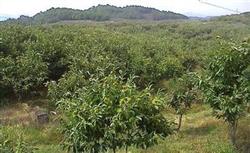
Chestnut is a well-known excellent dried fruit tree species of the Fagaceae family. The people of our country have a cultivation history of several thousand years and have accumulated rich experience. It occupies an important position in the economic life of our people. Chestnuts are rich in nutrition and delicious in taste. They can be eaten fresh, stir-fried, boiled, and made into various pastries and dishes. They have the characteristics of being sweet, fragrant, and glutinous, and also have the functions of nourishing the spleen, tonifying the liver, and strengthening the body. Thus they are renowned both at home and abroad, and are called Chinese chestnuts in the international market. The people in production areas call them iron-rod crops.
I. Characteristics
Cultivation occurs in most areas of our country. Chestnut is a light-demanding tree species, fond of light, with deep roots and a spreading crown. It has low requirements for soil, preferring slightly acidic soil, with pH 4.6-7.5 being suitable, and grows most favorably in deep, fertile, moist, well-drained gravelly loam. The chestnut tree is about 20 m tall, with bark having irregular deep longitudinal fissures; young branches densely covered with gray-white down; leaves oblong to oblong-lanceolate, 9-18 cm long, 4-7 cm wide, with gray-white stellate hairs and down on the underside; male inflorescences 9-20 cm long, female flowers mostly borne at the base of male inflorescences, usually 3 flowers clustered within the involucre, cupule spherical, with stellate hairs on the spines, nuts 2-3, 2-3 cm in diameter, often nearly flat on one or both sides, dark brown, flowering from May to June each year, fruit ripening from September to October. Branches are divided into different types such as vegetative branches, fruiting branches, fruiting mother branches, male flower branches, and water sprouts. Vegetative branches: developed from leaf buds and latent buds. They grow robustly and are the basis for forming the scaffold branches of the crown; fruiting branches: new shoots of the current year emerging from the mother tree, bearing male and female flowers, and those that flower and fruit are called fruiting branches; fruiting mother branches: branches bearing mixed buds are fruiting mother branches, from which several mixed buds at the top produce fruiting branches, while lower buds produce vegetative branches and male inflorescences, and several buds near the base do not sprout; male flower branches: branches produced from incomplete mixed buds, bearing only male inflorescences; water sprouts: long, upright new shoots sprouting after latent buds and leaf buds are stimulated. Among them, new shoots sprouting near the main trunk grow vigorously and are not easily transformed into fruiting branches, while new shoots sprouting from the middle and upper parts of main and lateral branches grow slowly and can be transformed into fruiting branches in 2-3 years. Water sprouts occur more on young trees, and some can be selected as trunk scaffold branches; while they occur less on old trees, they are good branches for renewal and rejuvenation.
II. Cultivation Techniques
The quality of seedlings directly affects the survival rate of cultivation, the growth and fruiting of young trees, so when developing chestnut production, attention must be paid to seedling quality and cultivating high-quality strong seedlings.
Grafting propagation technique: Grafting can maintain the characteristics of excellent varieties and can also advance fruiting. Rootstocks are selected from 1-4 year old chestnut or Quercus acutissima seedling trees about 4 cm thick. From mother trees with excellent varieties and robust growth, select 1-year-old robust fruiting branches as scions. The grafting time is generally from late February to April. Grafting methods can adopt cleft grafting, double tongue grafting, side grafting, bark grafting, bark-tongue grafting, and side-veneer grafting, etc. To improve the grafting survival rate, scions can be treated with 15% naphthaleneacetic acid for 24 hours. Rootstocks are cultivated in the nursery for grafting, then planted out. It is also possible to first plant the rootstocks, and graft after they survive, with support stakes to hold up new shoots, paying attention to fertilization, watering, loosening soil, and weeding. After 1-2 months of growth, the binding tape should be removed, and when new shoots grow 40-50 cm tall, the tips should be pinched to thicken seedling growth and promote scion branching. At the same time, attention should always be paid to removing sprouting shoots and root suckers to avoid competing with scions for nutrients.
Seedling propagation technique: Select middle-aged chestnut trees with excellent varieties, robust growth, and no pests or diseases as seed mother trees. Seeds should be large, thin-skinned, and fully mature. Near the afforestation site, select a place with flat terrain, fertile soil, good drainage, and convenient irrigation as the nursery site. Open furrows at a row spacing of 25-30 cm, and at a plant spacing of 10-15 cm, place seeds horizontally in the furrows, then cover with 3-4 cm of soil, and press well so the seeds are in close contact with the soil. Sow at 70-100 kg per mu, and seedlings emerge in about 20 days. After emergence, pay attention to loosening soil, weeding, and irrigation. Apply topdressing 2-3 times in June-July. One-year-old seedlings reach 50-70 cm tall and can be lifted from the nursery for afforestation. For chestnut afforestation, planting holes are 1×1×1 m, with base fertilizer applied. Determine plant and row spacing according to variety, soil quality, slope, and whether there is agroforestry intercropping. On fertile soil, 8×8 m; generally 5×5 m. The afforestation season is best before sap flow in winter and spring. When planting, pay attention to watering enough settling water, and in the dry season also water frequently according to soil moisture conditions.
III. Tending and Management
Chestnut orchards should carry out soil loosening, weeding, and cutting of miscellaneous trees every year to mature the soil, reduce water evaporation, promote tree growth and development, and reduce pests and diseases. Soil loosening and weeding are done in spring and autumn each year. Where conditions permit, forest-grain intercropping may be carried out, with intercrops such as corn, peanuts, beans, and tubers.
Chestnut trees are sensitive to fertilization. Fertilization can increase yield by 10%-20% in the same year and by more than double in the second year. Fertilizer is mainly organic fertilizer, combined with chemical fertilizer. In winter, apply organic fertilizer in ring-shaped trenches; in spring and summer, apply chemical fertilizer as topdressing, preferably by radial or hole application.
Correct pruning is also one of the important measures for increasing chestnut yield. For young trees, pruning should keep low trunks and low crowns. The crown should be spreading, generally a sparse stratified semicircular shape, ventilated and light-transmitting, favorable for tree growth and fruiting. Its shaping method: trunk height 60-100 cm, main branches 5-6, in 2-3 tiers, with 2-3 in the first tier, 1-2 in the second tier, and 1 in the third tier. Thin and weak branches below the extended shoots of main and lateral branches should be thinned out. When shaping, pay attention to opening the branch angles, cut off inward-growing branches, thin and weak branches, and water sprouts, and retain obliquely extending outward-growing branches to maintain a sparse and spreading tree form.
Chestnut wood is light chestnut brown, with straight grain, coarse texture, relatively heavy and hard, rot-resistant and moisture-resistant, and is used for sleepers, mine props, vehicles, farm tools, etc. Logs can also be used to cultivate mushrooms. The bark, cupules, young branches, and pith of the wood all contain tannins and can be used to extract tannin extract. Leaves can be used to raise tussah silkworms. Flowers are also a good nectar source. Not only is the whole chestnut tree a treasure, but it also has strong adaptability, is drought-resistant and waterlogging-tolerant, and is easy to cultivate and manage. Plant once and harvest for a hundred years, with strong disease resistance and stable yield. Developing chestnut production is of great significance for developing mountain area economies and improving the lives of farmers.