Persimmon trees need timely winter pruning when they enter the full fruit-bearing stage
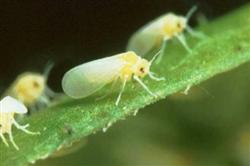
The pesticides suitable for controlling sweetpotato whitefly include acetamiprid, clothianidin, mineral oil, thiamethoxam (Actara), nitenpyram, pymetrozine, bifenthrin, abamectin, matrine, imidacloprid, chlorpyrifos, etc. These pesticides can be selected to control sweetpotato whitefly on persimmon trees. With long-term single-pesticide use, sweetpotato whitefly is prone to developing resistance...
 First, adjust the angle of the scaffold branches and balance tree vigor. As the branches gradually increase, the light in the inner canopy deteriorates year by year; in addition, as the growth vigor shifts outward and the branches droop, the small branches in the inner canopy grow weakly and bear less fruit. Pruning at this stage should adjust the angle of the scaffold branches and balance the inner and outer growth vigor. Excessive large branches should be thinned out over several years to promote robust growth, flowering, and fruiting of the small branches in the inner canopy. The original tips of the large branches should be retracted year by year, while the renewal branches at the rear should be encouraged to grow outward and upward at an angle, gradually replacing the original tips, so as to raise the angle of the main branches and restore their growth vigor.
Second, combine thinning and retraction to develop fruiting branches in the inner canopy. In the full fruit-bearing stage, the rear part of the persimmon tree gradually becomes bare and the fruiting position shifts outward. During pruning, retraction should be used to encourage renewal branches to emerge from the rear part, but these renewal branches are mostly fairly dense, so the weak ones should be removed and the strong ones retained. Persimmon trees bear more fruit and larger fruit on vigorous branches. Therefore, the fruiting branches in the inner canopy should be both retracted and extended, with attention to their development. Old branches that are too high or too long should be retracted in time to encourage renewal branches to emerge from the lower part. For short, thin fruiting branches, extend first and then retract, increasing the number of branches and promoting their rejuvenation.
Third, cut back more reserve branches to overcome alternate bearing. After bearing fruit, fruiting branches generally grow weakly, and most cannot form fruiting branches in the same year to bear fruit continuously. Based on years of work experience, each year the fruiting branches or 1/3 of the fruiting mother branches should be cut back as reserve branches so that they bear fruit every other year, with good results.
Fourth, renew in time to keep tree vigor from declining. Persimmon trees produce renewal branches earlier than most fruit trees, and their small branches have a short lifespan. After fruiting, they weaken or die within 2 to 5 years. However, because the latent buds have a long lifespan and strong sprouting ability, they can renew many times, keeping tree vigor from declining for a long time and extending the number of years of the full fruit-bearing stage.