Detailed Explanation of Papaya Seedling Cultivation Techniques: Teach You to Grow Robust Papaya Seedlings
Papaya is the dried near-ripe fruit of Chaenomeles speciosa (Sweet) Nakai, a plant in the Rosaceae family, also known as wrinkled-skinned papaya. It is mainly produced in Shandong, Anhui, Sichuan, Hubei, Yunnan, Shaanxi and other provinces. It has functions such as relieving cough and spasms, clearing summer heat and promoting diuresis, relaxing muscles and activating collaterals, and harmonizing the stomach and resolving dampness. In recent years, a series of products such as papaya beverages, papaya wine, preserved fruit, canned goods and cosmetics have been developed...
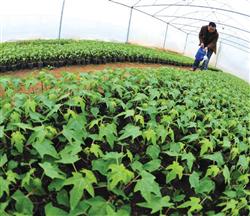
Papaya is the dried near-ripe fruit of Chaenomeles speciosa (Sweet) Nakai, a plant in the Rosaceae family, also known as wrinkled-skinned papaya. It is mainly produced in Shandong, Anhui, Sichuan, Hubei, Yunnan, Shaanxi and other provinces. It has functions such as relieving cough and spasms, clearing summer heat and promoting diuresis, relaxing muscles and activating collaterals, and harmonizing the stomach and resolving dampness. In recent years, a series of products such as papaya beverages, papaya wine, preserved fruit, canned goods and cosmetics have been developed, and demand in domestic and international markets exceeds supply. The prospects for developing the papaya industry are very broad. The papaya seedling propagation techniques are introduced below:
I. Seed collection and seed treatment
Select fruit trees in full bearing period that are free of pests and diseases, and around mid-September each year, when most of the outer skin of the papaya fruit turns yellow, begin picking. Remove the seeds, discard empty and shriveled seeds, then soak them in a 0.1-0.3% potassium permanganate aqueous solution for about 1 hour, rinse clean with clear water, and either sow directly or stratify in sand until sowing the following spring. The sand stratification method is to mix seeds with clean sand at a 1:3 ratio, and stratify in the open air in a wind-sheltered, shady, dry place with a pit about 50cm deep. If there are too many seeds, bamboo sticks or corn stalks should also be used to make an "exhaust vent." The sand moisture should be such that it forms a ball when squeezed in the hand without dripping water. Cover with about 30cm of clean sand. During storage, check 2-3 times each month. If mildew or heating occurs, transfer to another pit for storage in a timely manner. Around mid-March of the following spring, when two-thirds of the seeds have split open, sowing can begin.
II. Nursery site selection and pre-sowing preparation
The nursery site should preferably be selected in brown soil or yellow soil plots with convenient transportation, sufficient water sources, good drainage and irrigation, and loose, fertile soil. Before sowing, prepare the land finely, and apply 10 kg of imported carbofuran, 5 kg of carbendazim, and 15 kg of compound fertilizer per mu.
III. Sowing
Papaya is usually sown in drills on flat beds, with a sowing rate of 30-40 kg per mu, bed width of 120-150cm, row spacing of 20cm, furrow depth of 8-10cm, soil covering thickness of 3-4cm, and pathway of 20-25cm. After sowing, irrigate with enough bottom water.
IV. Field management
Field management of papaya seedlings mainly consists of loosening soil, weeding, watering, and fertilizing. As long as seed and soil disinfection are adequate and the seeds are fully mature, pest and disease control is generally unnecessary. Weeding should be done "early, while small, and thoroughly." Avoid drought, loosen the soil regularly, and begin fertilizing about one month after emergence. Use the furrow fertilization method, once every half month, applying about 15 kg of urea per mu, for a total of 4-5 applications. Stop fertilizing after the Beginning of Autumn to promote lignification of the seedlings.
V. Seedling grafting
Traditional planting often uses seedling trees, which not only bear fruit late (generally beginning to bear fruit in five to six years) and have low yields, but also suffer from variety degeneration and relatively low economic returns. Nowadays, most plantings use grafted seedlings, which begin bearing fruit in the third year. In recent years, several varieties selected and bred in Shandong, such as Changjun, Guohua, and Lvyu, have strong adaptability, high yields (after reaching full production, yield per mu can reach more than 5000kg, with income of nearly ten thousand yuan), and excellent quality, and can be developed and promoted on a large scale. The grafting time is generally from late August to early September, usually using the single-bud side grafting method, without exposing the bud. The following spring, check that healing is complete, cut off 2-3cm from the graft union, promptly remove sprouts and tillers, and strengthen management. In the same year, the seedlings can grow to about 1.5m. For the small number that do not survive, use the same method to graft again in spring.