What measures are there to overcome alternate bearing in mangoes?
To overcome alternate bearing in mangoes, the first requirement is an adequate amount of flowers; the second is for the flowering period to avoid low-temperature rainy weather; the third is to find ways to increase the fruit set rate. The measures are: 1. Choose varieties. Based on the characteristics of Guangxi's early spring, which is mostly low-temperature rainy weather, it is ideal for mangoes to bloom after early April. Therefore, varieties should be chosen...
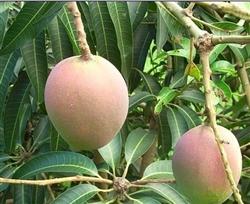
To overcome alternate bearing in mangoes, the first requirement is an adequate amount of flowers; the second is for the flowering period to avoid low-temperature rainy weather; the third is to find ways to increase the fruit set rate.
The measures are:
1. Choose varieties. Based on the characteristics of Guangxi's early spring, which is mostly low-temperature rainy weather, it is ideal for mangoes to bloom after early April. Therefore, varieties should be chosen that have a late flowering period, strong ability to regrow after frost damage to the inflorescence, and a relatively high proportion of bisexual flowers, such as Zihua mango, Guixiang mango, Qiu mango and Xiangya mango.
2. Strengthen management. After harvesting the fruit, more organic fertilizer should be applied, especially phosphorus and potassium fertilizer, and quick-acting fertilizer should be reasonably applied during the autumn shoot growth, flower panicle emergence, flowering period and fruit-bearing period. Shallow plowing after fruit harvest and deep plowing before and after the Start of Winter create a relatively fertile, loose, moist orchard soil environment with coordinated fertilizer, water, air and heat. For mango orchards on poor mountainous and hilly land, special attention should be paid to deep plowing and pressing in green manure to improve the soil; the orchard irrigation and drainage system and soil and water conservation projects should be well built to lay a good foundation for high and stable mango yields.
3. Reasonable pruning. Bearing mango trees are generally given summer pruning and post-harvest pruning. Summer pruning usually involves removing all summer shoots to regulate the conflict between summer shoots and fruit over nutrients; at the same time, inner canopy branches and overly weak or overly dense inflorescences should be thinned; branches in the middle and upper parts that shade the fruit and have no flowers or fruit should be cut away, so that the fruit is exposed, reducing pest and disease damage and promoting fruit enlargement. Post-harvest pruning is generally carried out after fruit harvest and before the autumn shoots sprout. Thin out overly dense branches that affect light, weak branches, drooping branches, aging branches with no fruiting capacity, dead branches and diseased or pest-infested branches, so as to improve light conditions and save nutrients and promote the growth of the remaining branches. In addition, crossing branches between tree canopies and within the canopy should be cut back so that the canopies maintain a certain distance; the declining branches at the tips, overly long vegetative branches and fruiting mother branches should be cut off to promote the sprouting and growth of autumn shoots.
4. Control pests and diseases. The main mango diseases are: anthracnose, sooty mold, powdery mildew, gummosis, fruit spot disease and scab; the main insect pests are: mango shoot borer (also called heart-piercing worm, shoot-boring moth), leafhopper, poisonous moth, scarab beetle, etc. For disease control, use carbendazim or thiophanate-methyl 700-800 times solution, spraying 1-2 times each when new shoots emerge and during the fruit-bearing period; when new shoots are about 3 cm long, spray trichlorfon plus dimehypo each at 800 times solution, or methamidophos or omethoate 800-1000 times solution, once every 7-10 days, 2-3 times per shoot period. 5. Promote flowering and remove flowers. Insufficient flower quantity in an off year is an important cause of reduced yield. For late-flowering varieties, from mid-December to early January, spray the canopy with ethephon 800-1000 times solution or ethephon 1000-1200 times solution mixed with B9 300-400 times solution, which can increase the panicle emergence rate by 15%-35%. If the inflorescence emerges too early, it can be removed when it grows to 3-5 cm to promote the re-sprouting of lateral flower buds.
6. Protect flowers and fruit. Place bees for pollination during the flowering period, with 15 hives per hectare of orchard; when there are few bees, use artificial supplementary pollination. After flowering, carry out foliar topdressing 1-2 times with 0.3% monopotassium phosphate plus 0.2% urea; spray 0.1% boric acid at full bloom; spray 5-8 PPM 2,4-D 2-3 times or 20-30 PPM "920" during the fruit-bearing period, etc., all of which have obvious effects on protecting flowers and fruit.