Detailed Explanation of Key Cultivation Techniques for Red-fleshed Navel Orange
Compared with the Newhall navel orange, Bonanza navel orange and other navel orange varieties currently mainly cultivated in China, the red-fleshed navel orange is comparable in yield, fruit appearance and internal quality, adaptability and resistance, but has 3 different characteristics: First, it is the only navel orange variety in the world whose peel and flesh are both red (the flesh is colored by lycopene), and the fruit is round and spherical.
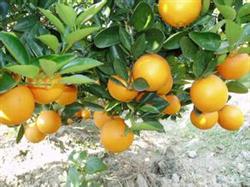
Compared with the Newhall navel orange, Bonanza navel orange and other navel orange varieties currently mainly cultivated in China, the red-fleshed navel orange is comparable in yield, fruit appearance and internal quality, adaptability and resistance, but has 3 different characteristics: First, it is the only navel orange variety in the world whose peel and flesh are both red (the flesh is colored by lycopene), and the fruit is round and spherical. Second, the ripening period is the end of December, slightly later than the navel orange varieties currently mainly cultivated in China (which mainly ripen from November to mid-December). Third, the fruit stores relatively well, and in areas without frost in winter it can be left on the tree for storage until March of the following year, with a richer flavor.
Because red symbolizes festivity and good fortune, red-fleshed navel orange fruit was extremely well received during trial sales in the mainland and the Hong Kong and Macao markets. People in the industry also generally believe that, given the position navel orange fruit has already established in the minds of consumers and the excellent quality of red-fleshed navel orange fruit, its sales prospects are bound to be broad. Compared with the navel orange varieties currently mainly cultivated, the market price of red-fleshed navel oranges is at least 50% higher, and as gift fruit and as assorted fruit platters for hotels the price will increase several times over. At present, the navel orange cultivation areas in China already have more than 667 hectares planted with red-fleshed navel oranges, but most are young trees that have not yet borne fruit or have just begun to bear fruit. China is now in a period of variety renewal for citrus, so the development prospects for red-fleshed navel oranges are relatively broad, and the cultivation area is also trending upward year by year.
In order to better reflect the cultivation potential and commercial value of the red-fleshed navel orange and to avoid losses that may be caused by blind development, it is very necessary to seek matching cultivation techniques. Based on many years of experience at various regional trial sites, the key cultivation points for the red-fleshed navel orange are summarized as follows.
Through grafting trials, the red-fleshed navel orange shows compatibility when grafted with trifoliate orange, citrange, citrumelo, Satsuma mandarin and sweet orange types of citrus. When top-grafting, single-bud side grafting (with more wood) restores tree vigor and yield relatively quickly; generally the canopy can be restored in two years, with a yield of about 300 kg per 667 sq m, and after 3 years the yield per tree can reach 10-20 kg.
The most suitable region for planting red-fleshed navel oranges is a navel orange suitable cultivation area with an annual accumulated temperature of ≥10°C of 5500-6500 and a large day-night temperature difference before fruit ripening (late October to November). Among the above areas, regions with no frost in winter or with frost arriving relatively late (such as after the end of December) and lasting for a short time are the best ecological regions for producing high-quality red-fleshed navel oranges. According to China's citrus development plan and the characteristics of the red-fleshed navel orange, the most suitable development area for red-fleshed navel oranges is the middle and upper reaches of the Yangtze River, where it can be developed as a main fresh-eating variety or one of the main varieties, with a total development area that can reach 13,000-20,000 hectares; its harvest period can run from the end of December to March of the following year, and the fresh fruit market supply period can be around the Spring Festival; secondly, in southern Jiangxi, southern Hunan, northern Guangxi and parts of Fujian and Guangdong, it can be developed as a main novelty variety, with the total development area not exceeding 20,000 hectares (because the development base in this region is relatively large), and the fresh fruit mainly supplies the market before the Spring Festival. For site selection, gentle slopes and hilly mountainous land without drought or waterlogging give the best cultivation results and benefits. When building a new red-fleshed navel orange orchard, sites with shallow soil should have trenches dug and sufficient base fertilizer applied; mature orchards should be deep-ploughed regularly to improve the soil. When the red-fleshed navel orange fruit is swelling, it is relatively sensitive to water deficit, so attention should be paid to building matching irrigation and drainage facilities for the orchard and to balanced irrigation throughout the year, especially watering during the dry season and timely fertilization.
Choose large, strong seedlings and plant them with soil. In mountain citrus orchards, it is suitable to plant 74 trees per 667 sq m (spacing 3 m - 3 m), and in flat land and gentle slope citrus orchards it is suitable to plant 56 trees per 667 sq m (spacing 3 m × 4 m). The red-fleshed navel orange has relatively strong sprouting ability, its young branches tend to droop, and it differentiates flower buds relatively easily, so attention should be paid to shaping the tree early by pulling, propping and tying branches, and the trunk height should preferably be 40-60 cm. After fruiting, in order to avoid too much fruit and fruit that is too small, attention should be paid to thinning flowers and fruit, controlling summer shoots and removing late autumn shoots, and appropriately promoting spring shoots and early autumn shoots; at the same time, after fruit harvest or before sprouting, prune large trees and thin out clustered branches to ensure good ventilation and light penetration in the tree body so that the fruit has a beautiful appearance.
Rainy weather during the flowering period has a relatively large impact on the yield of red-fleshed navel oranges; at this time, attention should be paid to shaking the tree to drop flowers. On the one hand, this can achieve a flower-thinning effect, and on the other hand, it can shake off the petals stuck to young fruit to prevent them from rotting and affecting fruit set or causing scars on the fruit.
When propagating seedlings, use spring shoots as scions as much as possible, and carry slightly more wood when grafting. Pest and disease control methods are the same as for other citrus varieties.