Cultivation Technical Key Points for the Late Navel Orange Variety
1. Adaptability and suitable cultivation areas: It has relatively wide adaptability and can be planted in all navel orange suitable areas in China, but after planting there have been reports of low or unstable yields. 2. Cultivation technical key points and precautions: (1) Suitable rootstock and strong seedlings, rational planting: In acidic and neutral soils, trifoliate orange rootstock can be used; but in alkaline [soils], it is advisable to use...
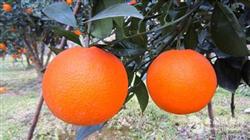
1. Adaptability and suitable cultivation areas: It has relatively wide adaptability and can be planted in all navel orange suitable areas in China, but after planting there have been reports of low or unstable yields.
2. Cultivation technical key points and precautions:
(1) Suitable rootstock and strong seedlings, rational planting: In acidic and neutral soils, trifoliate orange rootstock can be used; but in alkaline [soils], it is advisable to use red tangerine or Ziyang fragrant orange as rootstock. Plant strong seedlings, with a seedling height of more than 60 cm, a trunk diameter of more than 0.8 cm, and 3 or more branches. The planting density is generally 3 m between plants and 4 m between rows, that is, 56 plants per mu.
(2) Increase fertilizer application: Mainly organic fertilizer, supplemented by chemical fertilizer. For young trees in the first, second, and third years after planting, the main purpose is to promote the sprouting of spring, summer, and autumn shoots, so fertilizer should be applied frequently and lightly, mainly nitrogen. When entering the early fruiting stage, the amount of fertilizer should be increased and the frequency of fertilization reduced. Timely irrigation: The flowering stage and young fruit stage are very sensitive to high temperature and drought, and water shortage will cause a large number of young fruits to drop.
(3) Protect flowers and fruits, promote a good harvest: Before the first physiological fruit drop, apply kinetin at a concentration of 200-400 mg/L plus gibberellin at a concentration of 100 mg/L to coat the fruit, or spray the whole tree with a gibberellin solution at a concentration of 50-100 mg/L; before the second physiological fruit drop, spray the leaves with an ET2 solution at a concentration of 24 mg/L.
(4) Training and pruning, pest and disease control: In the first and second years after planting young trees, training should mainly consist of pinching and bud removal, so that the tree body forms a natural round-headed shape. For trees entering the fruiting stage, pruning should be carried out by thinning, heading back, and renewal pruning. Pruning time should mainly be in winter, with summer as a supplement. For pest and disease control, good control should be done against red spider mites, aphids, swallowtail butterflies, leafminers, tortrix moths, leaf-mining beetles, flea beetles, scale insects, rust mites, anthracnose, foot rot, greasy spot, and so on.