Detailed Explanation of Key Cultivation Techniques for Fruit Sugarcane
I. Variety Selection Currently, the fruit sugarcane varieties planted in Yuanjiang County are Crisp Red Cane and Foreign Red Cane. According to the results of a variety comparison trial conducted in 2000 at Daming'an, Crisp Red Cane is significantly superior to Foreign Red Cane in stem diameter, single-stem weight, internode length, powdery coating, eating quality, as well as in yield per unit area and marketable rate. Therefore...
I. Variety Selection
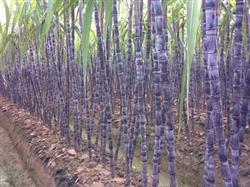
Currently, the fruit sugarcane varieties planted in Yuanjiang County are Crisp Red Cane and Foreign Red Cane. According to the results of a variety comparison trial conducted in 2000 at Daming'an, Crisp Red Cane is significantly superior to Foreign Red Cane in stem diameter, single-stem weight, internode length, powdery coating, eating quality, as well as in yield per unit area and marketable rate. Therefore, it is recommended to promote the planting of Crisp Red Cane. When selecting seed cane, choose cane tips with thick and large stems, uniform and crack-free, with robust tips, broad and green leaves, and free of pests and diseases. Do not use cane tips that have pests or diseases.
II. Site Selection and Land Preparation
1. Site selection: Choose sandy loam field plots below 700 m in altitude with deep soil layers, fertile soil, loose texture, good drainage and irrigation, convenient transportation, and ample sunlight. A 2-3 year crop rotation is required.
2. Land preparation and ridge shaping: After harvesting the previous crop in continuous cropping fields, the residues should be burned promptly, and the field should be flooded for more than one week to eliminate pests in the residues and soil. After the water dries, plow and turn the soil to a depth of more than 30 cm. For rotation land, remove surface residues before plowing and turning. Before ridge shaping, rake and break up the soil clods. The planting furrow spacing should be 120 cm, furrow depth more than 40 cm, and furrow bottom width 20 cm.
III. Planting
The planting time for fruit sugarcane should be from September of the current year to February of the following year. Planting too early means no seed cane is available; planting too late affects yield and quality. Before planting, loosen the furrow bottom and apply base fertilizer into the furrow bottom. The base fertilizer application rate should be no less than 1000 kg of farmyard manure and 50 kg of rare earth superphosphate (or ordinary superphosphate, calcium magnesium phosphate) per mu. After applying the base fertilizer, proceed with planting. The planting density is generally about 20 buds per meter, ensuring no fewer than 4500 effective stalks per mu.
IV. Mid-cultivation Management:
1. Fertilization: ① Seedling-promoting fertilizer: Apply after emergence along with the first weeding, 15 kg of urea per mu. ② Growth-stage fertilization: During the field growth period, along with each hilling, apply 100 kg of rare earth superphosphate (or ordinary superphosphate, calcium magnesium phosphate), 10 kg of NPK compound fertilizer (or potassium chloride), and 10 kg of silicon-calcium fertilizer per mu. ③ Apply foliar fertilizer and balanced fertilizer at appropriate times. During the growth period, spray the compound, high-efficiency, multi-element, organic ecological foliar fertilizer "Rongdafeng" at 300 times dilution 3-4 times according to seedling conditions; after seedling establishment (7-8 plants per meter), frequently water weak seedlings at the base with 5% ammonium bicarbonate solution.
2. Reasonable irrigation: Fruit sugarcane has a high water requirement and should be irrigated promptly, but avoid flood irrigation. Light irrigation is recommended, keeping the soil alternately dry and moist, with moisture being predominant.
3. Hilling and seedling establishment: Generally, hilling should be done 3-4 times per year, with intervals of about 30 days. Along with hilling, establish seedlings at the appropriate time.
4. Stripping of sheath leaves: Begin stripping leaves after the cane stalks elongate, stripping 3-4 leaves each time. Stripping too many leaves affects plant growth; failure to strip in time affects the powdery coating.
V. Prevention and Control of Diseases, Insects, Weeds, and Rodents.
Due to the early planting period and long continuous cropping of fruit sugarcane in Yuanjiang County, combined with a lack of attention to coordinated prevention and control, the accumulated pest and disease base has grown larger and larger, resulting in widespread occurrence of various pests and diseases. Therefore, prevention and control of diseases, insects, weeds, and rodents should be strengthened. The main diseases of fruit sugarcane include pineapple disease, top rot, smut, and leaf wilt. The main insect pests include sugarcane borers (commonly known as sugarcane stem borers), cotton aphids, red mealybugs, and sugarcane beetles. The control strategy should adopt integrated control measures combining "agricultural control, biological control, physical control, and chemical control."
(I) Agricultural control: The main measures of agricultural control are rational layout and regular crop rotation, standardized planting, selection of disease-free and pest-free seed cane, cleaning of fields, and strengthening field management. When sowing, disinfect seed cane with 3% quicklime water for 2-6 hours to promote robust growth of cane stalks, enhance resistance, and suppress the occurrence of pests and diseases.
(II) Biological control: Biological control uses natural enemies of pests such as Trichogramma, red ants, ladybugs, mantises, and dragonflies to control the occurrence and development of pests. Given that both pests and beneficial insects have poor resistance to highly toxic and high-residue pesticides, low-toxicity and low-residue biological pesticides should be promoted to avoid or reduce harm to natural enemies of pests - beneficial insects - achieving the goal of controlling pests with insects.
(III) Physical control: Physical control mainly uses the phototaxis of adult insects to trap and kill adults through set light wavelengths. The currently installed and trial-used "Jiaduo brand frequency-vibration insect-killing lamp" has ideal trapping and killing results. Under normal weather conditions, turning on the lamp for 10 hours each night, each lamp can trap and kill 300-500 sugarcane borer adults, 200-300 sugarcane beetles, and various other pests. Generally, one lamp should be installed per 50-60 mu of cane field. The lamp frame should be about 20 cm above the crops and capable of being raised and lowered.
(IV) Chemical control: Chemical control, i.e., the use of pesticides, must seize the peak occurrence periods (i.e., the three peaks of March-April, June-July, and September-October) to achieve rapid and efficient control effects, and achieve the "four unifications" of "unified pesticide, unified time, unified action, unified application."
1. Sugarcane borer control:
(1) At planting, apply 5 kg of dichlorvos or 5 kg of insect-killing granules or 5 kg of Miral granules per mu mixed with base fertilizer into the planting furrow, then plant and cover with soil. Subsequently, along with each hilling, apply the same amount mixed with fertilizer by deep application;
(2) When a small number of dead-heart seedlings appear at the seedling stage, use a knife to pry them out with roots and burn them in a centralized manner. When a small number of stem borings are found in the mid-to-late stage, use a sharp knife to pierce into the borer hole to kill the larvae, or use a syringe to inject the pesticide solution directly into the borer tunnel.
(3) Large-area spraying. Pesticides must be selected accurately, and long-acting pesticides must be mixed with fast-acting pesticides. The water volume per mu should be 45-90 kg, focusing on spraying the heart leaves, leaf sheath axils, and borer holes. Recommended pesticide varieties are 5% fipronil at 1000 times, or 98% cartap original powder at 800 times, or 10% fenitrothion at 1000 times, etc., used alternately and appropriately mixed with Kung Fu, Nongdile, Baishude, Sideling, Ke Ya Ming, Supusha, phoxim, etc.
2. Control of cotton aphids, red mealybugs, and sugarcane beetles: Generally, they can be controlled simultaneously when controlling sugarcane borers, but if missed, targeted pesticides must be used for spot treatment. For cotton aphids, use 25% pirimicarb at 2000 times or 10% imidacloprid at 2500 times; for red mealybugs, use 40% Supusha at 1500 times or 40% Dushibi at 1000 times; for sugarcane beetles, use 70% phoxim at 800 times or 24% Wanling at 600 times.
3. Disease control: Spray with 75% chlorothalonil at 500 times, or 70% thiophanate-methyl at 800 times, or 50% carbendazim at 1000 times, or 70% zineb at 500 times, spraying more than 4 consecutive times with 7-10 day intervals. Can be mixed with insecticides for spraying.
4. Weed control: At the seedling stage, spray the soil surface with 50% Du'a mixture at 300 times or Xuanhua Yi'a at 300 times. After planting and before emergence, irrigate first, and when the water slightly dries, spray with 10% glyphosate at 150 times to kill weeds. Spray on sunny and windless days. Mix gramoxone with glyphosate and an appropriate amount of neutral laundry detergent to help the solution adhere to the grass leaves. Pay attention to spray quality, fit the spray nozzle with a safety shield, and never spray on crops.
5. Rodent control: Use poisoned grain with 0.07% diphacinone sodium salt. Do not use rodenticides sold on the street, to reduce environmental pollution and harm to humans and livestock.
VI. Timely Harvesting.
The total growth period of fruit sugarcane is about 260 days, meaning that only after a growth period of more than 260 days from emergence can it reach full maturity with the highest yield and best quality. Otherwise, harvesting too early or too late will affect yield and quality.
The residues should be burned, and the field should be flooded for more than one week to eliminate pests in the residues and soil. After the water dries, plow and turn the soil to a depth of more than 30 cm. For rotation land, remove surface residues before plowing and turning. Before ridge shaping, rake and break up the soil clods. The planting furrow spacing should be 120 cm, furrow depth more than 40 cm, and furrow bottom width 20 cm.
III. Planting
The planting time for fruit sugarcane should be from September of the current year to February of the following year. Planting too early means no seed cane is available; planting too late affects yield and quality. Before planting, loosen the furrow bottom and apply base fertilizer into the furrow bottom. The base fertilizer application rate should be no less than 1000 kg of farmyard manure and 50 kg of rare earth superphosphate (or ordinary superphosphate, calcium magnesium phosphate) per mu. After applying the base fertilizer, proceed with planting. The planting density is generally about 20 buds per meter, ensuring no fewer than 4500 effective stalks per mu.
IV. Mid-cultivation Management:
1. Fertilization: ① Seedling-promoting fertilizer: Apply after emergence along with the first weeding, 15 kg of urea per mu. ② Growth-stage fertilization: During the field growth period, along with each hilling, apply 100 kg of rare earth superphosphate (or ordinary superphosphate, calcium magnesium phosphate), 10 kg of NPK compound fertilizer (or potassium chloride), and 10 kg of silicon-calcium fertilizer per mu. ③ Apply foliar fertilizer and balanced fertilizer at appropriate times. During the growth period, spray the compound, high-efficiency, multi-element, organic ecological foliar fertilizer "Rongdafeng" at 300 times dilution 3-4 times according to seedling conditions; after seedling establishment (7-8 plants per meter), frequently water weak seedlings at the base with 5% ammonium bicarbonate solution.
2. Reasonable irrigation: Fruit sugarcane has a high water requirement and should be irrigated promptly, but avoid flood irrigation. Light irrigation is recommended, keeping the soil alternately dry and moist, with moisture being predominant.
3. Hilling and seedling establishment: Generally, hilling should be done 3-4 times per year, with intervals of about 30 days. Along with hilling, establish seedlings at the appropriate time.
4. Stripping of sheath leaves: Begin stripping leaves after the cane stalks elongate, stripping 3-4 leaves each time. Stripping too many leaves affects plant growth; failure to strip in time affects the powdery coating.