Key Points of Dragon Fruit Irrigation and Drainage Techniques (Part 1)
Soil moisture conditions are closely related to tree development, high and stable yields, and tree lifespan. Maintaining soil moisture within a range favorable for fruit tree growth and development through irrigation and drainage is an important task in orchard soil management. 1. Irrigation. Water is the lifeblood of plant growth and an indispensable...
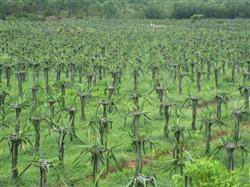
Soil moisture conditions are closely related to tree development, high and stable yields, and tree lifespan. Maintaining soil moisture within a range favorable for fruit tree growth and development through irrigation and drainage is an important task in orchard soil management.
1. Irrigation
Water is the lifeblood of plant growth and an indispensable component of all organ activity. In the life activities of fruit trees, water plays a role in maintaining cell turgor pressure, ensuring stomatal opening and carbon dioxide entry. All chemical changes within the body can only proceed under conditions where water is present. Nutrients in the soil can only be absorbed and utilized when dissolved in water. More importantly, water is an essential raw material for photosynthesis and the basis for yield formation. In addition, only under conditions where water is present can fruit tree transpiration be maintained, tree temperature regulated, and the transport of photosynthetic products and mineral nutrients ensured. Therefore, in fruit tree cultivation, timely watering is an important measure to ensure early fruiting, high yield, and high quality.
(1) Irrigation timing. Irrigation should be carried out before fruit trees are affected by water deficiency, and water must never be applied when fruit trees already show signs of drought stress (such as wilting or fruit shrinkage). Whether watering is needed is mainly determined by soil moisture. Generally, 60%-80% of the soil's maximum water-holding capacity is most suitable for fruit tree growth and development. Dragon fruit has long grown in desert regions and has a relatively strong tolerance for water deficiency. Abroad, measuring instruments are generally used to determine soil moisture to guide irrigation. In determining irrigation timing, in addition to soil moisture, climatic conditions and the growth and development stages of the fruit tree itself must also be considered. In production, watering is mostly carried out during the following periods.
① From before bud break to the flowering period. If there is sufficient water in the soil at this time, it can strengthen new shoot growth, increase leaf area, enhance photosynthesis, and allow flowering and fruit setting to proceed normally, laying the foundation for a high yield that year. In spring drought areas, this irrigation is especially important.
② New shoot growth and young fruit enlargement period. This period is often called the critical water requirement period for fruit trees. At this time, the physiological functions of the fruit tree are at their most active. If water is insufficient, the leaves take water from the young fruit, causing the young fruit to shrink and drop.
③ Rapid fruit enlargement period. This watering can meet the fertilizer and water requirements for fruit enlargement. However, the amount of water applied during this watering must be well controlled.
④ Before and after harvest and the dormant period. In arid areas in autumn and winter, irrigation at this time can store sufficient water in the soil, help decompose fertilizers, and thereby promote the growth and development of fruit trees the following spring. After the last batch of dragon fruit is harvested in autumn and winter, the plant enters the dormant period. If appropriate irrigation is given at this time, it can promote plant growth and encourage branches to become fruiting branches as quickly as possible.