What is the most effective spray for grape clusters before bagging?
Preparations before bagging: trim the flower clusters one week before flowering. For large clusters, remove the secondary clusters and 1-8 lateral branches at the base of the main axis; for small clusters, do not remove or remove only a few. During the flowering period, pinch off about 1/4 of the tip of the cluster. Thin the berries two weeks after fruit set; begin immediately once the fruit is stable and finish before the rainy season. For the bagging method, first open the paper bag with your hands...
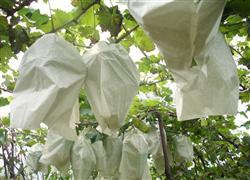 Which spray to use on grape clusters before bagging depends on which diseases are commonly prone to occur in your vineyard, and then determining which fungicide to spray will give the best results. Please refer to the following information:
1. Choose the ideal disease-prevention agent
① 10% Score (difenoconazole): a new generation of high-efficiency, broad-spectrum systemic fungicide that can control most fungal diseases. It has good control effects on anthracnose, brown spot, gray mold, powdery mildew, white rot, black rot, and rust, but is ineffective against downy mildew caused by Oomycetes fungi. Score does not pollute the environment and leaves no harmful residues in grape berries.
② 53% Ridomil Gold MZ (metalaxyl-mancozeb): a 21st-century highly active fungicide with both curative and protective action, and very high biological activity against downy mildew. It can prevent fungal hyphae from growing inside plant tissues and prevent spore formation, giving it a very good curative effect. Within 30 minutes after application, it can be rapidly absorbed by the green tissues of the plant, transported to the top through the vascular system, and finally distributed on the leaf surface. The residual effect period is about 14 days, and newly growing tissues receive the same protection. Ridomil Gold MZ contains no teratogenic, mutagenic, or carcinogenic substances.
③ 25% Amistar (azoxystrobin): effective against four major categories of pathogenic fungi: Ascomycetes, Basidiomycetes, Deuteromycetes, and most fungi in the Oomycetes. For the first time, it achieved control of multiple mixed-occurring diseases with a single spray of fungicide, without the need to mix several fungicides to effectively control multiple diseases. Amistar has a long residual effect period, with a spraying interval of about 15 days. It not only reduces the number of applications but also has three effects: preventive, curative, and eradicant. Amistar and its metabolites leave almost no residue in food, have no neurotoxicity, are non-teratogenic, non-carcinogenic, and do not persist in the environment. Amistar can be perfectly integrated into comprehensive disease management for grapes, effectively controlling various fungal diseases and laying the foundation for high yield and high quality.
2. New options for grape disease control
① After grapes leaf out, apply 1:1:120 Bordeaux mixture as a protective fungicide to prevent infection and proliferation of pathogens. When preparing Bordeaux mixture, slowly pour the copper sulfate solution into the diluted lime milk while stirring, and never pour the lime milk into the copper sulfate solution.
② From early inflorescence emergence to the flowering stage, use 53% Ridomil Gold MZ at 600-800 times dilution to control downy mildew; use 10% Score at 1500 times dilution to control white rot, powdery mildew, black rot, etc.
③ From mid-flowering to the fruit enlargement stage, spray 25% Amistar suspension concentrate at 1500 times dilution 3 times, with an interval of 15 days. It can prevent, cure, and eradicate fungal diseases on grapes, achieving control of multiple mixed-occurring diseases with a single fungicide spray.