Why fertilize mango trees early during the flowering period
For high-yield mango cultivation, the first step is to select good varieties. After the grafted seedlings survive, timely hole expansion and deep plowing, pest and disease control, and other management measures should be carried out. Scientific and rational fertilization runs through the entire tree-age cycle and is an important link related to high yield and good fruit quality. Notes: 1. Young mango trees have small root systems, and fibrous roots...
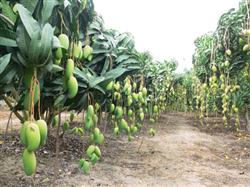 Due to winter drought and relatively high temperatures, mango trees often develop flower buds early, sprout flower spikes ahead of time, and form early flowers.
Early-flowering mango trees have long flower spikes, a large number of flowers, and consume a lot of nutrients. They bloom early and are prone to poor pollination and fertilization due to low-temperature and rainy weather, ultimately resulting in a low fruit-setting rate. If flower-strengthening fertilizer is applied early and heavily to raise the nutrient level of early-flowering mango trees, promote a strong tree vigor, and enhance the ability of flower spikes to resist low-temperature and rainy weather, the early-flowering mango trees can pollinate and fertilize normally, and the fruit-setting rate can be increased.
The specific fertilization method is as follows:
In winter and spring, pay attention to observing the autumn shoots of mango trees. If the tips of the autumn shoots begin to sprout flower buds before "Lichun" (Beginning of Spring), flower-strengthening fertilizer should be applied immediately, mainly high-quality organic fertilizer and a complete nitrogen-phosphorus-potassium fertilizer, while appropriately supplementing phosphorus and potassium fertilizer. For bearing trees over 5 years old, apply 45-50 kg of decomposed and rotted human, livestock, and poultry manure per tree, 1.5-2 kg of nitrogen-phosphorus-potassium (15-15-15) compound fertilizer, 3-4 kg of superphosphate or calcium magnesium phosphate fertilizer, and 1-1.5 kg of potassium chloride or potassium sulfate. The specific fertilization method is to dig 6-8 radial trenches under the tree canopy on the surface soil, 15-20 cm deep, 25-30 cm wide, and 80-100 cm long, fully stir and mix all the fertilizers evenly, spread them in the radial trenches, and cover with soil.
In addition, spray the leaves once every 10-15 days with a mixed solution of 0.1% borax, 0.1% magnesium sulfate, 0.2% urea, 0.2% potassium dihydrogen phosphate, and 800-fold nucleotide active liquid fertilizer, spraying continuously 3-5 times, evenly wetting all branches, leaves, and flower buds inside and outside the tree canopy, until water droplets begin to drip down. This supplements nutrients through the leaves, raises the plant's nutrient level, and helps strengthen the flower spikes.