Good post-harvest management of loquat is the key to a good harvest next year
Loquat harvesting is basically finished in May, and post-harvest production management directly affects tree vigor growth and next year's fruiting. Post-harvest production management of loquat should mainly be carried out in three aspects: fertilization, pruning, and pest and disease control. Apply sufficient post-harvest fertilizer. After harvesting loquat, fertilizer should be applied in time to promote the development of summer shoots, with nitrogen fertilizer as the main type, ...
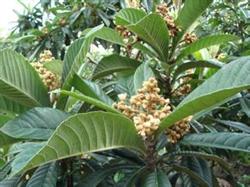
Loquat harvesting is basically finished in May, and post-harvest production management directly affects tree vigor growth and next year's fruiting. Post-harvest production management of loquat should mainly be carried out in three aspects: fertilization, pruning, and pest and disease control.
Apply sufficient post-harvest fertilizer
After harvesting loquat, fertilizer should be applied in time to promote the development of summer shoots. The fertilizer should be mainly nitrogen fertilizer, combined with phosphorus and potassium fertilizer. Fertilizer should be applied in sufficient quantity, accounting for about 50% of the annual fertilizer amount. In fertilization techniques, the following three principles should be mastered: First, according to the actual needs of loquat growth and development, make a reasonable combination of the three elements nitrogen, phosphorus, and potassium and other nutrient elements; Second, apply as much organic fertilizer and compound fertilizer as possible. Organic fertilizer should be piled and fermented for a certain period of time to remove organic acids and harmful gases and eliminate bacteria, insect eggs, weed seeds, etc. For compound fertilizer, organic compound fertilizer and multi-element compound fertilizer should be selected; Third, select high-quality chemical fertilizers to prevent poisoning or effects on loquat from biuret in urea, heavy metals and trichloroacetaldehyde in phosphate fertilizer, and residual chloride ions in potassium chloride, etc.
Prune in time
This can not only quickly restore tree vigor, but also promote robust summer shoots that sprout before late July, laying the foundation for high quality and high yield the next year. The amount of summer pruning should not exceed 20% of the total branch amount. Saw off 1-2 upright branches from the upper part of the canopy. Do not saw too many at one time; saw them off year by year to promote a decrease in canopy height. Perform renewal pruning on fruiting branches far from the main branches. Large branches to be renewed should retain 10-15 cm at the base and be sawed at an angle to promote new shoots. In empty areas of the canopy, short-cut vigorous water sprouts to cultivate large fruiting branch groups on skeletal branches. Fruiting branches after fruit harvest should be retained as much as possible, except for weak ones, so that they sprout fruiting branches.
The main post-harvest diseases of loquat are branch and trunk rot and leaf spot disease
Branch and trunk rot is also commonly called "foot rot." It mainly damages the root crown and main trunk, with few side branches affected. If the root crown and main trunk show soft rot under high humidity, or if gumming occurs when sap flow is vigorous, and the bark cracks, lifts, and peels off when dry, then it is very likely infected with "foot rot." In addition to strengthening cultivation and strengthening fertilizer and water management to enhance tree vigor, control methods also include scraping off the diseased spots, which must be scraped clean. The scraped bark should be burned on the spot, and under expert guidance apply medicine to promote wound healing.
Leaf spot disease is also a key disease for control
Leaf spot disease is the collective name for gray spot disease, spot disease, and angular leaf spot disease. It is a major disease of loquat. In mild cases it affects tree vigor; in severe cases the leaves become rigid and smaller, defoliation and dead branches occur early, and plant growth weakens with reduced yield. In addition to improving orchard management, enhancing tree vigor, and improving the tree's own disease resistance, control methods include: from after fruit harvest to before summer shoots sprout or at the beginning of sprouting, use 65% mancozeb 500-600 times solution, or 80% Daconil M-45 wettable powder 600 times solution, which has a preventive effect on disease occurrence. From after fruit harvest to before flower bud formation, use Bordeaux mixture at a concentration of 0.3-0.5% and lime sulfur mixture at 0.3-0.5 degrees Baume. This can both prevent disease and supplement copper and calcium for loquat; or 50% carbendazim wettable powder 800 times solution; or 70% thiophanate-methyl 600 times solution, etc.
The main post-harvest insect pests of loquat are yellow tussock moth and longhorn beetles
Yellow tussock moth is also called "yellow spicy caterpillar" or "hairy spicy caterpillar." Its larvae damage young shoots and leaves. The main control method in summer and autumn is spraying rosin-alkali 16-20 times solution, which can both kill the larvae of the yellow tussock moth and eliminate lichens, mosses, and other epiphytes on branches and trunks; 5% fipronil 1500 times, or 50% phoxim 1000 times can also be sprayed to kill them. Longhorn beetles mainly include brown longhorn beetle, star longhorn beetle, cloud-banded longhorn beetle, etc. They are omnivorous pests. Control methods mainly include searching for and killing adults in the loquat orchard in the morning and evening; using a steel wire hook to catch larvae inside tunnels; soaking cotton with 90% trichlorfon crystal 20 times solution, inserting it into fresh frass holes, covering the outside with mud, and sealing in to kill the larvae.