How to prune a bayberry tree after it bears fruit? A detailed guide to the method
For fruit-bearing trees that have not been shaped, first carry out large-branch pruning: saw off the upright branches in the upper part, branches where two trees cross, low branches that drag on the ground, densely growing branches inside the canopy, and overlapping branches. For multiple small branches sprouting from a single branch, remove the strong ones and keep the weak ones on the upper part of the canopy, and remove the weak ones and keep the strong ones on the lower part of the canopy. For crowded branches on the outer periphery, thin...
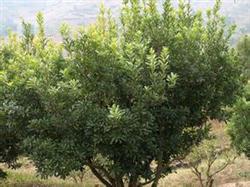
For fruit-bearing trees that have not been shaped, first carry out large-branch pruning: saw off the upright branches in the upper part, branches where two trees cross, low branches that drag on the ground, densely growing branches inside the canopy, and overlapping branches.
For multiple small branches sprouting from a single branch, remove the strong ones and keep the weak ones on the upper part of the canopy, and remove the weak ones and keep the strong ones on the lower part of the canopy.
For crowded branches on the outer periphery, focus mainly on thinning out small branches: cut away water sprouts, dead branches, diseased and pest-infested branches, and weakened branches; thin out densely growing branches and upright branches so that each branch carries a single shoot; cut away flowerless branches and late-autumn shoots; open up the side branches to encourage the shoots to age, thicken, and become sturdy.
Weak-growing fruit-bearing trees should preferably be pruned in spring, from late February to early March. Pruning too early makes them prone to frost damage, while pruning too late affects flowering and shoot growth. When pruning, be careful to adjust the structure of the fruit tree in good time, adjust the amount of pruning according to the number of flowers, and adopt a method based mainly on thinning out plus appropriate heading back. Thin out excess densely growing branches and upright branches, head back the weak, overlong fruiting branches in the inner canopy, and renew the fruiting branch groups.
Through shaping and pruning, cultivate a dwarfed, open canopy so that the tree is well ventilated and lets light through, achieving fruit production throughout the canopy, with tree height kept within 4 m. Through shaping and pruning, ensure that the upper part is not upright, the lower part does not drag on the ground, the surroundings are not crowded, the middle does not overlap, the inner canopy is not bare, and the orchard is not closed in.