How to manage mature longan trees to ensure a bumper harvest
Environmental factors such as warm winters have seriously affected the fruit set of longan, so that the yield of Putian longan in recent years has been consistently unsatisfactory. To ensure a bumper harvest of mature longan trees, the "four passes" must be strictly observed. The first is the variety pass. Years of practice by agricultural technology departments have shown that the "Songfengben" longan variety is the...
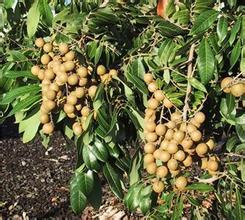
Environmental factors such as warm winters have seriously affected the fruit set of longan, so that the yield of Putian longan in recent years has been consistently unsatisfactory. To ensure a bumper harvest of mature longan trees, the "four passes" must be strictly observed.
The first is the variety pass. Years of practice by agricultural technology departments have shown that the "Songfengben" longan variety is the preferred variety for a bumper year, stable yield and large fruit. It is suggested that fruit growers can boldly graft this improved variety.
The second is the pruning pass. Pruning focuses on the "four cuts": First, frequently cut off weak and slender branches, densely growing branches, disorderly branches, shade branches, diseased and pest-infested branches, etc., to cultivate an umbrella-shaped crown and thick, strong branches. Second, cut off excess flower spikes. When thinning and breaking off flower spikes around Qingming, cut 1-2 nodes below the "gourd node"; when thinning and breaking off around Guyu, cut at the "gourd node"; when thinning and breaking off at Lixia, cut 1-2 nodes above the "gourd node". Third, boldly cut off spring shoots; the cutting method is similar to cutting flower spikes, which makes better use of the sprouting of summer and autumn shoots. Fourth, cut off excess young branches. The two "bud thinning" operations for summer shoots and autumn shoots are quite important; each branch should retain only 1-2 young branches. The purpose of these "four cuts" is to organize the tree shape well, cultivate good thick fruit-bearing mother branches, and at the same time prevent the occurrence of diseases and pests.
The third is the fertilization pass. To prevent winter shoots, effort must be put into fertilization. Mature trees are fertilized only 3 times per year, using the method of "one heavy, two balanced, three quick". "One heavy" means fertilization in early spring is particularly important, and the amount of fertilizer must be sufficient and heavy. Not only nitrogen fertilizer should be applied, but also phosphorus, potassium fertilizer and a small amount of boron fertilizer, as well as a large amount of farmyard manure, straw and cake fertilizer. This fertilization accounts for 60% of the total annual fertilization amount. "Two balanced" is the shoot-promoting and fruit-strengthening fertilizer in May. This time mainly apply human manure or urea, plus a small amount of imported compound fertilizer and potassium chloride, so that it appears balanced and uniform. This fertilization accounts for 30% of the total annual fertilization amount. "Three quick" is pre-harvest fertilizer; apply quick-acting fertilizer about 15 days before harvest, accounting for 10% of the total annual fertilization amount. In addition, do not fertilize in winter, and also dig large holes at an appropriate time (when experience and observation indicate winter shoots are about to sprout). This not only prepares conditions for applying heavy fertilizer the following spring; it can also damage the root system and indirectly achieve the purpose of preventing and controlling winter shoots.
The fourth is the disease and pest pass. For the prevention and control of diseases and pests, "indirect treatment" can be used, and cultivating a robust tree body is the top priority. Once diseases and pests are found, first immediately manually kill them or remove the diseased branches and leaves to isolate the source of infection; second is chemical control, and diseases and pests must be eliminated in the bud. In recent years, what fruit growers should pay special attention to are the three major moth species that harm new shoots: the litchi fruit borer, the litchi stem-end borer, and the Heymai moth. The focus of prevention is in August-September (among them, control of the litchi fruit borer should also be carried out about 12 days after longan flowers fade); spray once during the summer-extended autumn shoot and autumn shoot sprouting period, and spray a second time after 7-10 days.