What are the correct methods for fertilizing peach trees?
A netizen from Zhejiang, China commented: How should peach trees grown in greenhouses be managed? The key management points for growing peach trees in greenhouses are as follows: 1. Bud removal and pruning. During the bud break period of peach trees in the greenhouse, promptly remove unwanted buds. After flowering, promptly thin out overly dense branches, water sprouts, upright branches, shade-casting branches, and crossing branches as needed. 4-6 before harvest...
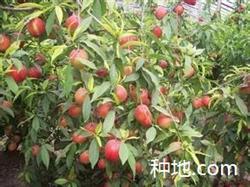 How should peach trees be fertilized properly? How can fertilization be carried out in a scientific and rational way?
In view of problems such as the large variation in fertilization rates among peach orchards, unreasonable fertilizer amounts, nitrogen-phosphorus-potassium ratios, fertilization timing and methods, and neglect of coordination between fertilization and irrigation, the following fertilization principles are proposed:
(1) Reasonably increase the application rate of organic fertilizer; according to soil fertility and early-, mid-, and late-maturing varieties and yield levels, reasonably regulate the application levels of nitrogen, phosphorus, and potassium fertilizers; the fertilizer requirement of early-maturing varieties is 20%-30% less than that of late-maturing varieties; pay attention to the combined application of calcium, magnesium, boron, zinc, or copper fertilizers; (2) For fertilizer distribution, autumn base fertilizer applied one month after peach fruit harvest is appropriate; the period before and after the peach fruit enlargement stage is the key period for topdressing; (3) Combine with high-quality cultivation techniques; within 3 weeks before harvest, nitrogen topdressing and large amounts of irrigation are not suitable, so as not to affect quality; in plain areas with poor drainage in summer, peach orchards need good soil management measures such as ridging, plastic film mulching, and growing grass; in arid areas, the use of plastic film mulching and the technique of storing fertilizer and water in holes are encouraged.
Fertilization rates and methods
(1) Yield level above 3000 kg/mu: organic fertilizer 2-3 cubic m/mu, nitrogen fertilizer (N) 15-18 kg/mu, phosphate fertilizer (P2O5) 8-10 kg/mu, potassium fertilizer (K2O) 18-22 kg/mu. (2) Yield level 2000-3000 kg/mu: organic fertilizer 1-2 cubic m/mu, nitrogen fertilizer (N) 12-16 kg/mu, phosphate fertilizer (P2O5) 7-9 kg/mu, potassium fertilizer (K2O) 17-20 kg/mu. (3) Yield level 1500-2000 kg/mu: organic fertilizer 1-2 cubic m/mu, nitrogen fertilizer (N) 10-12 kg/mu, phosphate fertilizer (P2O5) 5-8 kg/mu, potassium fertilizer (K2O) 12-15 kg/mu. For orchards with early leaf fall or a high crop load the previous year, foliar topdressing should be strengthened; before bud break, 2-3 sprays of 1%-3% urea may be applied; after bud break until before mid-July, spray regularly in a pattern of 2 applications of urea and 1 application of monopotassium phosphate, with the monopotassium phosphate concentration at 0.3%-0.5%. If a large amount of organic fertilizer was applied the previous year, then the nitrogen and potassium fertilizers applied as autumn base fertilizer that year may be reduced as appropriate by 1-2 kg/mu, and the amount of nitrogen and potassium fertilizer topdressed during the fruit enlargement stage may be reduced as appropriate by 2-3 kg/mu. All organic fertilizer, 30%-40% of the nitrogen fertilizer, 100% of the phosphate fertilizer, and 50% of the potassium fertilizer should be applied as base fertilizer by the trenching method in autumn after peach fruit harvest; the remaining 60%-70% of the nitrogen fertilizer and 50% of the potassium fertilizer should be topdressed in separate applications during the spring bud break stage, pit-hardening stage, and fruit enlargement stage of the peach trees (1-2 times for early-maturing varieties, 2-3 times for late-maturing varieties).
MorePeach tree planting techniques