How to prune a peach tree? These pruning techniques you need to master
How should a peach tree be pruned and what are the requirements? A peach tree has the following 5 technical key points: (1) Pruning techniques to balance tree vigor. During shaping and pruning, uneven growth among scaffold branches is often encountered, space cannot be fully utilized, and yield per tree is low. At this time, various means are used to suppress the strong and support the weak, achieving the goal of balanced growth...
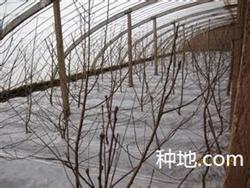
How should a peach tree be pruned and what are the requirements?
A peach tree has the following 5 technical key points:
(1) Pruning techniques to balance tree vigor. During shaping and pruning, uneven growth among scaffold branches is often encountered, space cannot be fully utilized, and yield per tree is low. At this time, various means are used to suppress the strong and support the weak, achieving the goal of balanced growth. When pruning, generally heavy pruning is given to strong branches and light pruning to weak branches, strong branches retain weak buds and weak branches retain strong buds, strong branches retain more fruit and weak branches retain less fruit, strong branches have their angles opened and weak branches have their angles raised, using props, pulling, weighting and other means, combined with fertilization, to gradually balance tree vigor.
(2) Pruning techniques to promote fruiting in vigorous trees. For this type of tree, besides controlling fertilizer and water and using chemical agents for control, reasonable pruning should be carried out. First open up the light path, thin out some scaffold branches and large shading branches, especially remove the water sprouts on the upper side, and widen the angle of the main branches; where there is light, there are flowers. Then pay attention to the summer methods of bending and pinching vigorous branches. Winter pruning can also be changed to after early spring to weaken their growth. In this way, in 1-2 years the tree vigor can be moderated, plump flower buds formed, and yield stabilized.
(3) Pruning of fruiting branches. The number of fruiting branches is related to variety, tree vigor, tree age, etc. Generally, after winter pruning, the spacing between the tips of fruiting branches is kept at 10-20 cm. Varieties of the northern variety group mainly bear fruit on short fruiting branches, so they can be appropriately denser; varieties of the southern variety group mainly bear fruit on medium and long fruiting branches, so they can be appropriately sparser.
The length of the fruiting branches left after pruning should be determined according to the length of the branch, its position, the fruit-setting rate of the variety, and so on. Generally, long fruiting branches are pruned to leave 5-8 nodes of flower buds; when too dense, remove upright branches and keep flat or slanting branches; note that branch distribution should not be "level-headed" but staggered in length; also note to leave reserve branches. Medium fruiting branches generally leave 3-5 nodes of flower buds, with a leaf bud at the cut bud; short fruiting branches and bouquet fruiting branches are generally only thinned and not headed back; vigorous fruiting branches have a low fruit-setting rate and grow vigorously, and after heading back they can sprout several good fruiting branches, often combined with summer pruning to be trained into fruiting branch groups.
(4) Training of fruiting branch groups. A fruiting branch group is a fruiting unit directly borne on scaffold branches and composed of several fruiting branches; it is also the main part of the tree's fruit yield. Branch groups are of 3 types: large, medium and small. Large branch groups have relatively strong growth vigor and a long lifespan. Fruit quality is good. The training method is generally to cut relatively vigorous branches leaving 5-10 nodes, in the 2nd year leave 2-3 robust branches at the lower part and head them back again, remove the remaining branches, and in the 3rd year head back again leaving 3-5 buds, which can train a large fruiting branch group. Large fruiting branch groups are generally distributed on the slanting side of scaffold branches, while medium and small branch groups are distributed on the upper side and in the spaces of large branch groups. The training methods for medium and small branch groups are similar to those for large branch groups, only controlled to be smaller.
(5) Pruning and renewal of fruiting branch groups. When pruning fruiting branch groups, pay attention to the growth vigor and density of the fruiting branches; consider both the current year's fruit and the fruiting branches for the next year. Strong branches can appropriately retain more fruit, while weak branches should be heavily pruned and renewed to ensure the stability of the branch group. If a branch group shows decline, it should be retracted in time and renewed within the group; heavily prune the vegetative branches and leave more reserve branches at the lower part, bear less fruit, and gradually recover. Some branch groups are already senescent and can be removed, using nearby new branches to train as replacements, or extending other branch groups into this space. If a branch group grows too vigorously, promptly thin out vigorous branches and upright branches, and keep moderate, robust fruiting branches.
In branch group pruning, there are two ways to train reserve branches. One is called two-branch renewal, that is, on the mother branch select two fruiting branches close to the base; the upper branch is pruned as a fruiting branch to bear fruit, and the lower branch is heavily cut back leaving only two buds at the base, sending out two new shoots to form the fruiting branches for the 2nd year. In winter, remove the branch above that has already fruited, and the two new branches below are still treated by the same method as the previous year, with the upper branch fruiting and the lower branch cut back to two buds; in this way each year one bears fruit and one sprouts branches. Another is called single-branch renewal, that is, appropriately heavy pruning of robust medium and long fruiting branches, so that they can both bear 2-3 fruits and send out relatively strong new shoots; in winter remove the small upper branches, and the robust new shoots at the lower part are likewise heavily pruned, repeating this to maintain fruiting.
MorePeach tree planting techniques