What methods are there to increase the yield of cherry tomatoes grown in greenhouses?
How can cherry tomatoes grown in greenhouses be made to yield more? In year-round cultivation of cherry tomatoes in greenhouses, for mid-to-late maturing varieties with strong growth vigor and a long fruiting period, such as Taiwan Shengnyu, AVRDC No. 6, and 139, adopting cultivation techniques such as continuous pinching and stem lowering can distribute the leaves evenly, maintain a reasonable position for light exposure...
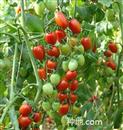
How can cherry tomatoes grown in greenhouses be made to yield more?
In year-round cultivation of cherry tomatoes in greenhouses, for mid-to-late maturing varieties with strong growth vigor and a long fruiting period, such as Taiwan Shengnyu, AVRDC No. 6, and 139, adopting cultivation techniques such as continuous pinching and stem lowering can distribute the leaves evenly, maintain a reasonable position for light exposure, improve photosynthetic efficiency, and keep the plants maintaining vigorous growth throughout, thus achieving a yield increase.
1. Continuous pinching. When the main stem has set 2 trusses of fruit, leave 2 leaves at the top and pinch off the growing point; this fruiting branch is called the 1st fruiting branch. When the fruit of the 1st inflorescence begins to be harvested and the fruit of the 2nd inflorescence begins to swell, keep one strong lateral branch below the top fruit truss to replace the main stem and continue growing. According to the plant's growth vigor, after the lateral branch has grown 2 trusses of fruit, pinch it again; this is the 2nd fruiting branch. When the fruit of the 2nd fruiting branch begins to be harvested, select and keep another strong lateral branch from its upper part as the 3rd fruiting branch, and so on. Over the whole growth period, pinch and renew the growing tip 6-7 times, keeping 6-7 fruiting branches per plant and leaving 12-14 trusses of fruit.
After the fruiting branches are selected, remove all the remaining lateral branches. Lateral branches should not be removed too early; generally, when they have grown to more than 20 cm, keep 2 leaves and remove them. This makes better use of the lateral branches to promote the growth of cherry tomatoes.
2. Lowering the stems at the right time
1. Timing of stem lowering: Before lowering the stems, control watering to reduce the water content in the stems and vines and enhance their toughness. Stem lowering should preferably be done in the afternoon on a clear, warm day, when the stems and vines have low water content and soft tissues, making operation easier and avoiding and reducing stem injury during lowering. When lowering the stems, remove the old yellow leaves and diseased leaves from the lower part of the stems and vines and take them outside the greenhouse to be deeply buried or burned. All the fruit in this part should also be harvested, to avoid the leaves and fruit developing disease on the damp ground after the stems are lowered and forming a center of infection. When the 1st inflorescence opens, hang the vines. After the fruit of the 1st fruiting branch has been completely harvested, carry out the 1st stem lowering when the 1st truss of fruit on the 2nd fruiting branch is rapidly swelling and the 2nd truss of fruit has set. After that, carry out stem lowering once after each fruiting branch has been completely harvested.
2. Method of stem lowering: Use the method of lowering stems alternately between plants, that is, untie the plant from the string, remove the lower old leaves, gently twist and coil the plant, and then hang the vine again. Stem lowering should be done in an orderly manner in the same direction, gradually coiling along both sides of the cultivation ridge. When coiling the stems and vines, bend them along their natural curve; do not force them to bend or bend them in the opposite direction, to avoid twisting, splitting, or breaking the stems and vines. Each time the stems are lowered, keep the leaf-bearing stems and vines about 15 cm from the ridge surface, keep more than 20 functional leaves per plant, and maintain plant height at 0.8 m from the greenhouse surface (south side of the greenhouse) to 1.5 m (north side of the greenhouse). Note that the tips of the stems of the front-row plants must not exceed those of the back rows, to avoid shading. Ensure the leaves are evenly distributed, always in the best position for three-dimensional light exposure and in the best state of leaf area, with the leaf area coefficient maintained at 3-4. Over the whole growth period, lower the stems 5-6 times.
3. Management after pruning and stem lowering
1. Temperature: In the few days after pruning and stem lowering, appropriately raise the temperature inside the greenhouse to promote healing of the wounds on the injured stems and vines. Keep the daytime temperature at 20-25°C and the nighttime temperature at around 15°C.
2. Spraying: To prevent pathogens from invading through wounds on the stems, vines, and leaves, according to the common diseases of cherry tomatoes, after pruning and stem lowering spray agents such as procymidone, grey mold control, chlorothalonil, and mancozeb to control leaf mold, grey mold, early blight, and late blight.
3. Fertilizer and water management: Although lowering the stems can lower the fruiting position of the plant, it cannot shorten the actual distance between the fruiting site and the root system. In addition, as the vegetative mass becomes larger and larger, insufficient fertilizer and water supply will cause problems such as increasingly poor fruit quality and increasingly small fruit. Therefore, sufficient fertilizer and water should be supplied to meet the plant's growth needs. For topdressing, potassium fertilizers such as potassium sulfate should be the main type, with 15-20 kg applied per mu each time, along with watering.
4. Removing side shoots and old leaves: After the fruit on a fruiting branch is harvested, the lateral branches below that branch should be removed in time to ensure the nutrient supply to the fruit-bearing branch, and at the same time all the leaves below the fruiting branch should be removed. The leaves on the fruit trusses must not be removed, to ensure good development of the upper fruit. Removing side shoots and old leaves should be done on sunny days to facilitate wound healing. When removing side shoots, the hand that snaps them off should only touch the shoot and not the whole stem, to avoid spreading tobacco mosaic virus disease. When removing leaves, remove them as close as possible to the branch and stem position, and be careful not to leave leaf stalks, to avoid grey mold.
4. Pest and disease control. The main diseases are early blight, leaf mold, grey mold, and canker. In the early stage of disease, Bordeaux mixture can be used for control; in the later stage, 70% thiophanate-methyl at 800-1000 times dilution, or 75% chlorothalonil at 600 times dilution can be used for control. The main insect pests are cotton bollworm, cabbage caterpillar, aphids, etc., which damage leaves and fruit. Tianrun Insecticide No. 1 or Tianrun Insecticide No. 2 has good control effects on cotton bollworm and cabbage caterpillar, and Sudeli or Chongluanke also has good control effects. Aphids can be controlled by spraying imidacloprid or pirimicarb.
Click to see more cherry tomato cultivation techniques
Click to see more fruit cultivation techniques