What should you pay attention to when growing sweet cherries? Keep these cultivation points in mind
What should you pay attention to in sweet cherry cultivation? Seek advice: trial planting first, then expansion. Sweet cherries like warmth and are not cold-tolerant, drought-tolerant, or waterlogging-tolerant, and they fear strong winds, so they are suitable for cultivation in areas with an annual average temperature of 10°C~15°C. Practice has shown that when the annual average temperature is above 15°C, sweet cherries often bloom heavily but set little fruit. For introducing and developing sweet cher...
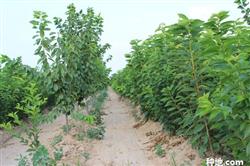
What should you pay attention to in sweet cherry cultivation? Seek advice
Trial planting first, then expansion
Sweet cherries like warmth and are not cold-tolerant, drought-tolerant, or waterlogging-tolerant, and they fear strong winds, so they are suitable for cultivation in areas with an annual average temperature of 10°C~15°C. Practice has shown that when the annual average temperature is above 15°C, sweet cherries often bloom heavily but set little fruit. To introduce and develop sweet cherries, you should not only look at local factors such as annual average temperature, precipitation, sunlight, and frost-free period, but also carefully analyze the local microclimate characteristics, and plant on a trial basis first before expanding.
Develop firm-fleshed, storage- and transport-tolerant varieties
At present, there are only a dozen or so excellent sweet cherry varieties that have been verified through cultivation, and each variety has certain shortcomings. For example, Hongdeng, bred in our country, has large fruit, bright color, juicy and sweet flesh, and high and stable yield, but it enters full bearing late, and the fruit has thin skin and soft flesh, making it unsuitable for processing, storage, and transport, so it is only suitable for small-area planting. In the future, sweet cherry cultivation should choose varieties with a beautiful appearance, firm flesh, good quality, slight cracking, tolerance for storage and transport, and suitability for both fresh eating and processing.
Focus on preventing crown gall and viral diseases
Choosing excellent rootstocks suitable for local cultivation is the key to successful sweet cherry cultivation. The most important thing is to see whether the rootstock is resistant to crown gall and whether it has viral diseases. In old sweet cherry production areas, when developing sweet cherries, you must not use continuous cropping land, and even more must not use continuous cropping land to raise sweet cherry seedlings; in newly developed sweet cherry production areas, on the premise of identifying good varieties and good rootstocks, you must strictly control crown gall and viral diseases.
Both pollination and fruit thinning are needed
Most sweet cherry varieties are self-unfruitful or have a very low fruit set rate, so cross-pollination is needed. Some sweet cherry orchards that do not produce well year after year and bear little fruit at the proper age are not affected by freeze damage; the main reason is unreasonable pollinizer arrangement, non-overlapping bloom periods, and poor pollination. Van and Lapins are both very ideal pollinizer varieties. Also, weak fruiting branches should be thinned in good time, smaller flowers should be removed, and small fruits with irregular shape and improper position and deformed fruits should be thinned, with 2~3 fruits retained per vigorous fruiting branch as appropriate.
Click to get more cherry cultivation techniques
Click to get more fruit cultivation techniques